
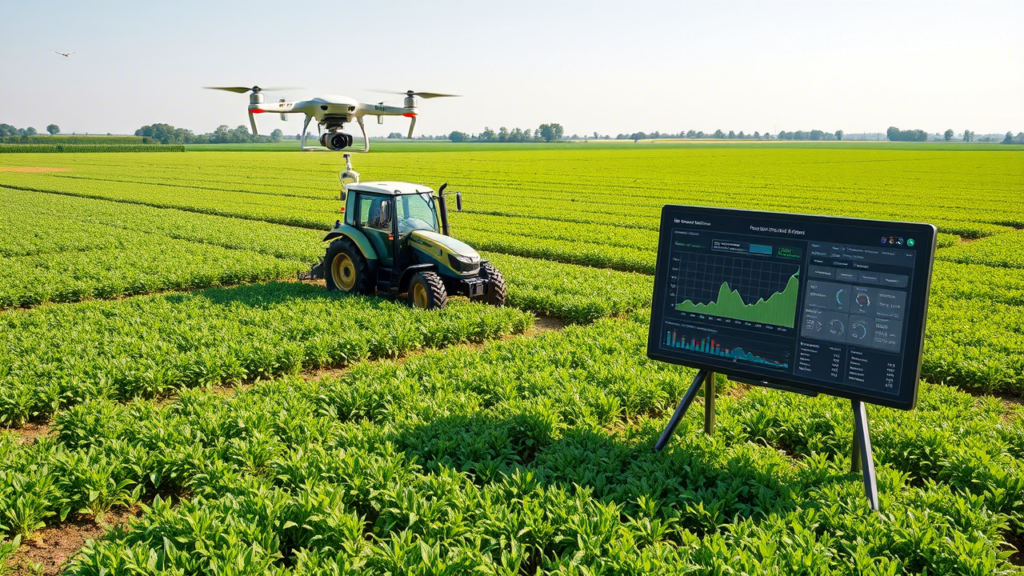
Creating a comprehensive step-by-step guide for the best ideas in digital farming technology for 2025 involves identifying key trends, tools, and innovations that will shape the future of agriculture. Below is a structured approach to generating unique articles with a table summarizing these ideas.
Step-by-Step Guide to Generating Unique Articles on Digital Farming Technology
Step 1: Define Key Trends in Digital Farming
Start by researching and listing the most promising trends in digital farming for 2025. These could include:
- Precision agriculture
- AI-driven crop monitoring
- IoT-based smart irrigation systems
- Blockchain for supply chain transparency
- Autonomous farming equipment
- Vertical farming and urban agriculture
- Drone-based crop management
- Soil health sensors and analytics
- Renewable energy integration in farms
- Climate-smart farming practices
Step 2: Create a Framework for Articles
Each article should follow a consistent structure to ensure clarity and uniqueness:
- Introduction
- Briefly introduce the concept and its relevance to modern farming.
- How It Works
- Explain the technology or idea in detail, including tools, software, or hardware involved.
- Benefits
- Highlight the advantages for farmers, consumers, and the environment.
- Challenges
- Discuss potential obstacles or limitations.
- Future Outlook
- Predict how this technology might evolve by 2025 and beyond.
- Case Studies/Examples
- Provide real-world examples or hypothetical scenarios.
- Conclusion
- Summarize the key points and emphasize its importance.

Step 3: Generate Unique Content
For each trend, create unique content using the framework above. Avoid plagiarism by paraphrasing and citing credible sources.
Step 4: Organize Ideas in a Table
To make the information easily digestible, organize the trends into a table with columns for key details.
Table: Best Ideas for Digital Farming Technology in 2025
| Trend | Description | Key Tools/Technologies | Benefits | Challenges | Future Potential |
|---|---|---|---|---|---|
| Precision Agriculture | Using data analytics to optimize resource use (water, fertilizers, pesticides). | GPS, GIS, drones, AI algorithms | Increased yields, reduced costs, minimized environmental impact. | High initial investment, data privacy risks. | Integration with autonomous systems. |
| AI-Driven Crop Monitoring | AI analyzes crop health, predicts diseases, and suggests interventions. | Machine learning models, satellite imagery | Early detection of issues, improved yield quality. | Requires technical expertise. | Real-time decision-making capabilities. |
| IoT-Based Smart Irrigation | Sensors monitor soil moisture and automate irrigation schedules. | IoT sensors, cloud platforms | Water conservation, optimized irrigation. | Connectivity issues in rural areas. | Expansion to multi-crop systems. |
| Blockchain in Supply Chain | Ensures transparency and traceability of agricultural products. | Blockchain platforms, QR codes | Builds consumer trust, reduces fraud. | Adoption barriers, scalability concerns. | Global adoption across industries. |
| Autonomous Farming Equipment | Self-driving tractors and harvesters reduce labor dependency. | Robotics, GPS, AI | Higher efficiency, reduced labor costs. | High costs, regulatory hurdles. | Widespread use in large-scale farms. |
| Vertical Farming | Growing crops in stacked layers indoors, often in urban areas. | LED lighting, hydroponics, aeroponics | Space-efficient, year-round production. | High energy consumption. | Integration with renewable energy. |
| Drone-Based Crop Management | Drones monitor fields, spray pesticides, and assess crop health. | UAVs, multispectral cameras | Faster inspections, targeted pesticide application. | Weather dependency, regulatory restrictions. | Enhanced mapping and analysis capabilities. |
| Soil Health Sensors | Sensors measure soil nutrients, pH, and moisture levels. | IoT devices, mobile apps | Improved soil management, higher productivity. | Sensor accuracy and durability. | Advanced analytics for predictive insights. |
| Renewable Energy Integration | Solar panels and wind turbines power farm operations. | Solar panels, wind turbines | Reduced energy costs, eco-friendly farming. | Initial setup costs. | Hybrid energy systems for farms. |
| Climate-Smart Farming | Practices that adapt to climate change and reduce greenhouse gas emissions. | Weather forecasting tools, carbon credits | Resilience to climate shocks, reduced carbon footprint. | Limited awareness and funding. | Mainstream adoption globally. |
Example Article Outline: Precision Agriculture in 2025
1. Introduction
Precision agriculture is revolutionizing farming by leveraging advanced technologies to optimize resource allocation. By 2025, it is expected to become a cornerstone of sustainable farming practices.

2. How It Works
Precision agriculture uses GPS and GIS technologies to map fields, while drones and sensors collect real-time data on soil conditions, crop health, and weather patterns. This data is analyzed using AI algorithms to provide actionable insights.
3. Benefits
- Reduces water and fertilizer wastage by up to 30%.
- Increases crop yields by ensuring optimal growing conditions.
- Minimizes environmental impact through targeted interventions.
4. Challenges
- High upfront costs for equipment and software.
- Data security and privacy concerns.
- Need for technical training among farmers.
5. Future Outlook
By 2025, precision agriculture is expected to integrate seamlessly with autonomous farming systems, enabling fully automated operations.
6. Case Studies/Examples
A case study from California highlights how a vineyard increased its grape yield by 20% using precision irrigation techniques.
7. Conclusion
Precision agriculture is a game-changer for modern farming, offering both economic and environmental benefits. Its adoption will be crucial for meeting the food demands of a growing population.
Certainly! Digital farming technology is rapidly evolving, and by 2025, we can expect significant advancements that will revolutionize agriculture. Below are some of the best ideas for digital farming technologies that could emerge or become mainstream by 2025, particularly focusing on Facqs (Farming Automation, Connectivity, Quality, and Sustainability):
1. Autonomous Farming Robots
- Description: Fully autonomous robots capable of planting, harvesting, weeding, and monitoring crops.
- Benefits:
- Reduces labor costs and addresses workforce shortages.
- Enhances precision in farming operations.
- Minimizes soil compaction through lightweight designs.
- Example: Swarm robots that work collaboratively to cover large fields efficiently.
2. AI-Powered Crop Monitoring Systems
- Description: Advanced AI systems using drones, satellites, and IoT sensors to monitor crop health, soil conditions, and weather patterns in real-time.
- Benefits:
- Early detection of diseases, pests, and nutrient deficiencies.
- Optimized irrigation and fertilization schedules.
- Predictive analytics for yield forecasting.
- Example: A dashboard that integrates satellite imagery with ground-level sensor data to provide actionable insights.
3. Blockchain for Supply Chain Transparency
- Description: Blockchain technology to track the entire agricultural supply chain from farm to fork.
- Benefits:
- Ensures food safety and traceability.
- Builds consumer trust through transparency.
- Reduces fraud and inefficiencies in the supply chain.
- Example: Farmers can log harvest data, transportation details, and processing information on a blockchain ledger accessible to consumers via QR codes.
4. Vertical Farming with Smart Automation
- Description: Indoor vertical farms equipped with AI-driven automation for lighting, watering, and climate control.
- Benefits:
- Maximizes space utilization in urban areas.
- Reduces water usage by up to 90% compared to traditional farming.
- Year-round production regardless of external weather conditions.
- Example: Modular vertical farming units that can be deployed in urban warehouses or rooftops.
5. Precision Irrigation Systems
- Description: Smart irrigation systems that use IoT sensors and machine learning to deliver water precisely where and when it’s needed.
- Benefits:
- Conserves water resources.
- Improves crop yields by preventing over- or under-watering.
- Reduces energy costs associated with pumping water.
- Example: Soil moisture sensors connected to automated drip irrigation systems.
6. Carbon Farming Technologies
- Description: Tools and platforms that help farmers implement practices to sequester carbon in the soil.
- Benefits:
- Combats climate change by reducing atmospheric CO2.
- Provides farmers with additional revenue streams through carbon credits.
- Improves soil health and fertility.
- Example: Mobile apps that calculate carbon sequestration potential based on farming practices.
7. Livestock Health Monitoring Wearables
- Description: Wearable devices for livestock that monitor vital signs, movement, and behavior.
- Benefits:
- Early detection of illnesses or stress in animals.
- Improves animal welfare and productivity.
- Reduces antibiotic use through preventive care.
- Example: Collars or ear tags equipped with biosensors that send alerts to farmers’ smartphones.
8. Augmented Reality (AR) for Farm Training
- Description: AR tools that provide immersive training for farmers on equipment operation, pest control, and sustainable practices.
- Benefits:
- Enhances skill development without requiring physical presence.
- Reduces errors during implementation of new techniques.
- Engages younger generations in agriculture.
- Example: AR glasses that overlay instructions on machinery or field layouts.
9. Weather Prediction and Adaptation Platforms
- Description: Hyper-local weather prediction systems integrated with adaptive farming strategies.
- Benefits:
- Helps farmers prepare for extreme weather events like droughts, floods, or storms.
- Optimizes planting and harvesting schedules.
- Reduces crop losses due to unpredictable weather.
- Example: A mobile app that combines historical data, real-time updates, and AI models to predict micro-climate changes.
10. Biodegradable Smart Sensors
- Description: Eco-friendly sensors embedded in fields to collect data on soil moisture, temperature, and nutrient levels.
- Benefits:
- Eliminates electronic waste from traditional sensors.
- Provides accurate data without harming the environment.
- Cost-effective scalability across large farms.
- Example: Sensors made from bioplastics that decompose after their useful life.
11. Digital Twin Technology for Farms
- Description: Virtual replicas of farms that simulate real-world conditions and test different scenarios.
- Benefits:
- Enables risk-free experimentation with new techniques or technologies.
- Identifies optimal resource allocation strategies.
- Supports long-term planning and decision-making.
- Example: A digital twin platform that predicts the impact of changing fertilizers or irrigation methods on yield.
12. Gamification for Sustainable Farming
- Description: Gamified platforms that incentivize farmers to adopt sustainable practices.
- Benefits:
- Encourages participation in eco-friendly initiatives.
- Educates farmers about sustainability metrics.
- Rewards achievements with certifications or financial incentives.
- Example: A leaderboard system where farmers earn points for reducing water usage or increasing biodiversity.
13. Smart Greenhouses with AI Optimization
- Description: AI-controlled greenhouses that adjust lighting, humidity, temperature, and nutrient delivery autonomously.
- Benefits:
- Increases yield per square meter.
- Lowers operational costs through energy-efficient systems.
- Produces high-quality crops consistently.
- Example: A greenhouse management system that learns optimal growing conditions for specific crops.
14. Regenerative Agriculture Platforms
- Description: Software platforms that guide farmers in adopting regenerative practices like cover cropping, no-till farming, and agroforestry.
- Benefits:
- Restores degraded soils and ecosystems.
- Boosts biodiversity and resilience against climate change.
- Offers market access for sustainably grown products.
- Example: An app that recommends crop rotations and cover crops based on soil test results.
15. Drone-Based Crop Dusting and Seeding
- Description: Drones equipped with sprayers or seed dispersal mechanisms for precise application.
- Benefits:
- Reduces chemical usage and environmental contamination.
- Covers large areas quickly and efficiently.
- Accessible for small-scale farmers at affordable costs.
- Example: A drone service provider offering on-demand seeding or pesticide spraying.
16. Energy-Efficient Farm Equipment
- Description: Electric or solar-powered tractors, plows, and harvesters.
- Benefits:
- Lowers fuel costs and carbon emissions.
- Operates quietly, reducing noise pollution.
- Compatible with renewable energy sources.
- Example: A solar-powered tractor designed for smallholder farmers.
17. Farmer Social Networks
- Description: Online communities where farmers share knowledge, resources, and success stories.
- Benefits:
- Fosters collaboration and innovation.
- Bridges the gap between experienced and novice farmers.
- Provides emotional support and reduces isolation.
- Example: A platform similar to LinkedIn but tailored specifically for agricultural professionals.
18. Nutrient Recovery Systems
- Description: Technologies that extract nutrients from agricultural waste for reuse as fertilizers.
- Benefits:
- Closes the nutrient loop and reduces dependency on synthetic fertilizers.
- Converts waste into valuable resources.
- Promotes circular economy principles.
- Example: A compact unit that processes manure into biofertilizers.
Final Answer
The best ideas for digital farming technology in 2025 include precision agriculture, AI-driven crop monitoring, IoT-based smart irrigation, blockchain for supply chain transparency, autonomous farming equipment, vertical farming, drone-based crop management, soil health sensors, renewable energy integration, and climate-smart farming practices. Use the provided table and article framework to generate unique, detailed content for each trend.
