1. Introduction: Why Proper Tilapia Feeding Is Important
Tilapia is one of the most widely farmed freshwater fish groups in aquaculture. Farmers raise tilapia because the fish can adapt to different production systems, accept formulated feeds, and grow under suitable water and management conditions.
However, successful tilapia farming is not simply about putting fish into a pond and supplying feed every day. Feed management directly influences fish growth, feed expenses, water quality, survival, and the final harvest.
Feed is often one of the largest operating expenses in intensive fish farming. If a farmer gives too much feed, uneaten pellets may decompose and increase the organic load in the pond. If the farmer provides too little feed, fish may grow slowly and take longer to reach market size.
Large-scale agricultural operations in 2027 will increasingly depend on automated … Read more
The best approach is to calculate feed according to the estimated total weight of the fish in the pond. This is known as biomass-based feeding.
For example:
A pond containing 1,000 fish weighing 50 grams each has 50 kg of total fish biomass.
A pond containing 1,000 fish weighing 300 grams each has 300 kg of total fish biomass.
Both ponds contain the same number of fish, but the second pond contains six times as much fish biomass. Therefore, it requires a much larger daily feed allowance.
A practical feeding programme should consider:
Average fish weight.
Number of live fish.
Total fish biomass.
Water temperature.
Dissolved oxygen.
Feed protein and pellet size.
Fish appetite and feeding response.
Natural food available in the pond.
Stocking density and aeration.
Fish growth during the production cycle.
FAO feeding tables and university aquaculture guidance also show that feeding rates generally decrease as tilapia become larger. FAOHome +2
2. How Much Feed Should Tilapia Eat Per Day?
The daily feed requirement depends mainly on the fish’s average body weight and the total biomass in the pond.
For a practical starting point, the following ranges can help farmers plan a feeding programme for formulated feed. These are indicative ranges, not fixed rules for every farm.
2.1 Tilapia daily feeding rate chart
Average fish weight
Indicative daily feed rate
General feeding frequency
Below 1 g
10–30% of biomass
6–8 times
1–5 g
6–10%
4–6 times
5–20 g
4–6%
3–4 times
20–100 g
3–4%
2–4 times
100–250 g
2–3%
2–3 times
250–500 g
1.5–2.5%
2–3 times
Above 500 g
1–2%
2 times
These are planning ranges synthesized from published FAO and aquaculture extension feeding tables. Actual feeding allowances vary with water temperature, culture system, feed quality, fish appetite, and natural pond food. FAOHome +3
Important: The percentage means the percentage of the total live weight of the fish—not the percentage of pond water volume.
For example, if the total fish biomass is 100 kg and the feeding rate is 2%, the daily feed allowance is 2 kg.
2.2 Why do small tilapia need more feed relative to their body weight?
Small fish grow rapidly and have higher nutritional requirements relative to their body weight. They need frequent access to suitable small-sized feed.
As fish grow, their percentage feed requirement usually decreases. A 10-gram fingerling may need a daily ration equivalent to a much higher percentage of its weight than a 400-gram market-size fish.
This is why farmers should not continue using the same feeding percentage throughout the entire production cycle.
2.3 Example of feed requirements for different fish sizes
Consider a group of 1,000 tilapia. The following examples show how the feed requirement changes as the fish grow.
Average weight per fish
Total biomass
Example feed rate
Daily feed
10 g
10 kg
5%
0.50 kg
25 g
25 kg
4%
1.00 kg
50 g
50 kg
3.5%
1.75 kg
100 g
100 kg
2.5%
2.50 kg
200 g
200 kg
2%
4.00 kg
300 g
300 kg
1.8%
5.40 kg
500 g
500 kg
1.5%
7.50 kg
These figures are examples using selected rates within commonly published feeding ranges. The actual ration should be adjusted after sampling the fish and observing feeding behaviour.
3. How to Calculate Daily Tilapia Feed
The calculation is simple once you know the number of live fish, their average weight, and the selected feeding rate.
Formula 1: Total fish biomass
\text{Biomass (kg)} = \frac{\text{Number of fish}\times\text{Average weight (g)}}{1000}
3.1 Example: 2,000 tilapia weighing 100 grams each
Suppose a farmer has:
Number of live fish: 2,000
Average fish weight: 100 grams
Selected feeding rate: 2.5%
First, calculate biomass:
\frac{2,000\times100}{1,000}=200\text{ kg}
Next, calculate daily feed:
200\times\frac{2.5}{100}=5\text{ kg}Calculated example
The farmer’s starting daily feed allowance is 5 kg per day, subject to adjustment based on appetite and water conditions.
If the farmer feeds twice daily, the initial allocation could be:
Morning: 2.5 kg
Afternoon: 2.5 kg
If the fish are not consuming the feed properly, the farmer should investigate the cause rather than automatically increasing the ration.
3.2 Example: 5,000 tilapia weighing 250 grams each
Suppose the pond contains 5,000 live fish with an average weight of 250 grams.
Total biomass:
\frac{5,000\times250}{1,000}=1,250\text{ kg}
At an example feeding rate of 2%:
1,250\times0.02=25\text{ kg/day}
The estimated daily allowance is 25 kg.
If divided into three meals:
Morning: approximately 8.3 kg
Midday: approximately 8.3 kg
Afternoon: approximately 8.4 kg
This is only an initial ration. The farmer should check consumption and water quality before maintaining it.
4. How Many Times Should You Feed Tilapia Per Day?
One of the most common questions from new fish farmers is: How many times should I feed tilapia per day?
The answer depends on the size of the fish and the production system.
Small fry need more frequent feeding because of their rapid growth and small body size. Larger grow-out fish can generally be managed with fewer meals.
4.1 Recommended feeding frequency
Fish growth stage
General daily feeding frequency
Newly feeding fry
6–8 times
1–5 g fish
4–6 times
5–20 g fingerlings
3–4 times
20–100 g juveniles
2–4 times
100–250 g growers
2–3 times
250–500 g growers
2 times
Market-size fish
Usually 2 times
Published guidance differs between systems. For example, FAO pond feeding tables commonly show two daily feedings for several grow-out size classes, while other intensive-system references describe more frequent feeding. FAOHome +2
For many small and medium pond farms, two or three well-managed meals are a practical starting point for larger fish.
4.2 Best time to feed tilapia
A simple daily schedule for grow-out tilapia is:
Time
Feeding activity
7:00–8:00 AM
First feeding after checking fish activity and water conditions
12:00–1:00 PM
Optional smaller meal if using three meals
4:00–5:00 PM
Final feeding before evening
The exact times can be changed according to local weather, water temperature, oxygen conditions, and farm routines.
Avoid feeding heavily when fish are showing signs of oxygen stress, such as gathering at the surface and gasping. Check aeration and water quality first.
4.3 Should you feed tilapia at night?
For ordinary outdoor pond farming, feeding during daylight is generally easier to manage because the farmer can observe fish behaviour and leftover feed.
Night feeding may be used in some controlled intensive systems, but it should not be adopted automatically. Dissolved oxygen can become a serious concern at night, particularly in heavily stocked ponds with high organic loads.
For small and medium farms, a consistent daytime feeding schedule is usually easier to monitor.
5. How Much Feed Per Day by Pond Size?
Pond size is important for understanding the production system, but it does not directly determine the daily feed quantity.
A 1-acre pond stocked with 2,000 fish may require much less feed than a 1-acre pond stocked with 10,000 fish at a larger average weight.
Therefore, pond-size calculations must include stocking numbers and average fish weight.
5.1 Example: 0.1-acre pond
Assume:
Pond surface area: 0.1 acre
Number of live fish: 500
Average weight: 100 g
Feeding rate: 2.5%
Biomass:
\frac{500\times100}{1000}=50\text{ kg}
Daily feed:
50\times0.025=1.25\text{ kg}
The example daily feed allowance is 1.25 kg.
5.2 Example: 0.25-acre pond
Assume:
Pond surface area: 0.25 acre
Number of live fish: 1,500
Average weight: 100 g
Feeding rate: 2.5%
Biomass:
\frac{1,500\times100}{1000}=150\text{ kg}
Daily feed:
150\times0.025=3.75\text{ kg}
The example daily feed allowance is 3.75 kg.
5.3 Example: 0.5-acre pond
Assume:
Pond surface area: 0.5 acre
Number of live fish: 3,000
Average weight: 150 g
Feeding rate: 2%
Biomass:
\frac{3,000\times150}{1000}=450\text{ kg}
Daily feed:
450\times0.02=9\text{ kg}
The example daily feed allowance is 9 kg.
5.4 Example: 1-acre pond
Assume:
Pond surface area: 1 acre
Number of live fish: 5,000
Average weight: 200 g
Feeding rate: 2%
Biomass:
\frac{5,000\times200}{1000}=1,000\text{ kg}
Daily feed:
1,000\times0.02=20\text{ kg}
The example daily feed allowance is 20 kg.
5.5 Pond-size comparison table
Pond size
Assumed live fish
Average fish weight
Example daily feed
0.1 acre
500
100 g
1.25 kg
0.25 acre
1,500
100 g
3.75 kg
0.5 acre
3,000
150 g
9 kg
1 acre
5,000
200 g
20 kg
2 acres
10,000
200 g
40 kg
Please note: This is a mathematical illustration, not a recommended stocking-density chart. Actual stocking numbers must be selected according to pond depth, water exchange, aeration, seed quality, local regulations, and the farmer’s production system.
Part 2: Choosing the Right Tilapia Feed
6. Which Feed Is Best for Tilapia?
Tilapia can consume natural pond food and formulated commercial feed. However, in commercial farming, a nutritionally balanced formulated feed is important for achieving predictable growth.
Common feed options include:
Commercial floating pellets.
Commercial sinking pellets.
Farm-made supplementary feed.
Natural pond food.
Agricultural by-products used in properly formulated diets.
The most suitable option depends on the fish size, production system, budget, and availability of quality feed.
6.1 Floating fish feed
Floating feed remains on the water surface for some time. It allows farmers to observe feeding activity and estimate whether fish are consuming the ration.
Advantages:
Easier to observe fish appetite.
Helps identify uneaten feed.
Allows feeding adjustments.
Useful for monitoring fish behaviour.
Makes hand-feeding easier.
Floating pellets are particularly useful in ponds where farmers want to monitor consumption visually.
6.2 Sinking fish feed
Sinking pellets move below the water surface. They may be suitable in certain production systems, but farmers have less opportunity to observe exactly how much feed remains uneaten.
When using sinking feed, pay attention to pellet stability, feeding response, and water quality.
6.3 Farm-made fish feed
Some farmers prepare supplementary feed using locally available ingredients. Common ingredients may include:
Rice bran.
Wheat bran.
Soybean meal.
Groundnut cake.
Maize or other cereal ingredients.
Fish meal or other suitable protein ingredients.
Vitamin and mineral premixes.
However, simply mixing ingredients does not guarantee a balanced tilapia diet. The formulation should meet the nutritional requirements of the fish and should be checked for protein, energy, amino acids, minerals, and ingredient quality.
Poorly formulated feed can reduce growth and increase waste.
7. How Much Protein Does Tilapia Feed Need?
Protein is an important part of fish nutrition. It supplies amino acids needed for muscle development, tissue repair, growth, and other biological functions.
The protein level should be selected according to fish size and production system.
7.1 Indicative protein levels
Fish size
Indicative dietary protein range
Very small fry
35–50%
1–5 g fingerlings
30–40%
5–25 g juveniles
25–30%
Larger pond-grown fish
Around 25% may be suitable
Fish in intensive tank systems
Often higher, depending on formulation
These are broad reference ranges, not a single mandatory feed specification. University of Florida IFAS guidance describes different protein requirements for young fish and for larger fish raised in ponds, cages, and tanks. Ask IFAS +2
7.2 Why is protein important?
Protein supports:
Muscle development.
Growth and body-weight gain.
Tissue maintenance.
Enzyme production.
Immune-system functions.
Normal biological activity.
However, higher protein does not automatically mean better growth. Feed must also provide appropriate energy, essential amino acids, vitamins, and minerals.
A farmer should choose a balanced feed rather than selecting a product only because its protein percentage is high.
8. What Pellet Size Should You Use for Tilapia?
The pellet must be appropriate for the mouth size and feeding ability of the fish.
If the pellets are too large, smaller fish may struggle to eat them. If pellets are too small, larger fish may spend more time feeding, and handling or feeding losses may increase.
8.1 General pellet-size guide
Average fish size
General feed form or pellet size
Below 1 g
Fine powder or micro-pellets
1–5 g
Small crumble, approximately 1–1.5 mm
5–20 g
Approximately 1.5–2 mm
20–100 g
Approximately 2 mm
100–250 g
Approximately 3 mm
Above 250 g
Approximately 3–4 mm
FAO feeding tables provide similar pellet-size recommendations across different tilapia growth stages. FAOHome +2
Part 3: Practical Feeding Management for Indian Fish Farmers
9. How to Adjust Feed According to Water Temperature
Water temperature influences fish activity, appetite, metabolism, and feed consumption.
Tilapia are warm-water fish. Their feeding activity can change when water becomes unusually cold or hot.
A farmer should not assume that the fish need the same amount of feed every day throughout the year.
9.1 Practical temperature management
Water condition
Feeding management
Suitable warm conditions
Follow the normal biomass-based ration
Cooler-than-normal water
Observe appetite and reduce feed if consumption falls
Very hot water
Check oxygen levels and fish behaviour; avoid forcing the normal ration
Sudden temperature change
Feed cautiously and monitor the fish
Fish showing stress
Stop or reduce feeding while investigating the cause
The exact temperature response depends on fish strain, acclimation, water quality, and the culture system.
Important: Do not use a fixed temperature chart as a substitute for checking fish behaviour and dissolved oxygen.
10. How Does Dissolved Oxygen Affect Tilapia Feeding?
Dissolved oxygen is one of the most important water-quality factors in aquaculture.
Fish require oxygen for respiration and normal activity. When dissolved oxygen becomes low, fish may reduce feeding, become stressed, and gather near the water surface.
10.1 Signs of low oxygen
Watch for these warning signs:
Fish gasping at the surface.
Fish gathering near water inlets.
Reduced appetite.
Unusual swimming behaviour.
Fish becoming less active.
Sudden deaths, especially during early morning.
When these symptoms appear, stop routine feeding temporarily and investigate the water conditions.
10.2 What should farmers do?
Check dissolved oxygen with a suitable meter.
Switch on available aerators.
Improve water circulation where appropriate.
Remove accumulated organic waste if practical.
Avoid adding unnecessary feed.
Check fish behaviour again after corrective action.
A heavily fed pond can accumulate organic material. Decomposition consumes oxygen, which can increase the risk of oxygen problems.
11. What Is the Best Way to Feed Tilapia in a Pond?
A good feeding method should distribute feed evenly and allow the farmer to monitor the fish.
Step 1: Check the pond
Before feeding, observe the water surface and fish behaviour.
Check whether fish are swimming normally or showing signs of stress.
Step 2: Estimate the daily ration
Use the latest biomass estimate and an appropriate feeding rate.
Step 3: Divide the ration into meals
For example, a daily ration of 6 kg could be divided into:
Morning: 3 kg.
Afternoon: 3 kg.
The allocation may be changed according to feeding response.
Step 4: Distribute the feed evenly
Avoid throwing the entire ration into one small area. Distribute it across suitable feeding locations so that fish have a reasonable opportunity to access the feed.
Step 5: Observe feeding response
Watch whether fish are consuming the feed actively.
If a noticeable amount remains uneaten, investigate why. Possible causes include poor water quality, unsuitable feed size, disease, temperature changes, or overfeeding.
Step 6: Record the quantity
Maintain a daily record of feed supplied and any unusual observations.
12. How Often Should You Change the Tilapia Feeding Rate?
The feeding rate should be reviewed regularly because fish gain weight throughout the production cycle.
A practical approach is to sample fish approximately every one or two weeks, depending on farm size and production conditions.
12.1 How to estimate average fish weight
Catch a representative sample of fish.
Weigh the fish individually or together.
Divide the total sample weight by the number of sampled fish.
Use the result as an estimate of average fish weight.
Recalculate the total biomass using the estimated number of live fish.
Example:
A farmer samples 20 fish.
Total sample weight = 4 kg.
Average weight:
4\div20=0.2\text{ kg}
Average weight per fish = 200 g.
If the estimated live population is 3,000 fish:
3,000\times0.2=600\text{ kg}
Estimated total biomass = 600 kg.
At an example feeding rate of 2%:
600\times0.02=12\text{ kg/day}
The calculated starting ration is 12 kg daily.
Remember that the estimated number of live fish should account for mortality and any fish harvested or removed.
13. Understanding Feed Conversion Ratio (FCR) in Tilapia Farming
Feed Conversion Ratio, commonly called FCR, is an important measurement in commercial fish farming.
It compares the amount of feed supplied with the weight gained by the fish.
Formula:
FCR=\frac{\text{Total feed used (kg)}}{\text{Total fish weight gain (kg)}}
13.1 Example of FCR calculation
Suppose a farmer supplies 1,000 kg of feed during a production period.
The fish gain 800 kg in total weight.
FCR=\frac{1,000}{800}=1.25
The calculated FCR is 1.25.
This means that 1.25 kg of feed was used for each kilogram of fish weight gained, under the assumptions of this simplified example.
13.2 Why should farmers monitor FCR?
FCR helps farmers:
Review feeding efficiency.
Estimate feed expenses.
Compare different feed products.
Identify possible feeding problems.
Monitor changes between production cycles.
Improve farm records.
FCR is affected by feed quality, fish health, water quality, stocking density, natural food, mortality, and how accurately feed and harvest weights are recorded.
A farmer should not compare FCR figures without checking whether the production systems and measurement methods are similar.
Part 4: Feed Cost Calculation and Farm Record Management
14. How Much Does Tilapia Feed Cost Per Day?
Feed cost depends on the feed brand, protein level, pellet type, supplier, transport, and purchase quantity.
Prices can change between states and suppliers in India. Therefore, the following figures are examples for calculating a farm budget, not verified current market quotations.
14.1 Daily feed-cost example
Suppose:
Daily feed requirement: 20 kg.
Assumed feed price: ₹40 per kg.
Daily feed cost:
20\times40=₹800
If the farmer feeds for 30 days:
₹800\times30=₹24,000Illustrative calculation
Item
Amount
Daily feed quantity
20 kg
Assumed feed price
₹40/kg
Daily feed expense
₹800
30-day feed expense
₹24,000
90-day feed expense
₹72,000
The actual amount will change as the fish grow and the daily ration increases or decreases.
14.2 Monthly feed budget for different quantities
Daily feed quantity
Assumed price per kg
Estimated monthly cost
5 kg
₹40
₹6,000
10 kg
₹40
₹12,000
20 kg
₹40
₹24,000
30 kg
₹40
₹36,000
50 kg
₹40
₹60,000
These figures assume 30 days of feeding at a constant daily quantity. In a real production cycle, the ration changes as biomass changes.
15. How to Reduce Tilapia Feed Expenses
Feed management is not about giving the lowest possible quantity. It is about providing the right quantity and quality without unnecessary waste.
Useful methods include:
Calculate feed from updated fish biomass.
Select feed with suitable protein and pellet size.
Observe fish appetite during each feeding.
Avoid feeding during periods of oxygen stress.
Store feed in dry and clean conditions.
Keep feed bags away from moisture and pests.
Compare suppliers based on feed quality, not price alone.
Record feed use every day.
Check fish growth regularly.
Review FCR at the end of each production cycle.
15.1 Correct feed storage
Fish feed can lose quality if it is exposed to moisture, excessive heat, pests, or long storage periods.
Farmers should:
Keep bags off the floor.
Use a dry and ventilated storage room.
Keep feed away from chemicals and fuel.
Follow the manufacturer’s storage instructions.
Check manufacturing and expiry dates.
Avoid using mouldy or damaged feed.
Mouldy feed can be unsafe for fish and should not be used.
16. Common Tilapia Feeding Mistakes
Even a well-designed pond can experience poor results if feeding is not managed properly.
Mistake 1: Feeding without calculating biomass
Giving a fixed quantity every day ignores fish growth and mortality.
Solution: Estimate average fish weight and update biomass regularly.
Mistake 2: Feeding too much
Excess feed increases waste and can negatively affect water quality.
Solution: Observe feeding response and adjust the ration.
Mistake 3: Using oversized pellets
Small fish may not be able to consume large pellets efficiently.
Solution: Select pellet size according to fish size.
Mistake 4: Using low-quality feed
Poorly balanced or damaged feed can reduce growth and increase waste.
Solution: Purchase reliable feed from reputable suppliers.
Mistake 5: Ignoring oxygen levels
Fish may stop feeding when oxygen becomes insufficient.
Solution: Monitor dissolved oxygen, particularly during high-risk periods.
Mistake 6: Never weighing fish
Farmers who do not sample fish may continue using outdated feed calculations.
Solution: Sample fish regularly and recalculate the daily ration.
Mistake 7: Feeding heavily during poor weather or stress
Fish appetite can change during sudden weather and water-quality disturbances.
Solution: Reduce or temporarily stop feeding when fish are stressed, and identify the cause.
Part 5: Tilapia Feeding Calculator and Practical Examples
17. Tilapia Daily Feed Calculator
The following calculator uses fish count, average weight, and feeding percentage to estimate the daily feed requirement.
Tilapia feed calculator
Enter your pond’s estimated live fish count and average fish weight.
Number of live fish
Average fish weight (grams)
Daily feeding rate (%)
Number of meals per day
2 meals
3 meals
4 meals
Total biomass
200.00 kg
Daily feed
5.00 kg
Estimated feed per meal
2.50 kg
Daily feed divided equally across 2 meals. Adjust portions based on fish appetite and water quality.
Reset calculator
This calculator provides a mathematical estimate, not a diagnosis of pond conditions or a guaranteed feeding recommendation.
18. Example Feeding Programme for a Tilapia Production Cycle
The following is a simplified example for planning purposes. It is not a guaranteed growth schedule because actual growth depends on seed quality, temperature, water quality, stocking density, nutrition, and farm management.
Production stage
Example fish weight
General management
Early fry
Below 1 g
Fine feed, frequent feeding
Fry
1–5 g
Small crumble, several meals
Fingerling
5–20 g
Small pellets, regular sampling
Juvenile
20–100 g
Grower feed, biomass-based ration
Grower
100–250 g
Larger pellets, 2–3 meals
Final grow-out
250–500 g
Adjusted grower or finisher ration
Market-size
Above 500 g
Monitor appetite and harvest plans
19. Natural Food in Tilapia Ponds
Tilapia can consume naturally available food in ponds, including algae, phytoplankton, periphyton, and other suitable natural organisms.
Natural food may contribute to nutrition, especially in semi-intensive pond systems. However, farmers should not assume that natural food completely replaces balanced feed in a commercial production system.
The contribution of natural food varies with pond fertility, water quality, stocking density, and management.
19.1 Can tilapia grow without commercial feed?
Tilapia may survive and grow in some systems with access to natural pond food and supplementary ingredients. However, growth may be slower or less predictable if nutritional requirements are not met.
For commercial production, farmers should use a feeding programme suited to the target harvest size and production intensity.
Part 6: Water Quality, Health and Record Keeping
20. Important Water Quality Factors for Tilapia Farming
Feed management cannot be separated from water quality. Farmers should monitor the pond regularly and respond to unusual changes.
Important factors include:
Dissolved oxygen.
Water temperature.
pH.
Ammonia.
Nitrite.
Water transparency.
Organic matter.
Fish behaviour.
20.1 Why ammonia matters
Ammonia can enter pond water through fish waste, uneaten feed, and decomposition of organic material.
High ammonia concentrations can stress fish and affect their health. The proportion of toxic unionized ammonia increases as pH and temperature rise.
Farmers should avoid excessive feeding, monitor water quality, and seek fisheries extension support when ammonia problems are suspected.
20.2 Water-quality monitoring checklist
Parameter
What to monitor
Dissolved oxygen
Measure with a suitable meter
Temperature
Check daily, especially during seasonal changes
pH
Monitor for sudden changes
Ammonia
Test when water quality or fish behaviour deteriorates
Nitrite
Check in intensive systems
Fish behaviour
Watch for gasping, reduced appetite, and unusual swimming
Feed leftovers
Check whether fish consume the ration
21. How to Maintain a Daily Tilapia Feeding Record
A farm record helps identify problems before they become expensive.
A simple record can include:
Date
Fish biomass
Feed given
Number of meals
Fish behaviour
Day 1
200 kg
5 kg
2
Normal
Day 2
200 kg
5 kg
2
Normal
Day 3
200 kg
4.5 kg
2
Reduced appetite
Day 4
200 kg
0 kg temporarily
0
Oxygen problem investigated
The entries above are illustrative only. A farmer should record actual quantities and observations.
22. Tilapia Feeding Guide for Small-Scale Farmers
Small pond owners may not have automatic feeders, laboratory equipment, or a large fisheries team. However, they can still follow a disciplined feeding routine.
A practical daily routine is:
Morning
Observe the fish.
Check water conditions.
Feed an appropriate portion.
Record the quantity.
Afternoon
Observe feeding activity.
Provide the next portion.
Check for uneaten feed.
Record unusual behaviour.
Weekly or fortnightly
Sample fish.
Calculate average weight.
Estimate total biomass.
Update the feeding ration.
Review feed consumption and growth.
Part 7: Frequently Asked Questions
23. How many times should I feed tilapia per day?
Small fry may need 6–8 feedings daily, while fingerlings may need 3–6 feedings depending on size and production conditions. Larger grow-out fish are commonly fed 2–3 times daily. The exact schedule should match the fish size and feeding system. FAOHome +2
24. How much feed does one 100-gram tilapia need per day?
At an example feeding rate of 2.5% of body weight, a 100-gram fish requires 2.5 grams of feed per day.
For 1,000 fish weighing 100 grams each, the calculated daily feed allowance is 2.5 kg.
25. How much feed do 1,000 tilapia need per day?
It depends on their average weight.
For example:
At 50 g each and a 3.5% feeding rate: 1.75 kg daily.
At 100 g each and a 2.5% feeding rate: 2.5 kg daily.
At 200 g each and a 2% feeding rate: 4 kg daily.
At 500 g each and a 1.5% feeding rate: 7.5 kg daily.
These are example calculations, not fixed feed allowances.
26. Can I feed tilapia only once a day?
Larger tilapia may be managed with one or two meals in some production systems, but splitting the daily ration into two meals can make it easier to observe feeding response and distribute feed. Small fish generally need more frequent feeding.
27. What is the best feed for tilapia growth?
A balanced commercial feed with suitable protein, energy, amino acids, vitamins, minerals, and pellet size is a good option. Feed should be selected according to fish size and the production system.
28. Can rice bran be used for tilapia?
Rice bran may be used as an ingredient in a properly formulated supplementary diet. However, rice bran alone does not provide a complete nutritional diet for intensive commercial tilapia production.
29. What happens if I overfeed tilapia?
Overfeeding can waste money, increase organic matter, reduce water quality, and contribute to oxygen problems. It can also make feed conversion less efficient.
30. Should tilapia be fed during rain?
Light rain does not automatically mean feeding must stop. However, during heavy rain, sudden temperature changes, poor water conditions, or unusual fish behaviour, farmers should check the pond before feeding.
31. How often should I weigh tilapia?
A sample every one or two weeks is a practical starting schedule for many farms. Faster-growing fish or intensive systems may require more frequent sampling.
32. Does tilapia need floating or sinking feed?
Both types can be used in suitable systems. Floating pellets make feeding response easier to observe, while sinking pellets may be suitable in other systems. Feed quality and fish size are more important than choosing a pellet type based on appearance alone.
33. What is a good FCR for tilapia?
FCR varies with the production system, feed quality, fish health, water conditions, and measurement method. A value calculated from a farm’s own feed and harvest records is more useful than comparing it blindly with another farm’s figure.
34. Can tilapia eat vegetables?
Tilapia can consume certain plant materials and naturally occurring plant-based food. However, vegetables alone are not a nutritionally complete commercial feed. A balanced diet is important for predictable growth.
35. Is tilapia farming profitable in India?
Tilapia farming may be profitable when seed, feed, water, labour, aeration, mortality, harvesting, and market prices are managed carefully. Profitability cannot be guaranteed. Farmers should prepare a local project report and check applicable state and national aquaculture regulations before starting.
Part 8: Conclusion and Practical Recommendations
36. Final Tilapia Feeding Recommendations
Successful tilapia feeding depends on the right balance between fish biomass, feed quality, feeding frequency, and pond conditions.
The most useful lessons for farmers are:
Calculate feed according to total fish biomass.
Use a higher percentage of body weight for smaller fish and a lower percentage for larger fish.
Feed small fry more frequently than grow-out fish.
Select the right pellet size for the fish.
Choose a balanced feed with suitable protein.
Observe fish appetite at every feeding.
Monitor dissolved oxygen and water quality.
Weigh a representative sample regularly.
Update daily feed quantities as fish grow.
Maintain feed and production records.
The key takeaway: Do not decide daily feed only from pond size. Estimate the number of live fish, measure average fish weight, calculate biomass, and then apply an appropriate feeding percentage.
This approach gives farmers a more reliable starting point for managing feed expenses and fish growth.
37. Recommended References and Further Reading
These technical references are useful for readers who want to check the feeding tables and nutritional guidance behind this article.
2027 Mushroom Farming Project Report: Cost and Profit Analysis in India
Mushroom farming is becoming an attractive agricultural business opportunity in India because it requires comparatively less land than traditional farming, can be started in a small indoor space, and offers opportunities to earn income throughout the year with proper temperature and humidity management.
In 2027, farmers, rural entrepreneurs, unemployed youth, self-help groups and small business owners can explore mushroom cultivation as a source of additional or full-time income.
However, mushroom farming is not automatically profitable. Success depends on mushroom variety, production capacity, climate control, raw material costs, labour, contamination management, market demand and selling prices.
This project report explains the investment, machinery, raw materials, production process, expected income, operating expenses, profit calculations, government support possibilities and marketing strategies for starting a mushroom farming business in India.
Important note about financial data: The financial figures below are planning estimates for 2027, not guaranteed market prices or official government-approved project costs. Actual costs vary by state, district, construction quality, electricity rates, production technology and local mushroom prices. The calculations will clearly distinguish assumptions from estimated results.:
Mushroom farming cost in India 2027
Mushroom farming profit per month
Mushroom cultivation business plan
Mushroom farming investment in India
Mushroom farming subsidy in India
Oyster mushroom farming project report
Button mushroom farming cost
Mushroom production per kg
Mushroom farming loan
Mushroom farming business for beginners
1. What Is Mushroom Farming?
Mushroom farming is the agricultural process of cultivating edible fungi under controlled environmental conditions for commercial consumption and sale.
Unlike conventional crops, mushrooms do not require large agricultural fields or direct sunlight for their growth. They are generally cultivated in specially designed rooms, sheds or growing houses.
Mushrooms grow on suitable organic substrates such as:
Wheat straw
Paddy straw
Cotton waste
Sawdust (for suitable species)
Other agricultural residues
These materials provide nutrients and a growing medium for mushroom development.
Mushroom farming can convert agricultural waste into a valuable food product while creating opportunities for rural employment and small-scale entrepreneurship.
2. Why Start Mushroom Farming in 2027?
There are several reasons why mushroom cultivation deserves consideration as a small agricultural business in India.
2.1 Low Land Requirement
Traditional farming often requires several acres of land. Mushroom cultivation can be conducted in a relatively small indoor area.
A beginner can start with a properly ventilated room or a small growing shed, depending on the selected mushroom variety and production target.
2.2 Utilisation of Agricultural Waste
Mushroom cultivation can utilise agricultural residues that might otherwise have limited economic value.
For example, paddy straw and wheat straw can be used as substrates for suitable mushroom varieties.
This creates an additional income opportunity for farmers.
2.3 Short Production Cycles
Some mushroom varieties have relatively short cultivation cycles.
Oyster mushrooms, for example, can begin producing harvestable mushrooms within a few weeks after spawning, depending on the strain and growing conditions.
2.4 Employment Opportunities
Mushroom farming creates work in several activities:
Raw material collection
Substrate preparation
Pasteurisation
Spawning
Bag filling
Growing room management
Harvesting
Packaging
Transportation
Marketing
2.5 Multiple Business Opportunities
Entrepreneurs can earn revenue through different mushroom-related products:
Fresh mushrooms
Dried mushrooms
Mushroom powder
Mushroom pickles
Mushroom soup mixes
Packaged mushroom products
Mushroom cultivation training and spawn distribution, where properly qualified and equipped
The best approach for a beginner is usually to establish reliable fresh-mushroom production and sales before investing in value-added processing.
3. Is Mushroom Farming Profitable in India?
Yes, mushroom farming can be profitable when production costs are controlled and a reliable market is available.
However, profitability is not the same for every mushroom grower.
Consider three different situations:
Business type
Investment level
Business approach
Small-scale
Low
Home-based or small shed production
Medium-scale
Moderate
Commercial growing room
Large-scale
High
Multiple growing rooms and controlled production
A small grower may sell mushrooms to local vegetable shops, hotels, restaurants and households.
A medium or large grower may supply supermarkets, wholesalers, food processors and institutional buyers.
The most important business principle is to identify customers before increasing production.
4. Real Mushroom Production Data in India
India’s mushroom industry has expanded considerably over the past decade.
A review published in CABI Agriculture and Bioscience reported that Indian mushroom production reached approximately 0.33 million tonnes during 2023–24. Button mushrooms accounted for the largest share, followed by oyster mushrooms. CABI Agriculture and Bioscience +1
4.1 Mushroom Production by Major Varieties
The following figures are approximate species-wise estimates reported in the 2025 review for 2023–24.
Mushroom variety
Estimated production
Approximate share
Button mushroom
235,200 tonnes
70%
Oyster mushroom
57,120 tonnes
17%
Paddy straw mushroom
30,240 tonnes
9%
Milky mushroom
10,080 tonnes
3%
Other varieties
3,360 tonnes
1%
Total
336,000 tonnes
100%
These are reported estimates, not a guarantee of the production mix in 2027. CABI Agriculture and Bioscience
4.2 Mushroom Production Opportunities in Different Indian States
Mushroom farming can be established in different parts of India, but the most suitable variety depends on the local climate and available infrastructure.
State
Business opportunity
Bihar
Oyster and button mushroom
Uttar Pradesh
Button and oyster mushroom
Odisha
Paddy straw and oyster mushroom
Maharashtra
Oyster and button mushroom
Gujarat
Milky and oyster mushroom
Haryana
Button mushroom
Punjab
Button mushroom
Himachal Pradesh
Button and specialty mushrooms
Uttarakhand
Button and oyster mushroom
Jharkhand
Oyster mushroom
West Bengal
Oyster and paddy straw mushroom
Tamil Nadu
Milky and oyster mushroom
Karnataka
Oyster and milky mushroom
Kerala
Oyster mushroom
This is a practical list of potential cultivation areas, not an official state-wise ranking.
4.3 Why Is Demand Increasing?
The mushroom market has opportunities in:
Hotels and restaurants.
Supermarkets.
Vegetable retailers.
Online grocery platforms.
Food processing industries.
Catering businesses.
Frozen food manufacturers.
Dried food product manufacturers.
Mushrooms are used in soups, pizza, pasta, curries, noodles and several other food products.
For entrepreneurs, the opportunity is not simply growing mushrooms. It is producing a consistent-quality product and building a dependable supply chain.
5. Types of Mushrooms Suitable for Commercial Farming in India
Before preparing a project report, it is important to select the right mushroom variety.
5.1 Button Mushroom Farming
Scientific name: Agaricus bisporus
Button mushrooms are among the most popular edible mushrooms in India.
They are commonly sold in supermarkets, hotels, restaurants and vegetable markets.
Growing conditions:
Compost-based cultivation.
Controlled temperature.
High humidity.
Proper ventilation.
Casing soil management.
Temperature: Generally around 14–18°C during fruiting, depending on the strain.
Business advantages:
Established consumer market.
High recognition among customers.
Opportunities for bulk supply.
Suitable for commercial growing systems.
Business disadvantages:
Compost preparation is technical.
Temperature control can be expensive.
Infrastructure investment is higher.
Contamination can cause substantial losses.
Button mushroom farming is particularly attractive where cooling infrastructure and experienced technical support are available.
5.2 Oyster Mushroom Farming
Scientific name: Pleurotus species
Oyster mushroom farming is one of the more accessible options for beginners.
It can be cultivated using agricultural waste such as paddy straw and wheat straw.
Growing conditions:
Suitable pasteurised substrate.
Good ventilation.
High relative humidity.
Diffused light.
Variety-specific temperature management.
Typical temperature: Approximately 20–30°C for many commonly cultivated strains, although the ideal temperature varies by species and strain.
Business advantages:
Comparatively low initial investment.
Short production cycle.
Agricultural waste utilisation.
Suitable for small growing rooms.
Relatively simple cultivation process.
Business disadvantages:
Fresh mushrooms have a short shelf life.
Temperature variations affect production.
Contamination must be controlled.
Selling prices fluctuate.
My recommendation: Oyster mushroom farming is a sensible starting point for many first-time growers because the production system can be established on a relatively small scale.
5.3 Milky Mushroom Farming
Scientific name: Calocybe indica
Milky mushroom is a tropical mushroom that is particularly relevant to warm regions of India.
Growing conditions:
Warm temperatures.
High humidity.
Suitable pasteurised substrate.
Casing layer.
Proper ventilation.
Typical temperature: Approximately 25–35°C, depending on the strain and cultivation stage.
Business advantages:
Suitable for many warm-climate regions.
Attractive white appearance.
Potential for local retail sales.
Alternative to seasonal button mushroom production.
5.4 Paddy Straw Mushroom Farming
Scientific name: Volvariella volvacea
Paddy straw mushroom is suitable for warm and humid conditions.
It can be grown using paddy straw, making it interesting for farmers in rice-producing areas.
Typical temperature: Approximately 28–35°C, depending on the cultivation method and strain.
Business advantages:
Uses locally available paddy straw.
Fast-growing mushroom.
Suitable for tropical conditions.
Can be started on a relatively small scale.
5.5 Which Mushroom Is Best for Beginners?
Mushroom variety
Investment requirement
Climate suitability
Beginner suitability
Oyster
Low to moderate
Depends on strain
Very good
Button
Moderate to high
Cooler conditions
Moderate
Milky
Low to moderate
Warm conditions
Good
Paddy straw
Low to moderate
Warm and humid
Good
The best variety is the one that can grow successfully in your local climate and can be sold reliably in your nearby market.
6. Mushroom Farming Business Models in India
A mushroom business can be started at different investment levels.
The following models are illustrative planning options for 2027.
6.1 Small-Scale Mushroom Farming
Suitable for: Beginners, farmers, homemakers and rural entrepreneurs.
Suggested infrastructure:
One growing room.
Basic racks or hanging arrangements.
Substrate preparation equipment.
Water sprayer.
Thermometer and hygrometer.
Clean packaging area.
Indicative startup budget: ₹50,000–₹1,50,000, excluding land purchase.
This model is useful for learning the cultivation process and testing local demand.
6.2 Medium-Scale Mushroom Farming
Suitable for: Entrepreneurs who want regular commercial production.
Suggested infrastructure:
Two or more growing rooms.
Substrate preparation area.
Pasteurisation equipment.
Commercial racks.
Humidity management.
Ventilation system.
Packaging and storage facilities.
Indicative startup budget: ₹3 lakh–₹8 lakh, depending on existing buildings and equipment.
6.3 Large-Scale Mushroom Farming
Suitable for: Established agricultural entrepreneurs, FPOs and food-processing businesses.
Suggested infrastructure:
Multiple production rooms.
Temperature-controlled systems.
Commercial pasteurisation facilities.
Separate preparation and packing areas.
Cold storage or pre-cooling arrangements.
Delivery vehicles or transport contracts.
Skilled workers.
Indicative startup budget: ₹15 lakh–₹40 lakh or more.
A large commercial unit should be established only after conducting a detailed market feasibility study.
Here is an illustrative commercial project model for an entrepreneur planning to establish an oyster mushroom farming business in India.
Project overview
₹5,00,000
Illustrative initial project investment
Business type
Oyster mushroom
Country
India
Project scale
Small commercial
Growing area
Approximately 500 sq. ft.
Production model
Staggered batches
Target market
Local and wholesale
Planning example only. The budget is not an official bank appraisal or approved project quotation.
7.1 Project Objectives
The primary objectives are:
Establish a commercial mushroom production unit.
Utilise agricultural waste as a cultivation substrate.
Generate employment.
Produce fresh edible mushrooms.
Supply local retailers and restaurants.
Develop a sustainable agricultural enterprise.
Explore value-added mushroom products after production becomes stable.
7.2 Land and Building Requirements
Mushroom cultivation does not necessarily require agricultural land.
A suitable indoor building can be used if it provides:
Clean surroundings.
Proper drainage.
Water availability.
Ventilation.
Temperature management.
Protection against insects and rodents.
Easy access for workers and transportation.
For a 500 sq. ft. unit, an illustrative layout could be:
Section
Approximate area
Growing room 1
200 sq. ft.
Growing room 2
150 sq. ft.
Substrate preparation
75 sq. ft.
Packing and storage
50 sq. ft.
Utility and movement space
25 sq. ft.
Total
500 sq. ft.
This is a suggested layout rather than a prescribed engineering design. Actual dimensions depend on racks, working space and production capacity.
7.3 Machinery and Equipment Required
Equipment
Estimated cost
Growing room preparation
₹1,00,000
Metal or bamboo racks
₹55,000
Pasteurisation equipment
₹45,000
Water spraying system
₹15,000
Exhaust fans and ventilation
₹25,000
Humidity management equipment
₹25,000
Thermometer and hygrometer
₹5,000
Plastic cultivation bags and tools
₹10,000
Packing and weighing equipment
₹15,000
Electrical installation
₹10,000
Miscellaneous equipment
₹10,000
Total
₹3,15,000
These are indicative budgeting allowances, not verified supplier quotations. A farmer who already has a suitable building may spend considerably less.
7.4 Initial Investment Calculation
Investment component
Estimated amount
Room preparation and equipment
₹3,15,000
Initial raw materials
₹35,000
Working capital reserve
₹1,00,000
Training, transport and setup
₹20,000
Contingency
₹30,000
Total project investment
₹5,00,000
The working capital reserve is important because the business must pay for inputs, labour, packaging and electricity before all harvested mushrooms are sold.
PART 2: Mushroom Farming Production Process and Raw Material Requirements
8. Raw Materials Required for Mushroom Farming
Raw materials are an important part of mushroom cultivation because the quality of the substrate directly affects production and contamination risk.
For oyster mushroom farming, the most commonly used raw materials include:
8.1 Main Raw Materials
Raw material
Purpose
Paddy straw
Main growing substrate
Wheat straw
Alternative substrate
Mushroom spawn
Mushroom-growing inoculum
PP cultivation bags
Holding the substrate
Clean water
Substrate preparation and humidity
Rubber bands or cotton plugs
Closing cultivation bags
Disinfectants
Hygiene and sanitation
Packaging materials
Selling fresh mushrooms
8.2 Mushroom Spawn Cost
Spawn is the planting material used to introduce mushroom mycelium into the prepared substrate.
It should be purchased from a reliable laboratory, agricultural university or recognised spawn producer.
An ICAR-Indian Institute of Horticultural Research price list published in June 2023 listed several oyster and milky mushroom spawn varieties at ₹90 per kg. This is a historical institutional price, not a guaranteed 2027 selling price. IIHR
Before purchasing spawn, check:
Production date.
Variety and strain.
Cleanliness.
Proper mycelial growth.
Absence of contamination.
Storage and transportation conditions.
Do not purchase spawn only because it is cheap.
9. Step-by-Step Oyster Mushroom Cultivation Process
9.1 Step 1: Selection of Quality Straw
Select clean and dry paddy or wheat straw.
Avoid:
Rotten straw.
Mouldy straw.
Chemically contaminated material.
Straw containing excessive soil.
Material with unpleasant odours.
Good-quality straw helps establish a healthy growing environment.
9.2 Step 2: Straw Cutting
Cut the straw into smaller pieces, generally around 3–5 cm.
This makes handling, soaking and bag filling easier.
9.3 Step 3: Straw Soaking
Soak the chopped straw in clean water to increase its moisture content.
The duration depends on the substrate and preparation method.
9.4 Step 4: Substrate Pasteurisation
Pasteurisation reduces unwanted microorganisms and competing organisms.
Common methods include:
Hot-water pasteurisation.
Steam pasteurisation.
Other validated substrate-treatment methods.
The correct temperature and treatment duration depend on the selected method and mushroom strain.
Never assume that ordinary soaking is equivalent to pasteurisation.
9.5 Step 5: Cooling and Draining
After treatment, drain excess water and allow the substrate to cool.
The substrate should be moist but not waterlogged.
Excessive moisture may create anaerobic conditions and increase contamination problems.
9.6 Step 6: Mushroom Spawning
Mix the spawn with the prepared substrate or layer it appropriately according to the selected cultivation method.
Use clean gloves and sanitised tools.
Follow the recommended spawn rate supplied by your training institution or spawn producer.
9.7 Step 7: Filling Cultivation Bags
Fill the prepared substrate into clean cultivation bags.
Make suitable holes or openings according to the production method.
Label bags with:
Date of preparation.
Mushroom variety.
Spawn batch.
Production batch number.
Batch records are particularly useful when contamination or poor yields occur.
9.8 Step 8: Incubation
During incubation, the mushroom mycelium spreads throughout the substrate.
The incubation room should maintain the temperature and ventilation requirements of the selected strain.
Keep bags away from direct sunlight.
Inspect the bags regularly for contamination.
9.9 Step 9: Fruiting Management
Once the substrate is sufficiently colonised, provide the conditions required for fruiting.
Important factors include:
Suitable temperature.
High relative humidity.
Fresh air exchange.
Appropriate light.
Proper spacing between bags.
Hygienic growing conditions.
For many oyster varieties, relative humidity around 85–95% is maintained during fruiting, with adjustments according to the strain and growing stage.
9.10 Step 10: Mushroom Harvesting
Harvest mushrooms when the caps are developed but before they become excessively mature.
Use clean hands or suitable harvesting tools.
Avoid pulling contaminated or damaged mushrooms into the saleable harvest.
9.11 Step 11: Grading and Packaging
Separate mushrooms according to:
Size.
Colour.
Freshness.
Appearance.
Damage.
Quality.
Use clean, food-grade packaging.
Fresh mushrooms should be cooled promptly and transported under suitable temperature conditions.
9.12 Step 12: Spent Mushroom Substrate Management
The leftover substrate after production is called spent mushroom substrate.
It may be used for suitable composting and vermicomposting applications after appropriate management.
This can create an additional benefit for farmers by recycling agricultural waste.
10. Mushroom Production Capacity: 1,000 Bag Project
Let’s understand production using a practical commercial calculation.
Suppose a farmer prepares 1,000 oyster mushroom bags.
Planning assumptions:
Number of bags: 1,000
Dry substrate per bag: 1 kg
Expected saleable yield: 0.80 kg per bag
Expected selling price: ₹150 per kg
These are illustrative assumptions. Actual biological efficiency, contamination losses and saleable yield depend on the mushroom strain and cultivation practices.
10.1 Total Mushroom Production
Formula:
Total production = Number of bags × Saleable yield per bag
Calculation:
1,000 × 0.80 kg = 800 kg
Estimated production per 1,000-bag batch
800 kg
Assuming 0.80 kg saleable mushrooms per bag
10.2 Gross Sales Calculation
Formula:
Gross revenue = Total saleable production × Selling price
800 kg × ₹150 = ₹1,20,000
The expected gross sales from this example batch are ₹1.20 lakh.
10.3 Alternative Production Scenarios
Yield per bag
Total production
Gross sales at ₹150/kg
0.50 kg
500 kg
₹75,000
0.60 kg
600 kg
₹90,000
0.70 kg
700 kg
₹1,05,000
0.80 kg
800 kg
₹1,20,000
0.90 kg
900 kg
₹1,35,000
1.00 kg
1,000 kg
₹1,50,000
These figures demonstrate why monitoring yield per bag is important for mushroom farmers.
PART 3: Mushroom Farming Cost and Profit Analysis in India 2027
11. Mushroom Farming Cost Per 1,000 Bags
The following is an illustrative operating budget for one 1,000-bag oyster mushroom batch.
Expense
Estimated cost
Paddy or wheat straw
₹8,000
Mushroom spawn
₹9,000
Cultivation bags
₹3,000
Water and substrate treatment
₹2,500
Labour
₹10,000
Electricity
₹3,000
Cleaning and sanitation
₹1,500
Packaging
₹5,000
Transportation
₹3,000
Miscellaneous expenses
₹2,000
Total operating cost
₹47,000
These are illustrative budget allowances, not observed national average prices. Local quotations should replace them before preparing a bank loan application.
11.1 Cost Per Kilogram
Formula:
Cost per kg = Total operating cost ÷ Total saleable production
₹47,000 ÷ 800 kg = ₹58.75 per kg.
Estimated operating cost per kg
₹58.75
Excludes fixed asset depreciation, loan interest, rent and any unlisted costs
12. Mushroom Farming Profit Per 1,000 Bags
Assume the farmer sells all 800 kg of mushrooms at ₹150 per kg.
This is a model result, not a guaranteed net profit. The final business profit will be lower after accounting for fixed costs, depreciation, financing, rent and taxes where applicable.
13. Mushroom Selling Price and Profit Sensitivity
The selling price is one of the most important factors affecting mushroom farming profitability.
Consider the same production and operating cost.
Selling price per kg
Gross revenue
Operating surplus
₹80
₹64,000
₹17,000
₹100
₹80,000
₹33,000
₹120
₹96,000
₹49,000
₹150
₹1,20,000
₹73,000
₹180
₹1,44,000
₹97,000
₹200
₹1,60,000
₹1,13,000
Important: Higher selling prices do not automatically mean higher profits. Unsold stock, retailer commissions, spoilage and additional transportation expenses can reduce actual earnings.
14. Mushroom Farming Monthly Income Calculation
A farmer who wants to earn regular monthly income should use staggered production.
Instead of preparing all cultivation bags on the same day, the farmer can prepare new batches at regular intervals.
For illustration, assume:
500 bags are prepared each month.
Each bag produces 0.80 kg of saleable mushrooms.
Monthly production is 400 kg.
Average selling price is ₹150/kg.
Operating costs are ₹23,500 per monthly batch.
Particulars
Monthly amount
Monthly production
400 kg
Selling price
₹150/kg
Gross revenue
₹60,000
Operating costs
₹23,500
Operating surplus
₹36,500
This is a simplified steady-state model. The actual cash flow during the first months will be different because mushroom production takes time to begin and different batches may overlap.
14.1 Annual Income Estimate
Assuming the same production and sales continue for 12 months:
Particulars
Annual amount
Total production
4,800 kg
Average selling price
₹150/kg
Gross revenue
₹7,20,000
Operating costs
₹2,82,000
Operating surplus
₹4,38,000
The above is not the final accounting profit. Add annual rent, equipment depreciation, interest, insurance and other fixed expenses to calculate the actual business profit.
14.2 What Happens if the Selling Price Falls?
For the same 400 kg monthly production and ₹23,500 operating cost:
Selling price
Monthly revenue
Monthly operating surplus
₹80/kg
₹32,000
₹8,500
₹100/kg
₹40,000
₹16,500
₹120/kg
₹48,000
₹24,500
₹150/kg
₹60,000
₹36,500
₹180/kg
₹72,000
₹48,500
This sensitivity analysis shows why a farmer should develop more than one sales channel.
15. Break-Even Analysis of Mushroom Farming
Break-even analysis helps identify the minimum selling price or production level required to cover the operating costs.
For the 1,000-bag example:
Operating expenses: ₹47,000
Saleable production: 800 kg
Break-even operating selling price:
₹47,000 ÷ 800 = ₹58.75 per kg.
Therefore, ₹58.75/kg is the simplified operating break-even price before fixed and financing expenses.
For a more complete business break-even calculation, fixed costs must also be included.
15.1 Break-Even Formula
Break-even quantity:
Fixed costs ÷ (Selling price per kg − Variable cost per kg)
This calculation is useful when comparing different production capacities.
PART 4: Government Subsidies, Loans and Financial Support
16. Mushroom Farming Subsidy in India 2027
The Government of India supports horticulture development through schemes that may include mushroom cultivation infrastructure.
One important programme is the Mission for Integrated Development of Horticulture (MIDH).
The published MIDH Operational Guidelines 2025 specify the following mushroom infrastructure cost norms and assistance rates. National Horticulture Board
16.1 Mushroom Subsidy Details
Component
Published cost norm
Assistance for eligible private projects
Mushroom production unit
₹30 lakh
40%
Spawn-making unit
₹20 lakh
40%
Compost-making unit
₹30 lakh
40%
Low-cost small-scale production unit (200 sq. ft.)
₹2 lakh
50%
For the specified special areas, including eligible North-Eastern and Himalayan states and other notified categories, higher assistance rates may apply.
For the low-cost unit, the guideline specifies assistance for up to five units per beneficiary, subject to scheme conditions.
Example of low-cost unit assistance:
Published unit cost norm: ₹2,00,000
Assistance rate: 50%
Illustrative assistance: ₹1,00,000
This is a scheme cost norm, not an automatic payment. Actual approval depends on state allocation, eligibility, technical specifications, inspection and sanction.
For production, spawn and compost units, the assistance is structured as credit-linked, back-ended subsidy. It should not be treated as an upfront cash grant.
16.2 Important Note for Gujarat Farmers
Farmers in Gujarat should check the current state horticulture department notifications and the relevant MIDH implementation rules before investing.
The subsidy availability, application window, documentation and eligible unit specifications can change.
Fresh mushrooms have a relatively short shelf life.
To reduce quality deterioration:
Harvest carefully.
Remove damaged material.
Avoid unnecessary washing before storage.
Use appropriate breathable packaging.
Pre-cool when suitable.
Maintain the recommended cold chain.
Minimise the time between harvest and delivery.
Never assume that all mushroom varieties have the same shelf life.
21. Major Risks in Mushroom Farming
Mushroom cultivation has good business potential, but entrepreneurs must understand its risks.
21.1 Contamination Risk
Contamination is one of the most common production problems.
It can occur because of:
Poor-quality spawn.
Inadequate substrate treatment.
Dirty cultivation rooms.
Contaminated water.
Poor hygiene.
Improper handling.
Solution: Purchase quality spawn, maintain sanitation and follow a scientifically recommended substrate-treatment process.
21.2 Temperature Problems
Temperature outside the suitable range may slow mycelial growth or reduce fruiting.
Solution: Choose a mushroom variety suitable for the local climate and install appropriate temperature-monitoring equipment.
21.3 High Humidity Without Ventilation
Excess humidity combined with inadequate ventilation can increase disease and contamination risks.
Solution: Maintain humidity and fresh-air exchange according to the selected variety.
21.4 Market Price Fluctuations
The price of mushrooms may decrease when several growers harvest at the same time.
Solution: Develop multiple sales channels and use staggered production.
21.5 Short Shelf Life
Unsold mushrooms can lose quality quickly.
Solution: Develop buyer relationships, organise fast delivery and investigate suitable processing methods.
21.6 Electricity Expenses
Commercial production may require fans, humidifiers, pumps and cooling systems.
Solution: Use energy-efficient equipment and calculate electricity costs before expanding.
PART 6: Real-World Mushroom Farming Economics and Five-Year Business Plan
22. Real ICAR Mushroom Farming Case Study
A useful way to understand mushroom farming economics is to examine actual Indian farmer experiences.
An ICAR article published in October 2025 reported the economics of oyster mushroom cultivation by Smt. Sukarmani Kharkhusa under the Farmer FIRST Programme.
The report recorded the following results: ICAR
Year
Bags
Mushroom production
Selling price/kg
Reported net income
2020–21
150
133 kg
₹150
₹15,000
2021–22
1,500
1,335 kg
₹160
₹1.60 lakh
2022–23
2,100
1,869 kg
₹180
₹2.40 lakh
2023–24
3,000
2,670 kg
₹180
₹3.60 lakh
2024–25
3,100
2,950 kg
₹180
₹4.00 lakh
22.1 What Can We Learn from This Case Study?
This example demonstrates several important business lessons.
First: A farmer can increase production capacity gradually.
The farmer expanded from 150 bags to 3,100 bags over the reported period.
Second: Technical support is important.
The Farmer FIRST Programme provided inputs and regular monitoring.
Third: Market development matters.
The farmer sold the produce in local markets and expanded the enterprise.
Fourth: Value addition creates opportunities.
The ICAR report also describes diversification into mushroom-based products such as badi and pickles.
Fifth: Waste recycling is beneficial.
Spent mushroom substrate was utilised for vermicomposting.
Important: This is a documented individual enterprise, not an average profitability benchmark for all Indian mushroom farmers. Its results should not be directly applied to a new commercial project without considering location, labour, costs and market access.
23. Five-Year Mushroom Farming Business Projection
The following is an illustrative business projection for a small commercial oyster mushroom enterprise.
It assumes gradual growth in production and sales.
Illustrative projection — not an official industry forecast
Financial year
Saleable production
Average selling price
Gross revenue
2027–28
3,000 kg
₹140/kg
₹4,20,000
2028–29
3,600 kg
₹145/kg
₹5,22,000
2029–30
4,200 kg
₹150/kg
₹6,30,000
2030–31
4,800 kg
₹155/kg
₹7,44,000
2031–32
5,400 kg
₹160/kg
₹8,64,000
These quantities require corresponding production capacity, customer demand and operating resources. They are not guaranteed output from a fixed 500 sq. ft. unit.
23.1 Projected Operating Expenses and Surplus
For illustration, assume operating costs equal ₹85 per saleable kg in the first year, increasing by ₹3 per kg each subsequent year.
Year
Revenue
Operating cost
Operating surplus
2027–28
₹4,20,000
₹2,55,000
₹1,65,000
2028–29
₹5,22,000
₹3,16,800
₹2,05,200
2029–30
₹6,30,000
₹3,69,600
₹2,60,400
2030–31
₹7,44,000
₹4,22,400
₹3,21,600
2031–32
₹8,64,000
₹4,86,000
₹3,78,000
Operating surplus is before depreciation, interest, rent, taxes and other excluded fixed expenses.
23.2 Five-Year Revenue Growth
24. How Much Investment Is Required for Different Mushroom Farming Capacities?
The following ranges are indicative planning budgets, not official subsidy norms or market quotations.
Business capacity
Suggested investment
Home-based mushroom unit
₹30,000–₹75,000
Small commercial unit
₹1–₹2.5 lakh
Medium commercial unit
₹3–₹8 lakh
Advanced commercial unit
₹10–₹20 lakh
Large integrated project
₹25–₹50 lakh or more
Actual investment depends on whether you own the building, the cooling requirements and whether you purchase new or used equipment.
24.1 Which Investment Model Is Best?
Beginners: Start with a small oyster mushroom unit.
Farmers: Use existing buildings wherever technically suitable.
Entrepreneurs: Develop a medium-scale unit after validating demand.
Established businesses: Consider controlled-environment production and processing.
A gradual expansion strategy can reduce financial risk.
PART 7: Advanced Mushroom Farming Business Opportunities in 2027
25. Mushroom Processing Business
Fresh mushroom production is only one business opportunity. Entrepreneurs can also explore processing and packaging.
25.1 Dried Mushroom Business
Dried mushrooms can be sold to:
Grocery stores.
Hotels.
Restaurants.
Food processors.
Online customers.
Drying reduces moisture and can improve storage stability when performed and packaged correctly.
25.2 Mushroom Powder Business
Mushroom powder is produced by drying and grinding suitable edible mushrooms.
Potential applications include:
Soup mixes.
Seasoning mixes.
Ready-to-cook products.
Food formulations.
25.3 Mushroom Pickle Business
Mushroom pickles are another value-added product.
The business requires:
Food-grade ingredients.
A validated preparation process.
Hygienic production.
Appropriate packaging.
Shelf-life and food safety controls.
25.4 Mushroom Snacks
Entrepreneurs can investigate:
Mushroom chips.
Dried mushroom snacks.
Mushroom crackers.
Mushroom-based ready-to-eat products.
These products require product development and proper food processing facilities.
26. Mushroom Farming Technology in 2027
Technology can improve production management and reduce unnecessary operating expenses.
26.1 Automatic Humidity Control
Humidity controllers can automatically operate humidifiers when the humidity falls below a selected level.
26.2 Temperature Monitoring
Digital temperature sensors help growers monitor growing-room conditions.
26.3 IoT-Based Mushroom Farming
Internet-connected sensors can provide information about:
Temperature.
Relative humidity.
Air quality.
Carbon dioxide levels.
Equipment operation.
26.4 Automatic Ventilation
Automated fans can help maintain suitable fresh-air exchange.
26.5 Digital Production Records
Farmers can maintain digital records of:
Spawn purchases.
Substrate preparation.
Bag production.
Contamination.
Harvest quantity.
Selling price.
Customer details.
Electricity consumption.
Labour expenses.
Monthly profit.
Technology should be introduced according to business requirements. A beginner does not need an expensive automated system immediately.
PART 8: Practical Business Planning and Implementation
27. How to Start a Mushroom Farming Business in India: Step-by-Step
Follow these steps before investing money.
Step 1: Conduct market research
Find out how many customers purchase mushrooms in your area.
Step 2: Select the mushroom variety
Choose oyster, milky, button or paddy straw mushrooms according to local climatic conditions.
Step 3: Attend mushroom cultivation training
Contact your nearest Krishi Vigyan Kendra (KVK), agricultural university or ICAR mushroom research institution.
Step 4: Prepare a detailed project report
Calculate the building cost, equipment investment, working capital, expected production and selling price.
Step 5: Arrange the growing space
Select a clean building with appropriate ventilation, water and drainage.
Step 6: Purchase equipment
Purchase the necessary racks, bags, spraying equipment, pasteurisation equipment and monitoring instruments.
Step 7: Purchase quality spawn
Buy spawn from a reliable supplier.
Step 8: Begin small-scale production
Test a small number of bags before increasing production.
Step 9: Develop marketing channels
Contact restaurants, retailers, wholesalers and households.
Step 10: Expand gradually
Increase production only when cultivation results and market demand justify expansion.
Training should cover substrate preparation, pasteurisation, spawning, incubation, fruiting, harvesting, contamination control and marketing.
29. Sample Mushroom Farming Project Report Summary for Bank Applications
The following table provides a simplified format that can be adapted for a bank project report.
Particulars
Details
Project name
Commercial Oyster Mushroom Farming
Location
India
Business activity
Mushroom cultivation
Project scale
Small commercial
Proposed growing area
500 sq. ft.
Initial investment
₹5,00,000
Proposed crop
Oyster mushroom
Cultivation method
Bag cultivation
Marketing
Retail, wholesale and restaurants
Expected revenue
Based on local market quotations
Proposed financing
Promoter contribution and bank loan
Employment
Owner-operated with additional labour as required
29.1 Financial Information Required by Banks
A detailed bankable report should include:
Detailed project cost.
Machinery quotations.
Building estimates.
Working capital requirements.
Production capacity.
Expected yield.
Market price evidence.
Projected profit and loss account.
Cash flow statement.
Balance sheet projections.
Debt repayment schedule.
Break-even analysis.
Promoter contribution.
The ₹5 lakh illustration in this article is not a substitute for a professionally prepared bank appraisal.
PART 9: Frequently Asked Questions About Mushroom Farming in India 2027
30. Is Mushroom Farming Profitable in India in 2027?
Mushroom farming can be profitable if farmers select a suitable variety, maintain production quality and establish a reliable market.
However, profit depends on selling prices, yield, operating expenses, infrastructure and wastage.
31. How Much Investment Is Required to Start Mushroom Farming?
A small home-based oyster mushroom unit may be started with approximately ₹30,000–₹75,000 under suitable conditions.
A medium commercial project may require ₹3 lakh–₹8 lakh or more.
These are indicative planning ranges.
32. How Much Profit Can I Earn from 1,000 Mushroom Bags?
In the illustrative calculation in this report:
Bags: 1,000.
Production: 800 kg.
Selling price: ₹150/kg.
Revenue: ₹1,20,000.
Operating expenses: ₹47,000.
Operating surplus: ₹73,000.
Actual results may be substantially different.
33. Which Mushroom Is Best for Beginners?
Oyster mushrooms are often a good starting option because they can be cultivated on agricultural residues using comparatively simple infrastructure.
However, milky mushrooms may be more suitable in some warm regions.
34. Can I Start Mushroom Farming at Home?
Yes. A clean, properly ventilated room can be used for small-scale mushroom cultivation if the necessary growing conditions are maintained.
35. How Many Days Does Mushroom Farming Take?
Oyster mushrooms can often begin producing harvestable mushrooms within approximately 3–4 weeks after spawning, depending on the strain and growing conditions.
Other varieties may require different production schedules.
36. Is Mushroom Farming Possible Without Land?
Yes. Commercial mushroom cultivation can be conducted in suitable indoor buildings without owning agricultural land.
37. Can Farmers Get Mushroom Farming Subsidies?
Eligible farmers and entrepreneurs may receive assistance under applicable horticulture development programmes, including MIDH.
The published 2025 guidelines contain mushroom infrastructure cost norms and assistance rates. Availability and eligibility must be confirmed with the state horticulture department.
38. Which Mushroom Has the Highest Market Demand in India?
Button mushrooms have a strong established market in India. Oyster and milky mushrooms also have commercial opportunities in suitable regions.
Demand differs by location and customer preferences.
39. How Much Space Is Required for Mushroom Farming?
A small unit may operate in a 100–200 sq. ft. area. Larger commercial units require additional growing, preparation and packing space.
40. Can Mushroom Farming Be Done Throughout the Year?
Yes, with appropriate variety selection and environmental management.
However, maintaining year-round production may require additional infrastructure and energy expenses.
41. How Can I Sell Mushrooms Directly to Customers?
You can sell through local vegetable shops, restaurants, supermarkets, WhatsApp Business, online grocery channels and direct household delivery.
42. What Is the Main Disadvantage of Mushroom Farming?
The major challenges include contamination, temperature management, short shelf life, market price fluctuations and the need for regular marketing.
43. Is Mushroom Farming Suitable for Gujarat?
Yes. Mushroom cultivation can be undertaken in Gujarat using suitable varieties and properly managed growing rooms.
Oyster and milky mushrooms are potential options, but local climate, especially summer temperatures, must be considered.
44. Can Mushroom Farming Be Started with ₹50,000?
A small experimental or home-based unit may be possible with ₹50,000 if an existing suitable room is available and expensive infrastructure is not required.
A commercial climate-controlled operation may require considerably more capital.
45. Can I Get a Bank Loan for Mushroom Farming?
You can approach banks with a technically sound project report, cost quotations, financial projections and other required documents.
Approval depends on the bank’s lending criteria.
PART 10: Final Conclusion – Is Mushroom Farming a Good Business in 2027?
Mushroom farming offers an interesting opportunity for Indian farmers and entrepreneurs who want to establish an agricultural business with relatively limited land requirements.
The availability of agricultural residues, opportunities for indoor production, growing consumer awareness and government horticulture development programmes create a favourable environment for exploring mushroom cultivation.
However, starting a profitable mushroom business requires more than purchasing spawn and preparing cultivation bags.
A successful entrepreneur must understand:
Mushroom variety selection.
Suitable growing conditions.
Quality spawn procurement.
Substrate preparation.
Contamination management.
Production planning.
Labour management.
Harvesting and packaging.
Customer development.
Financial management.
For beginners, starting with oyster mushroom cultivation is a reasonable approach in many regions.
Instead of immediately investing ₹10 lakh or ₹20 lakh, consider testing a smaller production unit, learning the cultivation process and developing a customer base.
Once production and sales become consistent, gradually increase the number of cultivation bags and explore value-added products.
The most important lesson is that mushroom farming profitability depends on the combination of good cultivation practices, controlled costs and reliable marketing.
A farmer who manages all three areas has a better chance of developing a sustainable mushroom farming business in India in 2027.
References and Sources for This Article
The following sources provide research, agricultural information, government guidelines and documented examples.
1. ICAR – Indian Council of Agricultural Research – Farmer FIRST mushroom cultivation economics. ICAR
2. Mission for Integrated Development of Horticulture – MIDH Operational Guidelines 2025 and mushroom subsidy norms. nhb.gov.in +1
3. National Horticulture Board – Oyster mushroom cultivation and historical economics. National Horticulture Board
4. ICAR-Indian Institute of Horticultural Research – Mushroom spawn and fresh mushroom institutional rates, June 2023. IIHR
5. CABI Agriculture and Bioscience – Current status and future prospects of mushroom cultivation and research in India: A review. CABI Agriculture and Bioscience
6. ICAR – Documented oyster mushroom cultivation success and farmer economics in Jharkhand. ICAR
7. Principal Scientific Adviser, Government of India – Low-cost ready-to-fruit mushroom bag technology. Principal Scientific Adviser
Additional SEO Recommendations for Your Website
Recommended featured image
Image ALT text: Mushroom Farming Project Report 2027 Cost and Profit Analysis in India
Image caption: Commercial mushroom farming in India with investment, production and profit opportunities in 2027.
Suggested Internal Links
Add internal links to relevant articles on your agriculture website:
Mushroom Farming Business Plan in India.
Oyster Mushroom Farming Complete Guide.
Organic Farming Business Ideas in India.
Agricultural Business Ideas for 2027.
Government Agriculture Subsidy Schemes in India.
Mushroom Farming Loan and Project Report.
Food Processing Business Ideas in India.
AdSense-Friendly Publishing Checklist
Add an original featured image.
Include author information.
Add a last-updated date.
Include reliable references.
Explain that financial estimates are illustrative.
Avoid guaranteed-profit claims.
Add relevant internal links.
Use descriptive image ALT text.
Add a table of contents.
Check spelling and factual accuracy.
Ensure the article is mobile-friendly.
Provide About Us, Contact, Privacy Policy and Disclaimer pages.
2027 SEO Blog Article | Agriculture | Organic Farming | Poultry Industry | Food Transparency
In 2027, the organic egg industry is entering a new era in which customers want more than just fresh eggs in attractive cartons. They want to know where their eggs come from, how hens are raised, what the birds eat, whether farms follow genuine organic standards, and how companies prove their claims.
Transparency is becoming one of the strongest competitive advantages for organic egg brands. Consumers increasingly expect businesses to provide meaningful information about their farms, animal welfare practices, organic certification, feed ingredients, food safety, packaging, and supply chains.
The journey from farm to carton is no longer simply about collecting eggs, sorting them, packaging them, and sending them to supermarkets. It is about building a trustworthy relationship between farmers, food businesses, retailers, and consumers.
For organic egg producers, 2027 presents an important opportunity. Companies that invest in traceability, independent certification, digital farm records, responsible poultry management, and honest communication can build stronger brands and differentiate themselves in an increasingly competitive agricultural marketplace.
This comprehensive guide explains how transparency standards are changing organic egg production, how farm-to-carton traceability works, which certifications matter, what information customers should receive, and how egg businesses can turn transparency into long-term commercial success
The global food industry is experiencing a significant transformation. Customers are no longer satisfied with attractive packaging, promotional advertisements, or simple statements such as natural, organic, farm fresh, and free range.
They want evidence.
When someone purchases a carton of organic eggs, they may ask several important questions:
Which farm produced these eggs?
Were the hens raised under certified organic conditions?
What ingredients were used in their feed?
Did the hens have meaningful access to outdoor areas?
Were animal welfare requirements followed?
How were the eggs collected and transported?
Was the product inspected and certified?
Can the customer verify the product’s origin?
These questions are changing the way organic egg businesses operate.
Previously, many egg brands competed mainly through price, availability, packaging design, and distribution networks. In 2027, these traditional factors remain important, but transparency is becoming another major competitive factor.
A company that can demonstrate its farming practices with reliable records and independent verification has an opportunity to earn greater customer confidence.
Transparency is not simply a marketing strategy. It is a business system that connects agricultural production with food safety, certification, quality management, and consumer trust.
1.1 What Does Farm-to-Carton Transparency Mean?
Farm-to-carton transparency refers to the ability to document and communicate the journey of eggs from the original poultry farm to the final packaged product.
It involves collecting information at different stages of production and making appropriate information available to regulators, auditors, retailers, and customers.
A transparent organic egg supply chain should document:
Farm identification and location.
Poultry breed and flock information.
Organic certification status.
Feed sourcing and feed records.
Animal health management.
Housing and outdoor-access arrangements.
Egg collection dates.
Cleaning and grading procedures.
Quality-control inspections.
Packaging and batch identification.
Storage and transportation conditions.
Retail distribution information.
For example, imagine a customer purchasing a carton of 12 organic eggs.
The carton contains a QR code. After scanning it, the customer can access a product information page showing the farm’s identity, certification details, production batch, packing date, and information about the farming system.
This provides more meaningful information than a simple statement saying that the eggs are organic.
However, a QR code alone does not establish authenticity. The underlying records must be accurate, maintained, and independently verified where required.
1.2 Why Organic Egg Brands Need Greater Transparency
There are several important reasons why transparency is becoming a competitive advantage.
1. Increasing consumer expectations
Customers want to understand how their food is produced. They increasingly pay attention to ingredients, farming practices, animal welfare, and environmental responsibility.
2. Greater attention to food authenticity
Organic food claims must be supported by appropriate certification and production records. Transparency helps businesses demonstrate that their claims are genuine.
3. Stronger competition
When several companies sell similar organic egg products, a brand with reliable farm-level information can differentiate itself.
4. Better supply chain management
Digital records make it easier to identify production problems, investigate complaints, and track individual batches.
5. Improved retailer confidence
Retailers need reliable documentation from suppliers. Clear certification and traceability information can make supplier evaluation easier.
6. Reduced risk of misleading marketing
Transparent businesses can support statements about organic production, feed sourcing, and animal welfare with evidence rather than unsupported promotional language.
1.3 The Difference Between Traditional Egg Marketing and Transparent Egg Branding
Traditional egg marketing
Transparent egg branding
Focuses mainly on packaging
Focuses on packaging and evidence
Uses general farm-fresh claims
Provides farm-level information
Limited public supply chain details
Provides traceability information
Certification information may be difficult to locate
Displays relevant certification details
Uses broad animal welfare statements
Explains measurable welfare practices
Limited digital product information
Uses batch records and QR information
Emphasizes product appearance
Emphasizes quality and production integrity
The most successful organic egg brands will need to combine both approaches: attractive products and verifiable information.
2. What Is Driving the Organic Egg Industry in 2027?
The organic egg industry is influenced by several developments in agriculture, food retail, technology, regulation, and consumer expectations.
The year 2027 is particularly important because some animal welfare certification requirements are changing, while digital traceability and supply chain documentation continue to receive greater attention.
2.1 Growing Interest in Organic Food
Organic food production is based on defined agricultural standards that regulate how products are produced, handled, and certified.
In India, organic food regulation is governed by the Food Safety and Standards Authority of India (FSSAI).
FSSAI’s Food Safety and Standards (Organic Foods) Regulations, 2017 recognize two major certification systems:
National Programme for Organic Production (NPOP).
Participatory Guarantee System (PGS-India).
These systems provide frameworks for organic certification and verification.
The important point for egg businesses is that an organic claim must be supported by the applicable certification requirements. A company cannot simply describe conventional eggs as organic because they come from a small farm or use natural-looking packaging.
Animal welfare is an important subject in modern poultry production.
Customers increasingly want information about:
Housing conditions.
Outdoor access.
Stocking density.
Natural behaviour.
Feed quality.
Veterinary care.
Handling practices.
Mortality management.
Organic certification and additional animal welfare certifications are not necessarily identical. A brand should explain exactly which standards it follows instead of suggesting that every organic certification guarantees the same welfare conditions.
2.3 Digital Technology Is Changing Food Traceability
Technology is helping poultry businesses maintain more organized production records.
Some useful technologies include:
QR-code product identification.
Cloud-based farm management software.
Digital egg collection records.
Automated grading systems.
Temperature monitoring sensors.
Batch tracking software.
Digital certification documents.
Inventory management systems.
Supply chain monitoring.
Data analytics platforms.
These technologies can help connect farm records with packing-house operations and retail distribution.
2.4 The Importance of Trust in Food Branding
Trust is one of the most valuable assets for a food company.
Customers may try a new egg brand because of its price or packaging, but they are more likely to become repeat customers when the company consistently delivers quality and supports its claims.
A transparent brand can explain:
Where production takes place.
How eggs are collected.
How organic feed is managed.
Which certification applies.
How quality is checked.
How consumers can contact the company.
The goal is to replace vague promises with understandable information.
3. Real Organic Certification Standards Every Egg Brand Should Understand
Organic certification is the foundation of a credible organic egg business.
A company selling organic eggs must understand the regulations applicable to its production location and target market.
Different countries have different organic certification frameworks. A certificate valid in one market does not automatically authorize an organic claim in every other country.
3.1 Organic Certification in India
In India, FSSAI recognizes NPOP and PGS-India under its organic food regulations.
National Programme for Organic Production (NPOP)
NPOP is India’s national organic certification framework, administered through the Agricultural and Processed Food Products Export Development Authority (APEDA) under the Ministry of Commerce and Industry.
It establishes requirements for organic production, handling, certification, and related activities.
Participatory Guarantee System (PGS-India)
PGS-India is a participatory certification approach particularly relevant to groups of farmers and local organic production systems.
The system involves participation, peer assessment, and defined verification procedures.
Organic egg businesses must check whether their specific poultry, feed, processing, and handling activities are covered by the applicable certification scope.
FSSAI organic food requirements
FSSAI’s organic food framework also addresses traceability to the producer level, subject to the recognized certification systems and applicable requirements.
The United States Department of Agriculture (USDA) operates the National Organic Program (NOP).
Its organic livestock and poultry standards cover animals used for products including eggs.
Important requirements include:
Organic management of poultry.
Organic agricultural feed.
Approved livestock management practices.
Restrictions on prohibited substances.
Animal health management.
Outdoor access.
Organic production records.
Prevention of commingling between organic and non-organic products.
USDA explains that organic livestock and poultry must receive 100% organic agricultural feed, with permitted vitamin and mineral supplements where applicable.
Organic poultry must also have access to the outdoors year-round, subject to specified temporary confinement conditions.
Organic labeling is another important part of transparency.
For example, USDA organic labeling distinguishes between different product categories:
USDA labeling category
General requirement
100% Organic
100% organic ingredients, excluding salt and water
Organic
At least 95% organic ingredients, excluding salt and water
Made with Organic
At least 70% organic ingredients, excluding salt and water
These percentage categories primarily concern multi-ingredient agricultural products. They should not be confused with a separate percentage-based test for an individual shell-egg product.
Organic egg brands must follow the applicable egg and livestock requirements, not simply borrow the labeling rules used for processed foods.
3.4 Why Certification Alone Is Not the Complete Transparency Strategy
Certification establishes compliance with defined standards. However, customers may still want additional information.
For example, an organic certificate may not tell a shopper:
Which particular farm supplied the eggs in a carton.
When the eggs were collected.
What the farm’s outdoor range looks like.
How the brand manages feed suppliers.
Which packing facility handled the batch.
That is where additional voluntary transparency systems become useful.
A brand can publish farm profiles, batch-level product information, audit summaries, and clear explanations of its production methods, provided all information is accurate and does not disclose confidential or sensitive farm data.
4. The Farm-to-Carton Supply Chain: How Organic Eggs Reach Consumers
The farm-to-carton process includes several stages. Every stage creates information that can help establish product identity and traceability.
A strong traceability system connects these stages through records and batch identification.
4.1 Stage One: Poultry Farm Selection
The process begins with the poultry farm.
Organic egg companies must select farms that can meet the applicable organic production and certification requirements.
Important farm-selection factors include:
Certification status.
Farm management practices.
Poultry housing.
Feed supply.
Animal health management.
Recordkeeping systems.
Biosecurity.
Egg collection procedures.
Environmental management.
Inspection history.
A company should maintain an approved supplier register containing relevant farm identification and certification details.
4.2 Stage Two: Poultry Breed and Flock Management
Different laying hen breeds and strains have different production characteristics.
Factors affecting egg production include:
Genetics.
Age.
Nutrition.
Lighting.
Housing.
Health.
Environmental temperature.
Water availability.
Disease prevention.
A transparent brand should avoid making unsupported claims about the productivity or welfare of a particular breed.
Instead, it should document its flock-management system and provide reliable information about the birds used in production.
4.3 Stage Three: Organic Feed Management
Feed is one of the most important components of organic egg production.
A laying hen requires a balanced diet containing energy, protein, amino acids, vitamins, minerals, and sufficient clean water.
Common poultry feed ingredients may include:
Maize.
Soybean meal.
Organic grains.
Approved plant protein sources.
Calcium sources.
Phosphorus sources.
Vitamin and mineral supplements.
The exact ingredients depend on nutritional requirements, local availability, certification rules, and feed formulation.
A transparent egg brand should maintain:
Feed supplier information.
Organic certification documents.
Ingredient specifications.
Feed purchase invoices.
Delivery records.
Feed storage records.
Batch information.
Approved supplement records.
Why feed transparency matters
Customers may want to know whether hens receive certified organic feed and whether the feed supplier follows the applicable organic requirements.
A brand should distinguish between verified facts and marketing statements. For example, organic feed does not automatically mean that a product is soy-free, GMO-free under every jurisdiction’s exact legal definition, or nutritionally superior to all conventional eggs.
4.4 Stage Four: Hen Housing and Outdoor Access
Housing is an important component of organic poultry management.
Depending on the applicable standards, the system may include indoor housing, nesting areas, perches, litter, and access to outdoor areas.
A transparent company should explain:
The type of poultry housing.
How outdoor access is provided.
How range areas are maintained.
How birds are protected from predators.
How litter is managed.
How ventilation is maintained.
How flock health is monitored.
It is important to distinguish between cage-free, free-range, organic, and pasture-raised claims. These terms are not interchangeable.
4.5 Stage Five: Daily Egg Collection
Egg collection is a critical stage because poor handling can damage eggs or increase contamination risks.
Farm employees should follow established procedures for collecting, identifying, and handling eggs.
Important records include:
Record
Purpose
Collection date
Identifies when eggs were collected
Farm identification
Connects eggs to their source
Flock identification
Identifies the production group
Collection quantity
Measures production
Damaged eggs
Records losses
Collection employee
Supports operational accountability
Transfer details
Documents movement to the next stage
These records help businesses investigate quality problems and trace affected batches.
4.6 Stage Six: Egg Cleaning, Grading, and Inspection
After collection, eggs may move to an approved packing facility.
The exact cleaning and processing methods depend on the applicable food safety regulations and operational system.
Common quality-control activities include:
Visual inspection.
Crack detection.
Dirt and contamination checks.
Weight grading.
Internal quality evaluation.
Batch identification.
Packaging inspection.
Eggs should be handled according to appropriate food safety requirements.
For example, egg washing, sanitizing, and refrigeration procedures vary between jurisdictions. A company operating in India should follow the applicable FSSAI requirements rather than automatically copying US or European procedures.
4.7 Stage Seven: Packaging and Carton Identification
Packaging is the point where transparency becomes visible to customers.
An organic egg carton can include important information such as:
Brand name.
Product description.
Egg quantity.
Relevant organic certification details.
Producer or packer information.
Batch or lot number.
Packing date, where required.
Best-before or use-by information, as applicable.
Storage instructions.
Consumer contact details.
QR code for additional product information.
All mandatory labeling requirements must be followed.
A QR code is a useful additional feature, but it does not replace legally required label information.
4.8 Stage Eight: Transportation and Retail Distribution
The final stage is transportation from the packing facility to distributors, supermarkets, online grocery platforms, and local retailers.
Egg quality can be affected by:
Temperature conditions.
Humidity.
Handling.
Vibration.
Packaging damage.
Storage duration.
Transportation delays.
Companies should establish suitable storage and transportation procedures according to applicable food safety requirements.
Digital records can connect the dispatched batch with its destination.
This helps businesses identify which retailers received a particular shipment if a quality complaint or recall occurs.
Part 2: Transparency Technology and Competitive Advantages for Organic Egg Brands
5. QR Code Traceability: Connecting Consumers Directly to the Farm
QR-code technology is becoming an important tool for food businesses that want to communicate product information.
A QR code is a two-dimensional barcode that can be scanned using a smartphone camera. It can connect consumers to a website containing product details, farm information, certification information, and batch records.
For organic egg brands, this creates an opportunity to connect the physical carton with the digital supply chain.
5.1 How QR-Code Traceability Works
A typical QR-code traceability system works through the following steps:
The farm receives a unique identification number.
The production batch is recorded.
Egg collection information is entered into the system.
The packing facility receives and verifies the batch.
The eggs are graded and packed.
A unique batch or product identification code is generated.
The QR code is printed on the carton.
Customers scan the code.
A product information page displays the available verified information.
For example, a customer purchasing a carton of organic eggs could scan its QR code and see:
Farm identification.
General farm location.
Organic certification information.
Egg collection date.
Packing date.
Batch number.
Production method.
Storage instructions.
Brand contact information.
The information displayed should correspond to the actual production batch.
5.2 What Information Should an Organic Egg QR Code Display?
A well-designed QR-code page should be simple, informative, and easy to understand.
Information
Why it matters
Farm name
Identifies the source
Farm location
Provides origin information
Certification details
Helps verify organic claims
Batch number
Supports traceability
Collection date
Communicates production timing
Packing date
Helps identify handling history
Feed information
Explains the feed management system
Animal welfare information
Explains the production approach
Storage instructions
Helps consumers handle eggs safely
Customer support
Provides a contact point
Not every item must be publicly displayed. Businesses should distinguish between information required by law, information verified by certification, and additional voluntary disclosures.
5.3 Benefits of QR-Code Transparency
Benefit 1: Better customer confidence
Customers can access information instead of depending entirely on promotional packaging.
Benefit 2: Improved product differentiation
Brands can communicate verified farm-level information that competing products may not provide.
For small and medium-sized egg producers, a well-managed digital database may provide better value than an expensive blockchain system.
6.4 Should Every Organic Egg Brand Use Blockchain in 2027?
No.
The technology should be selected according to business requirements.
A small organic egg farm may need:
Digital farm records.
QR-code generation.
Batch identification.
Inventory management.
A large egg company with several farms, packing facilities, suppliers, and export markets may benefit from more advanced shared traceability systems.
The objective should be reliable information, not simply adopting fashionable technology.
7. Artificial Intelligence and Smart Poultry Farming
Artificial intelligence (AI) is creating new possibilities for poultry farm management.
AI systems can analyze information from sensors, cameras, production records, and environmental monitoring equipment.
When properly implemented, these systems can help farmers identify problems earlier and improve operational efficiency.
7.1 AI Applications in Organic Egg Production
1. Poultry health monitoring
Computer vision systems can help identify changes in bird movement, behaviour, or activity.
2. Egg production forecasting
AI models can analyze historical production data to estimate future egg output.
3. Feed management
Data analytics can help farmers monitor feed consumption and identify unusual patterns.
4. Environmental monitoring
Smart sensors can monitor temperature, humidity, ventilation, and other environmental conditions.
5. Egg quality monitoring
Automated inspection equipment can help identify cracks, defects, and other quality problems.
6. Production management
Digital dashboards can combine flock information, egg collection data, and inventory records.
7.2 How Smart Sensors Improve Farm Transparency
Smart sensors can collect data about the farm environment.
Examples include:
Sensor
Information monitored
Temperature sensor
Indoor temperature
Humidity sensor
Relative humidity
Air quality sensor
Selected air quality indicators
Water monitoring sensor
Water availability or consumption
Energy meter
Electricity consumption
Camera system
Bird activity and selected behaviours
Egg counter
Production quantities
Sensor information can help farmers understand environmental conditions and maintain better records.
However, a sensor reading is not automatically proof of animal welfare compliance. The data must be interpreted using appropriate standards and verified procedures.
7.3 AI and Consumer Transparency
In the future, an organic egg brand may publish selected information about its farm-management system.
For example, the brand may explain how it monitors temperature, water availability, egg production, and flock health.
This can help customers understand that the company uses structured management procedures.
Businesses should avoid publishing misleading AI-generated claims or suggesting that automated monitoring replaces veterinary care and independent inspections.
8. Animal Welfare: One of the Most Important Competitive Factors in 2027
Animal welfare is increasingly important in discussions about sustainable poultry production.
For organic egg companies, welfare standards can influence farm management, production costs, brand positioning, and customer trust.
A company should not rely only on attractive photographs of hens outdoors. It should explain how animal welfare is managed and verified.
8.1 What Is Animal Welfare in Poultry Farming?
Animal welfare refers to the physical and behavioural well-being of poultry.
Important factors include:
Access to clean drinking water.
Balanced nutrition.
Appropriate housing.
Adequate ventilation.
Suitable lighting.
Comfortable resting areas.
Opportunities for natural behaviour.
Veterinary care.
Disease prevention.
Protection from unnecessary suffering.
Farmers should establish documented welfare-management procedures and review them regularly.
8.2 Cage-Free, Free-Range, Organic, and Pasture-Raised: Understanding the Differences
Consumers frequently confuse these terms.
However, they describe different production characteristics.
Term
General meaning
Cage-free
Hens are not kept in conventional cages
Free-range
Hens have access to outdoor areas under the applicable definition
Organic
Production meets the relevant certified organic requirements
Pasture-raised
Hens are managed with access to pasture under the applicable production or certification standard
An egg can be cage-free without being certified organic.
Similarly, the word free-range does not automatically establish organic certification.
The exact requirements depend on the country, applicable law, and certification programme.
8.3 USDA Organic Livestock and Poultry Standards: Important 2027–2029 Developments
The USDA published its final Organic Livestock and Poultry Standards rule in November 2023.
This rule strengthened several animal welfare requirements, including provisions relating to housing and outdoor access.
According to the ASPCA’s explanation of the implementation schedule:
Many requirements took effect on January 2, 2025.
Certain indoor and outdoor space requirements for laying hens and other poultry have a longer implementation period.
The specified space and outdoor soil and vegetation requirements have a compliance deadline of January 2, 2029.
This is particularly important for businesses planning long-term poultry housing investments.
It means that organic egg producers selling into the US market should not assume that every new housing requirement becomes fully applicable in 2027.
They should review the applicable implementation dates and requirements.
8.4 New American Humane Free-Range Standards for 2027
Another notable development concerns the updated American Humane Certified Free Range Standards.
The American Humane Society announced that its updated free-range standards take effect on January 1, 2027, with certain requirements phased in through January 1, 2028.
The updated programme places greater emphasis on whether hens actually use the outdoor range.
According to the organization’s published explanation, participating farms must maintain records demonstrating outdoor access on at least 275 days per year under the relevant standard, and independent auditors assess how birds use the range.
This development illustrates an important change in animal welfare verification: attention is moving beyond simply providing outdoor access toward demonstrating that the system works in practice.
These are programme-specific requirements, not universal organic egg regulations.
Feed represents a major part of poultry production management.
Organic egg brands need to understand where their feed comes from, how ingredients are produced, and whether suppliers meet applicable organic requirements.
9.1 Main Ingredients in Organic Layer Feed
A typical layer-feed formulation may contain several ingredients.
Feed ingredient
General nutritional role
Maize
Energy
Organic soybean meal
Protein
Wheat
Energy and nutrients
Sunflower meal
Protein and fibre
Calcium sources
Eggshell formation
Phosphorus sources
Bone and metabolic functions
Approved vitamin supplements
Nutritional support
Approved mineral supplements
Mineral balance
This is an illustrative list, not a universal organic feed formula. Actual ingredients and proportions should be established by a qualified poultry nutritionist.
9.2 Why Feed Documentation Is Important
Feed records can help answer important questions:
Which supplier provided the feed?
Was the feed covered by the appropriate organic certification?
What ingredients were included?
When was the feed delivered?
Which flock received it?
How was it stored?
Were approved supplements used?
Were any feed-related problems identified?
These records can help businesses demonstrate compliance and investigate production concerns.
9.3 Organic Feed Versus Conventional Feed
Organic feed must meet the requirements of the relevant organic certification framework.
Conventional feed may be produced under a different agricultural production system.
The difference is not simply whether feed contains maize or soybean meal. It concerns how agricultural ingredients were produced, certified, sourced, and handled.
An organic egg business should not use a conventional feed invoice as proof of organic feed compliance.
9.4 Building a Transparent Feed Supply Chain
A strong feed transparency programme should include:
Approved feed supplier list.
Supplier certification checks.
Ingredient documentation.
Delivery records.
Feed batch identification.
Storage and pest-control procedures.
Feed quality checks.
Periodic supplier reviews.
This creates a documented connection between feed production and egg production.
10. Independent Audits and Third-Party Certification: Building Genuine Trust
Independent certification can help consumers distinguish verified claims from unsupported advertising.
Organic certification and animal welfare certification may cover different requirements.
A company should understand the scope of each certification before displaying its logo or making a marketing claim.
10.1 What Is an Independent Audit?
An independent audit is an examination conducted by an authorized or qualified external organization to evaluate whether an operation meets specified requirements.
Depending on the programme, an audit may examine:
Production records.
Feed documentation.
Farm management.
Housing conditions.
Animal welfare.
Cleaning procedures.
Storage systems.
Product identification.
Packaging and labeling.
Supply chain documentation.
10.2 What Should an Organic Egg Brand Publish?
A transparent company can provide customers with:
Certification name.
Certification body.
Certificate reference.
Certificate validity information.
Certified farm or facility scope.
Relevant production standard.
Publicly available audit information.
The company must not imply that an audit covers every farm, flock, product, or production stage unless that is actually the case.
10.3 The Importance of Additional Welfare Certifications
Some brands use independent welfare certification programmes alongside organic certification.
The Cornucopia Institute’s organic egg scorecard, for example, evaluates several aspects of egg production, including flock size, housing, outdoor access, feed sourcing, and transparency.
Its published criteria also emphasize detailed farm-level disclosure.
This demonstrates why transparency is increasingly treated as a meaningful part of evaluating organic egg brands.
Part 3: Business Strategy, Packaging, Food Safety, and Market Opportunities
11. How Transparency Creates a Competitive Advantage for Organic Egg Brands
Transparency can become a valuable commercial asset when it is supported by reliable operations.
An organic egg brand does not need to compete exclusively through low prices.
It can also compete through product quality, verified sourcing, clear communication, responsible production, and customer service.
11.1 Building a Premium Brand Position
A premium organic egg brand can communicate its value through:
Certified organic production.
Traceable farm origin.
Responsible poultry management.
Verified feed sourcing.
Reliable quality control.
Appropriate packaging.
Consistent product availability.
However, premium pricing must be justified by genuine product and service value.
Simply adding a QR code or using green packaging does not automatically justify a higher selling price.
11.2 Improving Customer Loyalty
Customers who understand a company’s production practices may develop greater confidence in the brand.
A business can encourage long-term relationships by:
Providing consistent product quality.
Updating traceability information.
Responding to customer questions.
Explaining certification requirements.
Correcting misleading or outdated information.
Publishing accurate farm updates.
Transparency should continue after the first purchase.
11.3 Reducing Supply Chain Risks
Traceability can help companies identify the origin of products and investigate operational problems.
For example, suppose a packing facility identifies a quality issue in one egg batch.
If the company maintains accurate batch records, it can investigate:
Which farm supplied the eggs.
Which flock produced them.
When collection occurred.
Which facility packed them.
Which retailers received the shipment.
This can make corrective action more focused and efficient.
11.4 Increasing Retailer Confidence
Supermarkets and food retailers need reliable supplier documentation.
An organic egg brand that maintains organized certification, traceability, and food safety records may be better prepared for supplier assessments.
Retailers may examine:
Certification documents.
Product specifications.
Food safety procedures.
Product recall systems.
Batch traceability.
Packaging information.
Delivery records.
A transparent supplier can make these checks easier.
12. Sustainable Packaging: Making the Carton Part of the Brand Story
Packaging is more than a container.
It protects eggs, communicates essential information, supports transportation, and helps customers identify the product.
In 2027, sustainable packaging is an important area for organic egg brands to evaluate.
12.1 Common Egg Packaging Materials
Packaging material
Main characteristics
Molded paper pulp
Commonly used for protective egg cartons
Recycled paperboard
Can support paper-based packaging
Plastic cartons
Lightweight and potentially recyclable depending on material and local facilities
Biodegradable materials
Environmental performance depends on composition and disposal conditions
Corrugated cardboard
Commonly used for bulk transportation
No packaging material should automatically be described as environmentally superior in every situation.
Businesses should consider the entire life cycle, including raw material sourcing, production, transportation, protection, reuse, and disposal.
12.2 What Makes Sustainable Egg Packaging Effective?
Good packaging should:
Protect eggs from breakage.
Maintain product identification.
Provide mandatory food labeling.
Support efficient transportation.
Use materials suitable for the intended market.
Minimize unnecessary packaging.
Provide accurate recycling instructions.
Avoid misleading environmental claims.
12.3 The Importance of Packaging Transparency
An organic egg brand can communicate:
Packaging material.
Recycled content, if verified.
Recycling instructions.
Disposal information.
Packaging supplier details, where relevant.
Environmental certification, where applicable.
For example, if a carton contains recycled paper, the company should be able to substantiate the percentage claimed.
Avoid statements such as 100% eco-friendly or zero environmental impact without appropriate evidence.
12.4 QR Codes and Sustainable Packaging
A QR code can provide additional information without overcrowding the carton.
Instead of printing lengthy descriptions, companies can link customers to:
Farm information.
Certification details.
Packaging material information.
Product handling instructions.
Customer support.
Frequently asked questions.
This approach can improve access to information while keeping packaging relatively simple.
13. Food Safety Standards: The Foundation of Organic Egg Quality
Organic certification does not mean that food safety requirements can be ignored.
Organic eggs must also meet applicable food safety, hygiene, storage, packaging, and labeling requirements.
Food safety should be integrated into every stage of the farm-to-carton process.
13.1 Major Food Safety Risks in Egg Production
Egg producers should manage several potential risks.
1. Salmonella contamination
Certain Salmonella bacteria can be associated with eggs and poultry environments.
Good hygiene, flock health management, appropriate handling, and effective food safety controls are important.
2. Dirty or contaminated eggs
Eggs may become contaminated through poor nesting conditions, handling, or storage.
3. Cracked eggs
Cracked shells can compromise the physical protection provided by the shell.
4. Improper storage
Unsuitable storage conditions can affect egg quality and safety.
5. Cross-contamination
Unclean equipment, surfaces, containers, or handling practices can spread contamination.
6. Poor pest control
Rodents, insects, and other pests can create hygiene problems in poultry facilities and packing areas.
13.2 Important Food Safety Management Practices
Organic egg businesses should establish:
Farm hygiene procedures.
Biosecurity plans.
Pest management.
Clean water management.
Equipment sanitation.
Employee hygiene training.
Egg handling procedures.
Storage monitoring.
Quality inspection.
Complaint management.
Product recall procedures.
13.3 HACCP in Organic Egg Production
HACCP stands for Hazard Analysis and Critical Control Points.
It is a systematic food safety approach that identifies potential hazards and establishes controls at relevant stages.
For an egg packing operation, the HACCP plan may consider:
Receiving eggs.
Inspecting incoming products.
Cleaning and handling.
Grading.
Packaging.
Storage.
Dispatch.
The specific critical control points must be determined through a proper hazard analysis rather than assumed to be identical for every facility.
13.4 Food Safety and Organic Certification Are Different
This distinction is important.
Organic certification evaluates compliance with organic production and handling requirements.
Food safety systems address hazards that may affect consumers.
A company should not use an organic certificate as a substitute for appropriate food safety controls.
Both systems are important for responsible egg production.
14. Farm Records Every Organic Egg Brand Should Maintain in 2027
Farm records are the foundation of transparency.
Without accurate records, it becomes difficult to demonstrate how eggs were produced or investigate problems.
14.1 Essential Poultry Farm Records
Record type
Information to maintain
Farm registration
Farm identity and location
Organic certification
Certification and scope
Flock records
Breed, age, and flock identification
Feed records
Feed ingredients and suppliers
Health records
Veterinary care and treatment
Mortality records
Daily or periodic flock mortality
Egg production
Daily production quantities
Collection records
Collection date and quantity
Cleaning records
Relevant hygiene activities
Water records
Water quality and availability
Environmental records
Temperature and ventilation
Transportation
Shipment and dispatch details
Sales records
Product quantity and destination
14.2 Why Five-Year Recordkeeping Matters in the US Organic System
Under the USDA National Organic Program regulations, certified operations must maintain relevant production and handling records.
The federal organic regulations specify that records must be maintained for at least five years beyond their creation.
They must also provide an audit trail from acquisition through production to sale or transport, allowing products to be traced back to the last certified operation.
This is a particularly useful example of how recordkeeping supports organic integrity.
Both systems can be used, depending on the applicable requirements and business operations.
Paper records
Digital records
Easy to begin
Easier to search
Lower initial technology cost
Requires technology investment
Can be damaged or lost
Can use backups
Manual calculations
Automated calculations possible
Physical storage required
Digital storage available
Sharing can be slower
Information can be shared quickly
Many small poultry businesses can benefit from a hybrid system.
For example, farmers can record daily production information in a simple register and transfer it to a digital database periodically.
14.4 Daily Egg Production Register: Example
The following is an illustrative record format.
Date
Flock ID
Eggs collected
Damaged eggs
Usable eggs
01-01-2027
F001
950
12
938
02-01-2027
F001
970
10
960
03-01-2027
F001
960
15
945
04-01-2027
F001
980
11
969
05-01-2027
F001
990
9
981
Illustrative sample figures, not actual farm survey data.
A production register like this can help farmers monitor daily output, losses, and flock performance.
15. Organic Egg Business Opportunities in India in 2027
India has opportunities for businesses interested in poultry production, food processing, organic agriculture, and direct-to-consumer food distribution.
However, an organic egg business must be planned carefully.
The company needs to understand the certification system, feed availability, production costs, poultry health, food safety requirements, and market demand.
15.1 Why India Is an Interesting Market
Several business factors make India worth considering:
A large population of food consumers.
Established poultry production networks.
Growing digital grocery distribution.
Interest in farm-origin products.
Opportunities for local farm brands.
Demand from restaurants and hospitality businesses.
Scope for direct-to-consumer distribution.
Opportunities for farm-based entrepreneurship.
These are potential market drivers, not proof that every Indian city has sufficient demand for premium organic eggs.
Entrepreneurs should conduct local customer research before investing.
15.2 Potential Organic Egg Business Models
Model 1: Small certified poultry farm
A producer establishes a poultry farm and sells eggs through local channels.
Model 2: Contract farming network
A brand works with several eligible producers under an appropriate certification and quality management arrangement.
Model 3: Organic egg packing business
A company purchases eggs from approved certified suppliers and handles packing and distribution within the applicable certification scope.
Model 4: Direct-to-consumer brand
A business sells through its own website, subscriptions, local delivery, and online grocery platforms.
Model 5: Premium retail supply
A producer supplies supermarkets, specialty food stores, and selected hospitality businesses.
Each model requires different investment, operational controls, and certification arrangements.
15.3 Important Considerations Before Starting
Entrepreneurs should calculate:
Land and building requirements.
Poultry housing investment.
Certified chick availability.
Organic feed cost.
Labour expenses.
Veterinary expenses.
Electricity and water.
Egg collection equipment.
Grading and packing.
Certification and inspection.
Transportation.
Marketing and customer acquisition.
Organic production may involve additional costs compared with conventional production.
The actual profitability depends on productivity, mortality, feed prices, selling prices, certification costs, and distribution efficiency.
15.4 Direct-to-Consumer Organic Egg Sales
Direct selling can help a brand develop a closer relationship with customers.
Potential channels include:
Farm websites.
WhatsApp ordering.
Local subscription delivery.
Farmers’ markets.
Organic food stores.
Online grocery platforms.
Restaurant partnerships.
A direct-sales model can also make it easier to share farm information and answer customer questions.
However, delivery costs, breakage, product freshness, and reliable supply must be managed carefully.
16. How to Build a Transparent Organic Egg Brand: Step-by-Step Business Strategy
A successful transparency strategy should be built into daily business operations.
It should not be introduced only as a marketing campaign.
Step 1: Establish the Right Certification Framework
Identify the applicable organic certification requirements for the country where the eggs will be produced and sold.
In India, investigate the relevant NPOP or PGS-India pathway and applicable FSSAI organic food requirements.
Update farm management practices and digital records as the business grows.
Part 4: Marketing, Consumer Behaviour, Challenges, and the Future of Organic Egg Brands
17. How Organic Egg Brands Can Use Transparency in Digital Marketing
Digital marketing is an important opportunity for organic egg producers.
A business can have excellent production practices, but if customers cannot understand its products or verify its claims, the company may struggle to communicate its value.
Transparency provides useful material for building an effective marketing strategy.
17.1 Create a Farm Transparency Website
An organic egg brand should consider developing a dedicated website section explaining its production system.
Suggested website pages include:
About Our Farm.
Meet Our Farmers.
Our Organic Certification.
How Our Hens Are Raised.
Our Poultry Feed.
Egg Collection Process.
Quality and Food Safety.
Packaging and Sustainability.
Farm-to-Carton Traceability.
Frequently Asked Questions.
The website should provide factual information instead of making exaggerated claims.
17.2 Use Farm Photography and Videos
Real farm photographs can help customers understand the production environment.
Useful content includes:
Poultry housing.
Outdoor range areas.
Egg collection.
Feed storage.
Packing operations.
Farm employees.
Quality inspection.
Transportation.
Businesses should use genuine photographs from their own operations whenever possible.
Stock photographs should never be presented as evidence of conditions at a particular farm.
17.3 Publish Educational Content
Educational content can improve customer understanding of organic eggs.
Possible blog topics include:
What Makes an Egg Organic?
Organic Eggs vs Conventional Eggs.
How Organic Poultry Feed Is Produced.
Understanding Free-Range Egg Labels.
How to Read an Egg Carton.
How Egg Traceability Works.
What Consumers Should Know About Animal Welfare.
How Eggs Are Collected and Packed.
This content can also support organic search traffic when it provides useful and accurate information.
17.4 Use Social Media for Farm Transparency
Social media platforms can help brands share short educational updates.
Examples:
Instagram: Farm photographs, production updates, and packaging information.
YouTube: Farm tours, egg collection demonstrations, and educational videos.
Facebook: Customer discussions, farm announcements, and product information.
LinkedIn: Certification updates, supply chain improvements, and business partnerships.
WhatsApp: Customer service, ordering, and product updates.
A brand should maintain consistency between social media claims and its actual production practices.
18. Consumer Expectations: What Customers Want to Know Before Buying Organic Eggs
Modern food customers may evaluate products using several factors.
Price remains important, but product origin, production methods, certification, and convenience can also influence purchasing decisions.
18.1 Important Customer Questions
Customer question
Information the brand should provide
Are these eggs certified organic?
Applicable certification details
Where are the eggs produced?
Farm or production origin
What do hens eat?
Verified feed information
Are hens kept in cages?
Accurate housing description
Do hens have outdoor access?
Applicable production details
Are eggs inspected?
Quality-control procedures
How are eggs packed?
Packing and handling information
How can I verify the batch?
Traceability identification
How should I store eggs?
Safe storage instructions
How can I contact the company?
Customer service information
18.2 Transparency and Customer Confidence
A customer may compare two egg brands.
Brand A uses attractive packaging and states that its eggs are natural and farm fresh.
Brand B provides certification details, farm information, a clear production explanation, and batch-level traceability.
Some customers may prefer Brand B because they can understand the product’s origin and production system.
This is a potential competitive advantage, although individual purchasing decisions also depend on price, taste, availability, and personal preferences.
18.3 Honest Communication Is More Valuable Than Exaggerated Claims
Brands should avoid misleading statements such as:
Completely chemical-free.
100% disease-free.
Zero environmental impact.
Guaranteed healthiest eggs.
Completely contamination-proof.
All natural with no certification required.
These claims may create legal, scientific, and reputational problems.
A better approach is to communicate measurable facts.
For example:
Instead of saying:
“Our eggs are the healthiest eggs in the country.”
A business can say:
“Our eggs are sourced from farms covered by the applicable organic certification programme. Scan the carton QR code to view available farm and batch information.”
This is clearer and more responsible.
19. Measuring Transparency Performance: Important KPIs for 2027
An organic egg company should monitor both operational performance and customer information quality.
KPIs are Key Performance Indicators.
19.1 Important Transparency KPIs
KPI
What it measures
Certified supplier coverage
Share of suppliers with verified required certification
Batch traceability coverage
Share of batches with complete traceability records
Record completeness
Percentage of required records maintained
QR-code accessibility
Whether product information pages work correctly
Complaint response time
Time taken to respond to customers
Recall traceability time
Time needed to identify affected product batches
Audit corrective actions
Outstanding findings and closure progress
Feed documentation coverage
Share of feed purchases supported by required documents
Product rejection rate
Share of eggs rejected during quality checks
Packaging damage rate
Share of products damaged during handling
These are proposed management indicators, not legally prescribed universal targets.
19.2 Example of a Transparency Dashboard
The following is an illustrative business dashboard for an organic egg company.
Performance indicator
Illustrative result
Farms covered by the company’s approved supplier system
10
Farms with current verified certification
10
Egg batches with complete digital records
98%
Cartons with working QR codes
99%
Feed purchase records completed
100%
Customer complaints resolved within the internal target
95%
Scheduled internal reviews completed
100%
All numbers in this example are hypothetical and are not industry survey results.
A business can use this type of dashboard to monitor improvements and identify weak areas.
19.3 Why KPIs Improve Business Performance
Performance indicators help management:
Identify missing documentation.
Monitor supplier performance.
Improve product quality.
Reduce operational errors.
Track customer service.
Prepare for audits.
Improve recall readiness.
Evaluate investment in technology.
Transparency becomes more useful when companies measure it rather than simply advertise it.
20. Challenges Facing Organic Egg Brands in 2027
Although transparency provides several opportunities, implementing it can be challenging.
Small and large businesses face different operational difficulties.
20.1 High Initial Investment
Digital traceability, farm infrastructure, packaging equipment, and certification can require investment.
Smaller farmers may struggle to adopt advanced technology immediately.
Possible solution: Start with simple digital records, unique farm identification, and batch tracking before investing in more complex systems.
20.2 Organic Feed Availability
Organic feed ingredients may be difficult to source consistently in some locations.
Changes in availability and prices can affect production costs.
Possible solution: Develop reliable supplier relationships and maintain appropriate feed documentation.
20.3 Limited Technical Knowledge
Some farmers may not have experience using digital systems.
Possible solution: Provide practical training in farm records, smartphone applications, and traceability procedures.
20.4 Maintaining Consistent Quality
Egg production can be influenced by flock age, health, nutrition, climate, and farm management.
Possible solution: Establish standardized operating procedures and regular quality checks.
20.5 Certification Complexity
Organic certification involves documentation, inspections, and compliance with specific standards.
Businesses operating in multiple countries may need to manage different certification requirements.
Possible solution: Work with appropriately authorized certification bodies and maintain a compliance calendar.
20.6 Data Accuracy
Digital systems are only as reliable as the information entered into them.
Possible solution: Use authorized data entry, record reviews, supporting documents, and independent verification.
20.7 Greenwashing Risks
Some businesses use environmental and animal welfare language without sufficient evidence.
This can damage consumer trust and expose companies to regulatory action.
Possible solution: Require evidence before approving marketing claims.
20.8 Balancing Transparency and Commercial Confidentiality
Businesses may not want to disclose supplier prices, proprietary feed formulas, or confidential farm information.
Possible solution: Share meaningful consumer information while protecting legitimate confidential business data.
21. Organic Egg Brands and the Future of Sustainable Agriculture
Sustainable agriculture is about managing farming systems in a way that considers production, environmental resources, economic viability, and social responsibility.
Organic egg businesses can contribute to sustainability through appropriate farm management.
21.1 Responsible Land Management
Poultry farms with outdoor ranges need suitable land management practices.
These may include:
Vegetation management.
Soil protection.
Appropriate stocking management.
Water drainage.
Erosion prevention.
Rotation or recovery of range areas where appropriate.
The objective is to prevent environmental degradation while maintaining suitable conditions for poultry.
21.2 Water Conservation
Clean water is essential for poultry production.
Businesses can improve water management by:
Monitoring water consumption.
Repairing leaks.
Maintaining drinker systems.
Protecting water sources.
Checking water quality.
Recording water use.
21.3 Renewable Energy in Egg Production
Egg farms and packing facilities may use considerable energy for ventilation, lighting, machinery, and refrigeration where applicable.
Solar energy can be considered as part of an energy management strategy.
However, the actual financial and environmental benefits depend on installation costs, energy consumption, local electricity prices, system design, and maintenance.
21.4 Poultry Manure Management
Poultry manure contains nutrients that may be useful in agriculture when appropriately managed.
Potential uses include:
Compost production.
Soil fertility improvement.
Nutrient recycling.
Organic matter management.
Manure should be handled according to applicable hygiene, environmental, and organic production requirements.
21.5 Measuring Environmental Performance
An organic egg brand can track:
Electricity consumption.
Water consumption.
Feed sourcing.
Packaging materials.
Transport distances.
Manure management.
Waste generation.
Food losses.
Publishing selected verified information can help customers understand the company’s sustainability approach.
However, organic certification alone does not establish that a product has zero emissions or no environmental impact.
22. Export Opportunities for Transparent Organic Egg Brands
International markets may provide opportunities for egg businesses that can meet the relevant import, food safety, certification, and animal health requirements.
However, organic certification and permission to export eggs are separate matters.
A company must evaluate both.
22.1 Important Export Market Considerations
Potential target markets include:
United States.
European Union.
United Kingdom.
United Arab Emirates.
Singapore.
Other markets where the business can meet import requirements.
This list represents potential markets for research, not a statement that Indian organic shell eggs automatically qualify for entry into each destination.
22.2 Requirements Exporters Must Investigate
Depending on the destination, exporters may need to address:
Organic certification recognition.
Import authorization.
Veterinary health certification.
Poultry disease requirements.
Salmonella controls.
Food safety documentation.
Packaging requirements.
Labeling regulations.
Cold-chain requirements, where applicable.
Customs documentation.
Traceability and transaction records.
22.3 Why Transparency Matters in Export Markets
International buyers often require detailed supplier documentation.
A well-organized business can provide:
Farm identification.
Organic certification.
Feed documentation.
Production records.
Batch identification.
Quality inspection records.
Packing details.
Transportation documentation.
These records can support supplier evaluation and help build international business relationships.
22.4 Organic Egg Exports Require Careful Planning
Shell eggs are sensitive food products.
Their export involves additional considerations such as shelf life, packaging, transport conditions, import rules, and veterinary requirements.
Therefore, a company should complete market feasibility and regulatory assessments before investing in an export-oriented organic egg farm.
23. How Retailers Can Support Transparency in the Organic Egg Market
Retailers are an important link between organic egg producers and consumers.
They influence product visibility, product selection, pricing, and customer education.
23.1 Retailer Responsibilities
Retailers can improve transparency by:
Purchasing from appropriately certified suppliers.
Checking certification documents.
Maintaining supplier information.
Ensuring accurate product labeling.
Separating products where required.
Training retail employees.
Providing clear storage information.
Responding to customer complaints.
Supporting product recall procedures.
Avoiding misleading promotional statements.
23.2 How Supermarkets Can Display Organic Egg Information
Retailers can provide product information through shelf labels, websites, mobile applications, and QR codes.
Useful information includes:
Product origin.
Certification details.
Egg size or grade.
Packaging date information where applicable.
Storage requirements.
Brand contact details.
The information must remain consistent with the actual product label and supporting documentation.
23.3 Online Grocery Transparency
Online grocery platforms can display additional information that may not fit on a physical carton.
For example:
Farm origin.
Product certification.
Production method.
Pack size.
Product photographs.
Storage instructions.
Customer service information.
Online product descriptions should not exaggerate the certification or welfare status of the eggs.
24. The Future of Organic Egg Transparency Beyond 2027
The organic egg market is likely to see continued development in traceability, data management, certification, and animal welfare verification.
Several trends are worth monitoring.
24.1 More Detailed Digital Product Passports
Food brands may increasingly provide structured digital product information connected to batch identification.
For organic egg businesses, this could make farm origin, certification, and handling information easier to access.
The exact regulatory requirements for digital product information will depend on the relevant market.
24.2 Greater Use of Automated Quality Inspection
Automated egg inspection systems can help packing facilities evaluate shell defects, cracks, and selected quality characteristics.
These systems may improve processing efficiency when properly calibrated and maintained.
24.3 Better Farm-Level Data
Smart poultry systems may make it easier to maintain production, health, and environmental records.
24.4 More Attention to Measurable Animal Welfare
Certification programmes may increasingly emphasize evidence of actual animal management practices rather than broad promotional claims.
24.5 Stronger Supplier Verification
Food companies may continue investing in supplier approval, certification checks, and traceability.
24.6 Greater Consumer Education
Brands may compete through clear explanations of organic standards, farming methods, and product handling.
24.7 Integration of Sustainability and Traceability
Farm-to-carton information may eventually connect product origin with selected sustainability indicators, provided the data is reliable and comparable.
25. A Practical 2027 Transparency Checklist for Organic Egg Businesses
The following checklist can help businesses review their current operations.
Organic Egg Transparency Audit
0/20 completed
Verify the applicable organic certification and its scope
Maintain an updated farm and supplier register
Document poultry flock identification
Verify organic feed supplier documentation
Maintain feed purchase and storage records
Document animal health and welfare management
Record daily egg collection quantities
Establish batch-level egg identification
Maintain packing and quality inspection records
Implement appropriate food safety procedures
Monitor storage and transportation conditions
Check mandatory carton labeling requirements
Add a working QR-code information page
Verify the accuracy of publicly displayed claims
Establish customer complaint procedures
Maintain a product recall and traceability plan
Conduct periodic internal reviews
Review independent audit findings and corrective actions
Provide staff and farmer training
Review sustainability performance indicators
Reset checklist
This checklist is a management aid, not a replacement for an official organic certification audit or food safety inspection.
Part 5: Frequently Asked Questions, Conclusion, and References
26. Frequently Asked Questions About Farm-to-Carton Transparency in 2027
26.1 What Does Farm-to-Carton Transparency Mean?
Farm-to-carton transparency means documenting and communicating the journey of eggs from poultry farms to consumers.
It includes information about farm origin, organic certification, feed sourcing, egg collection, quality inspection, packaging, and distribution.
26.2 Why Is Transparency Important for Organic Egg Brands in 2027?
Transparency helps businesses demonstrate the authenticity of their production claims, build consumer confidence, improve supply chain management, and differentiate their products from competitors.
26.3 What Is Organic Egg Certification?
Organic egg certification is a verification process that evaluates whether poultry production and egg handling meet the applicable organic standards.
In India, the recognized systems include NPOP and PGS-India under the FSSAI organic food regulatory framework.
26.4 What Is the Difference Between Organic and Free-Range Eggs?
Organic eggs must meet the applicable organic production and certification requirements, including requirements relating to feed and poultry management.
Free-range describes a housing or outdoor-access production characteristic under the relevant definition.
Free-range eggs are not automatically certified organic.
26.5 How Does QR-Code Technology Help Organic Egg Businesses?
QR codes connect physical egg cartons to digital product information.
Customers can use them to access farm details, certification information, batch numbers, collection information, and other verified product information.
26.6 Can Customers Track Eggs Back to Their Farms?
Yes, if the company maintains a reliable traceability system.
Farm identification, flock records, collection records, packing records, and batch identification can connect a carton to its production source.
The amount of information available to consumers depends on the company’s system and applicable disclosure requirements.
26.7 What Is the Role of Blockchain in Organic Egg Production?
Blockchain can provide a shared digital record of selected supply chain transactions.
It may help connect farm, packing, and distribution information. However, it cannot independently verify whether the original farming information is truthful.
26.8 What Is the Role of AI in Poultry Farming?
AI can help farmers analyze production data, monitor environmental conditions, identify unusual flock behaviour, forecast egg production, and support quality inspection.
It should complement, not replace, qualified poultry management and veterinary care.
26.9 Why Is Organic Poultry Feed Important?
Organic feed is important because feed production and sourcing are central components of organic livestock and poultry requirements.
Proper feed documentation also helps demonstrate compliance with the applicable certification standards.
26.10 What Information Should Be Printed on an Organic Egg Carton?
The exact requirements depend on the country and product category.
Generally, relevant information includes the product identity, quantity, responsible business details, mandatory labeling information, applicable certification details, batch identification, and required storage or date information.
A QR code may provide additional information but cannot replace mandatory labeling.
26.11 Are Organic Eggs Always More Nutritious Than Conventional Eggs?
Not necessarily.
Organic certification describes a production system, not a guarantee that every nutritional characteristic is superior.
Egg nutritional composition can vary according to feed, hen genetics, age, and other production factors.
26.12 Does Organic Certification Guarantee That Eggs Are Free From Salmonella?
No.
Organic certification does not guarantee the absence of Salmonella or other foodborne pathogens.
Appropriate poultry health management, hygiene, handling, inspection, and food safety controls remain essential.
26.13 What Is the USDA Organic Standard?
The USDA National Organic Program establishes organic production, handling, certification, and labeling requirements in the United States.
It includes requirements relating to organic livestock and poultry production, feed, outdoor access, and recordkeeping.
26.14 What Is the Importance of Independent Auditing?
Independent auditing helps verify whether a business meets the requirements of a certification or assurance programme.
It can increase confidence in documented production and animal welfare claims.
26.15 Can Small Poultry Farmers Implement Transparency?
Yes.
Small farmers can begin with basic farm registers, flock identification, feed records, egg collection registers, supplier documents, and simple digital databases.
Advanced technology is not necessary to begin building a reliable traceability system.
26.16 Is Organic Egg Farming Profitable in India in 2027?
It can be profitable, but profitability is not guaranteed.
Important factors include organic feed costs, poultry productivity, mortality, certification expenses, labour, packaging, distribution, and selling prices.
Farmers should prepare a detailed business plan before investing.
26.17 What Is the Future of Organic Egg Packaging?
The future may include recyclable materials, improved protective designs, QR-code traceability, digital product information, and more detailed sustainability disclosures.
The best packaging depends on product protection, cost, food safety, and local recycling infrastructure.
26.18 How Can an Organic Egg Brand Build Consumer Trust?
A company can build trust by maintaining valid certification, providing accurate product information, supporting traceability, following food safety procedures, and responding honestly to customer questions.
26.19 What Is the Difference Between Organic Certification and Animal Welfare Certification?
Organic certification verifies compliance with organic production requirements.
Animal welfare certification evaluates specified animal management and welfare criteria.
One certificate does not automatically establish compliance with every other certification programme.
26.20 Why Will Transparency Be a Competitive Advantage Beyond 2027?
Transparency can help businesses demonstrate product authenticity, improve supplier relationships, manage risks, communicate quality, and establish long-term customer confidence.
As supply chains become more digitally connected, reliable production information may become an increasingly important part of food branding.
27. Conclusion: The Future of Organic Egg Brands Belongs to Transparent Businesses
The organic egg industry is moving toward a business environment where trust, product authenticity, and verifiable production practices matter increasingly.
In 2027, customers are not simply purchasing a carton containing six or twelve eggs. They may also want to understand the farm, the feed, the hens, the certification, the handling process, and the company behind the product.
This changing expectation creates an opportunity for organic egg producers.
Farm-to-carton transparency can connect farmers, certification bodies, food processors, distributors, retailers, and consumers through reliable information.
Digital traceability, QR codes, AI-supported farm management, independent audits, appropriate animal welfare practices, and responsible packaging can all contribute to a more accountable production system.
However, technology alone cannot create trust.
The real foundation of transparency is accurate documentation, genuine certification, responsible poultry management, effective food safety procedures, and honest communication.
Organic egg brands that invest in these areas can develop stronger relationships with customers and improve their competitiveness.
For farmers, transparency creates an opportunity to demonstrate the value of responsible production. For retailers, it improves supplier information. For consumers, it makes product information easier to understand. For businesses, it can become an important foundation for sustainable growth.
The future of organic eggs is not only about what goes inside the carton. It is also about how clearly a brand can explain everything that happened before the carton reached the customer.
That is why, in 2027 and beyond, transparency is becoming more than a marketing message. It is becoming a competitive business strategy.
28. Important Real-World Sources and References
The following official and industry resources can help readers understand the standards and developments discussed in this article.
29. Final SEO Recommendations for Publishing This Article on WordPress
Recommended SEO setup
AdSense-friendly approach
Suggested H1
From Farm to Carton in 2027: How Transparency Standards Became the New Competitive Edge for Organic Egg Brands
Primary keyword
From Farm to Carton in 2027
SEO title
From Farm to Carton in 2027: Transparency Standards for Organic Egg Brands
Meta description
Discover how farm-to-carton transparency, organic certification, egg traceability, animal welfare, and digital technology are transforming organic egg brands in 2027.
Recommended content category
Agriculture → Poultry Farming → Organic Egg Production
Organic free-range hens on a poultry farm in 2027.
Organic eggs collected from a sustainable poultry farm.
Farm-to-carton egg traceability using QR codes.
Organic egg packaging with transparent certification information.
Modern egg grading and quality inspection facility.
30. AdSense Quality and Publishing Guidelines
For a stronger-quality informational article:
Use original farm photographs wherever possible.
Keep certification claims linked to reliable sources.
Clearly identify illustrative data rather than presenting it as actual research.
Avoid unsupported nutritional and health claims.
Add author information and an editorial policy.
Include an About Us, Contact Us, Privacy Policy, and Disclaimer page.
Use relevant internal links.
Avoid excessive keyword repetition.
Keep the article easy to read on mobile devices.
Update the article when certification requirements change.
Important: No particular article length or formatting guarantees Google AdSense approval. Overall website quality, originality, useful content, navigation, policy compliance, and the site’s other pages also matter.
This article is designed as a long-form educational resource for an agriculture website. The regulatory facts are supported by the cited sources, while the business examples and dashboard figures are clearly illustrative rather than claimed industry statistics.
If you raise chickens, pigs, cattle, or fish, feed is almost certainly your single largest recurring expense. It does not matter whether you run a small backyard operation or a commercial farm—every rupee, dollar, or real you spend on feed eats directly into your margin. By late 2026, feed prices have already shown clear direction, and the signals for 2027 are mixed but readable.
The problem is that most online “feed calculators” ask you to plug in a price per kilogram or per ton without telling you what a realistic 2027 price actually looks like. You end up guessing. This guide fixes that. Below, you will find the actual benchmark prices analysts are projecting for 2027, broken down by region and animal type, plus a practical walkthrough of how to use a feed cost calculator correctly so your numbers reflect reality rather than wishful thinking.
One honest disclaimer before we go further: no one can predict 2027 feed prices with perfect accuracy. Weather, trade policy, ethanol demand, and disease outbreaks all move the needle. What we can do is give you the best available forecast data from market researchers and industry analysts, explain the assumptions behind those numbers, and show you how to build a buffer into your budget. That is what a responsible 2027 feed cost plan looks like.
What a Feed Cost Calculator Actually Does (and What It Doesn’t)
Before you trust any calculator with your farm’s budget, you should understand its mechanics. A feed cost calculator is not a magic forecasting tool. It is a multiplication engine dressed up with dropdown menus.
2.1 The Basic Math Behind Every Feed Calculator
Every feed cost calculator, whether it is a simple spreadsheet or a web-based tool like the one offered by Agri Farming, runs on the same core formula:
Daily Feed Cost = Number of Animals × Daily Feed Intake per Animal × Price per Kilogram
From there, the calculator multiplies by 30 for a monthly estimate and by 365 for an annual estimate . It also converts your total feed requirement into bags if you purchase by the bag, and it calculates cost per animal so you can compare the economics of different species or batches .
That is it. The math is deliberately simple and transparent. The quality of the output depends entirely on the quality of the input—specifically, the feed price you enter.
2.2 The One Input That Makes or Breaks Your Estimate
Most calculators let you select an animal type and then ask for a price. Some provide a preset default price. Do not trust the default. Feed prices vary enormously by country, region, supplier, feed formulation, brand, season, and purchase quantity . A price that is accurate for a commercial broiler operation in Germany will be wildly off for a smallholder fish farmer in Andhra Pradesh.
The Agri Farming calculator is explicit about this limitation: it does not pull live prices or convert currencies automatically. It uses the number you give it, and it tells you plainly that feed prices are not the same everywhere . That honesty is actually a feature. It forces you to do the one thing that matters: call your supplier, get a current quote, and use that number as your baseline before applying a 2027 adjustment.
2027 Poultry and Livestock Feed Cost Benchmarks by Region
Now to the numbers you came for. The table below synthesizes forecasts from Expert Market Research, published in late 2026, covering compound feed prices across major markets. These are not guesses pulled from thin air—they are based on quarterly price tracking through Q3 2026 and modeled forward using grain cost expectations and demand projections .
3.1 Global Compound Feed Price Forecast for 2027
Region Q3 2026 Actual (USD/MT) 2027 Forecast Range (USD/MT) Key Driver Global Average 399–420 380–435 Grain supply vs. energy costs Brazil 340–370 ~340–380 Large corn/soy supply keeps prices low China 385 ~385–420 Hog demand and import policy United States 415–435 ~415–450 Labor costs and poultry demand Germany 455–480 ~455–490 Energy and import costs India 395 ~395–420 Corn prices and ethanol diversion
Sources: Expert Market Research compound feed and feed price forecasts, Q3 2026 data .
The headline takeaway: global compound feed is expected to remain in the USD 380–435 per metric ton range through 2027, with a flat-to-slightly-lower bias compared to late 2026 peaks . That is relatively good news after the volatility of recent years. But the regional spread is enormous—Germany pays nearly USD 100 per ton more than Brazil for similar feed—which is why using a global average for your local budget is a mistake.
3.2 The India Poultry Feed Problem: Corn Is Getting Expensive
If you are raising poultry in India, the 2027 outlook requires extra attention. Indian feed corn prices rose from roughly USD 0.26/kg in April 2026 to USD 0.29–0.30/kg by October 2026, and industry participants warn prices could exceed USD 0.31/kg if supply tightens further .
Two forces are squeezing Indian corn supply. First, weak monsoon rains in key growing regions—Maharashtra, Karnataka, Andhra Pradesh, and Telangana—reduced yield potential. Second, India’s ethanol blending program now diverts roughly 37% of the country’s ethanol production to corn-based ethanol, directly competing with feed mills for grain . Farmers holding back remaining stocks are adding further tightness.
The practical implication for a 2027 poultry feed calculator: if you are in India, do not use the global compound feed average. Use a corn price of at least USD 0.30–0.31/kg as your ingredient baseline, or budget USD 400–420 per metric ton for finished poultry feed, and build in a 5% contingency for El Niño-related weather risk .
2027 Fish Feed Cost Benchmarks: India and Global
Fish feed is a different beast. It is more expensive per ton than poultry or livestock feed because of the protein content, and its price is tightly linked to fishmeal—a commodity with its own volatile supply chain.
4.1 India Aquaculture Feed Price Forecast
According to Ken Research, India’s aquaculture feed market is projected to reach a blended average selling price of approximately USD 499 per metric ton in 2027 . That is up from roughly USD 478 per metric ton in 2025, reflecting steady demand growth from inland species like carp and pangasius, plus the persistent cost of imported fishmeal and soy inputs .
For a fish farmer in India, that USD 499/MT figure is the most directly usable benchmark available. If you are pricing floating pellets for carp or pangasius, expect to pay somewhere in the ₹40,000–45,000 per ton range depending on your supplier, volume, and formulation. Premium shrimp feed will run higher.
4.2 The Fishmeal Wildcard
India imports an estimated 20–30% of its fishmeal requirement from Peru, Chile, and Denmark, because imported fishmeal has higher protein content and better digestibility for shrimp and marine fish formulations . This import dependence makes Indian fish feed prices vulnerable to global fishmeal markets.
The global fishmeal price forecast for 2027 sits at USD 1,975–2,135 per metric ton, with a modest upward bias driven by lower landings and steady demand from aquaculture . Peru, the largest producer, was trading at around USD 1,850/MT in Q3 2026, while China paid USD 2,200/MT . The OECD-FAO has explicitly warned that El Niño intensity will have “large impacts” on anchoveta production, with knock-on effects on fishmeal prices . If you are budgeting for fish feed in 2027, treat fishmeal as the upside risk in your calculation.
How to Use a Feed Cost Calculator for 2027 (Step-by-Step)
Now that you have the benchmarks, here is how to actually run the numbers for your farm. We will use the Agri Farming calculator as the reference tool because it is free, transparent, and covers livestock, poultry, and fish .
5.1 Step One: Get Your Local Price, Then Adjust for 2027
Call your feed supplier and ask for the current price per kilogram or per bag. Write it down. Now apply your 2027 adjustment based on the benchmarks above:
· Global average poultry/livestock: Add 0–3% to your current price (prices are expected to be flat to slightly lower, but local variation matters). · India poultry: Add 5–8% to account for corn tightness and ethanol demand. · India fish feed: Use USD 499/MT (or the rupee equivalent) as your target price. · Any region with El Niño exposure: Add a 5% contingency buffer.
5.2 Step Two: Enter Animal Count and Daily Intake
The calculator will ask for the number of animals and daily feed intake per animal. Use realistic figures. A broiler chicken eats roughly 0.1–0.15 kg per day depending on age. A layer eats about 0.11–0.12 kg. A pig might eat 2–3 kg. A carp might eat 1–3% of its body weight. If you are unsure, consult your feed supplier or extension officer—the calculator itself will not tell you how much your animals should eat .
5.3 Step Three: Choose Your Pricing Basis
If you buy feed by the bag, select “Per Bag” and enter the bag weight. The calculator will convert everything to cost per kilogram internally and tell you how many complete bags you need to buy for your daily, monthly, and annual requirements . This is more useful than it sounds—knowing you need 151 bags rather than 150.2 means you will not run short.
5.4 Step Four: Read the Output Honestly
The calculator will give you daily, monthly, and annual costs, total feed required, cost per animal, and bag counts. Treat these as planning estimates, not gospel. The tool itself includes a disclaimer that actual requirements vary by breed, age, climate, and management practices . A vet or nutritionist can refine your daily intake figures; the calculator just does the arithmetic.
Building a Realistic 2027 Feed Budget: A Practical Example
Let us put this together with a concrete scenario so you can see how the numbers work in practice.
Scenario: A small poultry farmer in India with 500 broiler chickens.
Step 1: Estimate daily feed intake. Assume 0.12 kg per bird per day (a reasonable mid-cycle average).
Step 2: Calculate daily feed requirement. 500 birds × 0.12 kg = 60 kg per day.
Step 3: Apply the 2027 India price. Using a conservative 2027 poultry feed estimate of USD 0.42/kg (roughly ₹35/kg, reflecting the corn price pressure discussed above), the daily feed cost is: 60 kg × USD 0.42 = USD 25.20 per day.
Step 5: Add contingency. A 5% buffer for price volatility brings the annual budget to approximately USD 9,658.
Now compare that to a fish farmer in India with a 1-hectare pond producing 5 tons of carp per year at an FCR of 1.8. Total feed required: 9,000 kg (9 MT). At USD 499/MT, total feed cost is USD 4,491 for the cycle. That is a very different number structure—fish feed is a larger upfront cost per unit of feed, but the annual cycle may be shorter or longer depending on your harvest schedule.
The point is not that one species is more profitable than another. The point is that the calculator gives you a structure for thinking about feed as a line item with real numbers attached, rather than a vague anxiety in the back of your mind.
Risks That Could Break Your 2027 Feed Budget
No budget survives contact with reality unchanged. Here are the specific risks that could push 2027 feed costs above the benchmarks we have discussed.
7.1 El Niño and Fishmeal Supply
The OECD-FAO has been explicit: El Niño conditions affect anchoveta production in the Pacific, which cascades directly into fishmeal and fish oil prices . If the 2027 El Niño is stronger than expected, fish feed prices in India—already dependent on imported fishmeal for premium formulations—could spike well above the USD 499/MT benchmark .
7.2 India’s Ethanol Policy
The diversion of corn to ethanol is not a temporary weather story. It is a structural policy choice. As long as India prioritizes ethanol blending, corn will face competing demand from fuel producers and feed mills. The 2026 price rise from USD 0.26 to USD 0.30/kg may not fully reverse in 2027, and further policy tightening could push prices toward or beyond USD 0.31/kg .
7.3 Energy and Transport Costs
Feed is heavy and bulky. The cost of moving it from mill to farm is embedded in the price you pay. Higher diesel prices, labor costs, and electricity for feed mills all feed into the final number. The Polish agricultural analysis institute IERiGŻ has warned that energy, fuel, transport, and labor costs will contribute to feed price increases in 2026/27, independent of grain market movements . This is a global pattern, not a local one.
7.4 Disease Outbreaks
A disease outbreak in a major livestock region can do two things simultaneously: reduce demand for feed (as animals are culled) and disrupt supply chains. The net effect on price is unpredictable but almost never favorable for the farmer’s planning.
Frequently Asked Questions About 2027 Feed Costs
Is there a free calculator that automatically uses 2027 prices?
No. No calculator has reliable access to real-time 2027 prices because 2027 has not happened yet. Any tool that claims to give you an exact 2027 price is guessing. The responsible approach is to use a transparent calculator like Agri Farming’s, enter your current local price, and apply the forecast adjustment ranges in this guide .
What is the single best feed price to use for India in 2027?
For poultry, plan around USD 0.40–0.42/kg of finished feed, or roughly USD 400–420/MT. For fish feed in India, use USD 499/MT as your blended average benchmark . These are not guarantees, but they are grounded in published market data rather than guesswork.
Will feed prices go down in 2027?
The global compound feed average is expected to be flat to slightly lower than 2026 peaks, in the USD 380–415/MT range according to one forecast . But India is an exception: domestic corn prices are expected to stay firm into early 2027 due to ethanol demand and weak monsoon production . Do not assume that a global “down” trend applies to your local market.
How much should I budget for feed per animal?
That depends entirely on the animal, the feed conversion ratio, and the local price. A broiler might cost USD 2–3 in feed over its lifetime; a layer might cost USD 8–12 per year; a pig might cost USD 150–250 over a growing cycle. Use a calculator with your specific inputs rather than relying on generic per-animal figures.
Can I use the same calculator for fish and poultry?
Yes, if the calculator supports multiple animal types. The Agri Farming calculator includes fish as an animal option, though it adds a note about fish feed specifics . The math is the same: number of animals × daily intake × price. The difference is in the biological inputs—fish feed intake is often expressed as a percentage of body weight, which changes as the fish grow. For a more precise fish-specific estimate, a tool like FCRSOFT that uses Feed Conversion Ratio may be more appropriate.
Final Word: Plan With Data, Not Fear
Feed cost anxiety is real. Every farmer feels it. But anxiety is not a budgeting strategy. The difference between a farm that survives a price spike and one that does not is often whether the owner had a realistic number written down before the spike hit.
The 2027 benchmarks in this guide—USD 380–435/MT for global compound feed, USD 400–420/MT for Indian poultry feed, and USD 499/MT for Indian fish feed—give you a starting point. Your job is to take those numbers, adjust them for your local supplier’s reality, and run them through a calculator that shows you the daily, monthly, and annual impact on your operation.
If the number looks uncomfortable, that is useful information. It means you need to negotiate harder on input prices, adjust your feeding strategy, or reconsider your production plan before the year begins. A calculator cannot make feed cheaper. But it can stop you from being surprised. And in farming, not being surprised is half the battle.
Large-scale agricultural operations in 2027 will increasingly depend on automated grain handling systems, smart storage facilities, high-capacity grain conveyors, advanced drying technology, and AI-powered grain monitoring.
The goal is to move grain efficiently from harvesting to transportation and storage while reducing labour costs, grain losses, moisture damage, pest infestation, and operational expenses.
For large farms, grain elevators, commercial farming companies, cooperatives, and grain processing businesses, the best approach is to build an integrated grain handling system rather than relying on individual machines.
1. Top 10 Grain Handling Solutions for 2027
1. Automated grain receiving systems
Automatically unload grain from trucks and trailers using hydraulic tipping platforms, receiving pits, intake hoppers, and high-capacity conveyors.
Faster truck unloading
Reduced manual labour
Better harvest-season logistics
2. High-capacity grain conveyor systems
Use belt conveyors, chain conveyors, screw conveyors, and bucket elevators to transport grains between different processing and storage areas.
Continuous grain movement
Reduced handling time
Suitable for large warehouses and grain terminals
3. Industrial grain drying systems
Continuous-flow and batch grain dryers remove excess moisture using controlled heated air.
Prevents mould development
Improves storage stability
Helps maintain grain quality
Choose dryer capacity according to peak harvest intake, not just average daily production.
4. Large-capacity grain storage silos
Install steel or concrete silos with suitable foundations, ventilation, aeration, discharge systems, and inspection access.
Bulk grain storage
Better inventory management
Protection from rain and external contamination
5. IoT-based grain monitoring
Smart sensors monitor grain temperature, relative humidity, and other storage conditions.
Real-time monitoring
Early warning of heating and spoilage
Remote monitoring through mobile applications
Advanced systems can automate aeration based on sensor readings and weather conditions.
6. Automated grain cleaning and separation
Use vibrating screens, aspirators, magnetic separators, destoners, and optical sorters.
Removes dust and foreign materials
Separates stones and unwanted particles
Improves grain quality and market value
7. AI-powered grain grading
Optical cameras and computer vision identify discoloured, damaged, broken, and defective grains.
Consistent grading
Better quality control
Reduced manual inspection
8. Automated grain aeration
Fans and perforated ducts circulate air through stored grain to manage temperature and moisture migration.
Reduces hot spots
Helps control insect activity
Maintains storage quality
Remember: aeration is primarily for cooling and conditioning, not a substitute for proper grain drying.
9. Automated warehouse handling
Use robotic palletizers, automated stacking systems, forklifts, and conveyor-based bag handling.
Storage selection depends on grain type, storage duration, available land, climate, and investment capacity.
Storage solution
Main advantage
Suitable use
Steel silos
High-capacity bulk storage
Wheat, maize, rice
Concrete silos
Permanent infrastructure
Large grain terminals
Flat-bottom bins
Large storage volumes
Commercial farms
Hopper-bottom bins
Easy grain discharge
Frequent grain movement
Hermetic storage
Limits exchange with outside air
Selected grains and seeds
Modern warehouses
Flexible storage
Bagged food grains
Important: Hermetic storage must be properly sealed and designed for the intended grain and moisture conditions. It is not a substitute for drying wet grain.
According to grain storage guidance from agricultural authorities, controlling temperature, moisture, and airflow is essential to preventing spoilage. Canada +2
4. Smart Grain Handling: Technologies to Watch in 2027
The next generation of grain handling facilities will increasingly integrate:
Artificial intelligence: Predict grain spoilage risks and identify operational problems.
Internet of Things: Connect temperature, humidity, and environmental sensors.
Cloud-based monitoring: Allow managers to monitor several storage facilities remotely.
Predictive maintenance: Detect conveyor, motor, and bearing problems before major failures.
Automated inventory management: Track grain quantities entering and leaving storage.
Digital traceability: Record grain origin, quality, processing, and transportation history.
Renewable energy: Use solar power where technically and economically suitable for auxiliary equipment.
A 2025 research review of Indian food-grain processing and storage highlights IoT, AI, blockchain, mechanized grading, and improved drying as important innovation areas. ScienceDirect
5. Recommended Grain Handling System for Large Farms
For large-scale operations, the most effective solution is an integrated grain handling line.
Recommended operational workflow:
01
Grain harvesting
Combine harvesters and grain collection
02
Truck receiving
Receiving pits and automatic unloading
03
Pre-cleaning
Remove dust, straw and foreign materials
04
Moisture testing
Measure moisture before storage or drying
05
Grain drying
Reduce moisture to the crop-specific safe target
06
Final cleaning and grading
Separate damaged and unwanted grain
07
Conveyor transportation
Move grain through the facility
08
Silo storage
Store with aeration and sensor monitoring
09
Quality inspection
Check temperature, moisture and pests
10
Dispatch and transportation
Load, weigh and transport grain
This workflow reduces unnecessary grain movement and creates a more organized operation.
6. Grain Handling Equipment for Different Farm Sizes
The following are planning categories, not fixed engineering capacity standards.
Integrated grain terminal, high-capacity automation and logistics
Actual machinery capacity should be calculated from peak tonnes per hour, daily harvest intake, operating hours, crop characteristics, and storage turnover.
7. Best Grain Handling Solutions for Indian Agriculture
For agricultural operations in India, particularly Gujarat, Punjab, Haryana, Rajasthan, Maharashtra, and Madhya Pradesh, equipment should be selected according to the local climate and major crops.
Use moisture testing before accepting grain into storage.
Protect storage infrastructure from monsoon water leakage.
Provide adequate ventilation and suitable aeration.
Maintain pest-control and sanitation programmes.
Use dust collection systems around grain transfer points.
Consider solar-assisted drying where local conditions permit.
Maintain separate storage and traceability for different crop varieties and quality grades.
India is also moving towards more mechanized food-grain warehousing. The Central Warehousing Corporation’s 2025 mechanization initiative explored conveyor-based handling, automated stacking and de-stacking, and smart warehouse equipment. CEWACOR
8. How to Choose the Right Grain Handling Equipment
Before purchasing equipment, evaluate these eight factors:
Capacity: How many tonnes must be handled per hour?
Grain type: Wheat, rice, maize, soybean, or mixed crops?
Moisture: What drying capacity is required?
Storage duration: A few weeks, several months, or longer?
Automation: Manual, semi-automatic, or fully automated?
Energy consumption: Electricity, diesel, biomass, or solar-assisted systems?
Maintenance: Availability of spare parts and technical support.
Total cost: Purchase, installation, electricity, labour, maintenance, and depreciation.
Essential safety requirements
Large grain facilities need more than efficient machinery. They also need:
Dust extraction and explosion-risk management.
Guarding around conveyors, elevators, and rotating equipment.
Lockout/tagout procedures during maintenance.
Confined-space entry procedures for silos.
Grain engulfment prevention.
Fire detection and emergency response plans.
Worker training and appropriate protective equipment.
Never enter a grain silo or bin containing flowing or unstable grain. Grain engulfment can be fatal.
9. Biggest Grain Handling Trends in 2027
Trend
Expected operational benefit
AI monitoring
Early identification of storage risks
Automated conveyors
Reduced manual handling
Smart grain dryers
Better drying control
Wireless sensors
Remote monitoring
Robotic stacking
Faster warehouse operations
Solar-assisted drying
Potential energy savings
Digital grain tracking
Better supply-chain transparency
Predictive maintenance
Reduced unplanned downtime
These are emerging technology directions, not guarantees that every facility will achieve the same savings or performance.
10. Final Recommendation: Best Integrated Solution
For a large agricultural operation in 2027, I recommend combining these six core systems:
Automated grain receiving and unloading.
High-capacity belt conveyors and bucket elevators.
Industrial grain cleaning and grading.
Energy-efficient mechanical grain dryers.
Smart grain silos with automated aeration and monitoring.
Digital inventory, weighing, and dispatch management.
The most important investment priority should be grain drying, proper storage, and real-time monitoring. These systems protect the value of harvested grain, while conveyors and automation improve operational efficiency.
11. Frequently Asked Questions (FAQs)
Q1. What is the best grain handling system for large farms?
An integrated system containing automated receiving, grain cleaning, mechanical drying, conveyors, storage silos, and smart monitoring is generally the best option.
Q2. Which conveyor is best for bulk grain transportation?
Belt conveyors are suitable for many long-distance horizontal applications, while bucket elevators are used for vertical transportation. Screw conveyors are useful for shorter transfer distances.
Q3. How can farmers prevent grain spoilage during storage?
Maintain appropriate grain moisture, control temperature through aeration, inspect grain regularly, and implement pest-management procedures.
Q4. What is smart grain storage?
Smart grain storage uses sensors, automation, and digital monitoring to track storage conditions and identify potential spoilage problems.
Q5. Is automated grain handling profitable?
It can improve profitability through reduced labour requirements, faster grain movement, lower handling losses, and improved grain quality. However, profitability depends on utilization, capital cost, energy prices, and maintenance.
Q6. Which grain storage technology is best for India?
Properly engineered steel silos with suitable aeration, moisture monitoring, cleaning, and mechanical drying are strong options for large commercial operations.
1. Introduction: Why Farm Record Keeping Matters in 2027
Farming has changed significantly over the years. Agriculture is no longer limited to planting seeds, watering crops, harvesting produce, and selling it in the market. Modern farming is becoming a business that depends on planning, technology, financial management, production efficiency, and accurate information.
Whether a farmer manages a small vegetable farm, a large crop operation, a dairy farm, a poultry unit, or a mixed agricultural business, keeping proper records is one of the most important habits for long-term success.
Many farmers work hard throughout the year but do not maintain complete information about their farming activities. They may remember how much fertilizer they purchased, how many workers helped during harvesting, or how much money they received from selling crops. However, memory alone is not a reliable way to manage a farm business.
Without proper records, it can be difficult to answer important questions:
How much money did the farm earn this season?
What was the total cost of producing one acre of crop?
Which crop variety produced the best yield?
How much fertilizer was used?
Which field experienced the most pest problems?
How much feed was consumed by livestock?
Which farm machine required the most maintenance?
How much money is still owed by customers?
What should be changed in the next farming season?
Farm records help farmers answer these questions using actual information instead of guesswork.
According to the Internal Revenue Service’s Farmer’s Tax Guide, farm records can help farmers monitor business progress, prepare financial statements, identify income sources, track expenses, prepare tax returns, and support financial information. The guide also explains that farmers should maintain records that clearly show their income and expenses.
Record keeping is not only useful for large agricultural companies. Small farmers, family farms, independent growers, and new agricultural entrepreneurs can also benefit from maintaining simple and organized records.
In 2027, farmers who combine traditional agricultural knowledge with reliable record keeping can make more informed decisions about their land, crops, animals, equipment, and finances.
The goal of this guide is to explain what records modern farms should keep, why each record matters, and how farmers can create a practical recordkeeping system without making farm management unnecessarily complicated.
2. What Are Farm Records?
Farm records are written or digital documents that contain information about the activities, resources, production, expenses, income, and performance of a farming business.
These records may be maintained in a notebook, register, spreadsheet, mobile application, accounting software, or farm management system.
A farm record can contain information about:
Land and field details
Crop planting and harvesting
Seed and fertilizer purchases
Irrigation activities
Pesticide and pest management applications
Livestock identification and production
Farm labor and wages
Machinery and equipment
Farm inventory
Agricultural sales
Income and expenses
Loans and payments
Weather and field observations
Farm records should be accurate, understandable, and updated regularly. A record that is incomplete or entered incorrectly may create confusion when the farmer needs to make an important decision.
The University of Wisconsin–Madison Extension explains that farm record keeping involves collecting and organizing both production information and financial information. These records support risk management and help farmers make decisions that can improve the long-term performance of their farm business.
In simple terms, farm records tell the story of what happened on the farm.
They show what the farmer produced, what resources were used, what the farm earned, what it spent, and what changes may be needed in the future.
3. Why Every Modern Farm Should Maintain Records
Keeping farm records requires time and effort. However, the information collected can be useful throughout the farming year.
3.1 Understanding Farm Profitability
A farmer may sell a large quantity of produce and assume that the season was profitable. However, sales revenue alone does not show the actual financial result.
The farmer must also consider expenses such as:
Seeds and planting materials
Fertilizers and soil amendments
Irrigation and electricity
Fuel and machinery
Labor
Packaging and transportation
Land rent
Repairs and maintenance
Interest and other business costs
Farm financial records help farmers compare their income with their expenses.
For example, imagine that a farmer earns ₹2,00,000 from selling a crop during one season.
If the recorded production and operating expenses total ₹1,45,000, the difference is ₹55,000 before any additional costs that have not yet been included.
This example is for illustration only. Actual farm profitability depends on the crop, location, production system, market price, and cost structure.
Without expense records, the farmer may incorrectly assume that the entire ₹2,00,000 is profit.
3.2 Improving Crop Production
Crop production records help farmers understand how different fields and crop varieties perform.
A farmer can record:
Crop variety
Planting date
Field location
Seed quantity
Fertilizer applications
Irrigation dates
Pest observations
Harvest quantity
After several seasons, these records may reveal useful patterns.
For example, one field may consistently produce lower yields than another field. By reviewing field records, the farmer may discover differences in soil conditions, irrigation, planting dates, or crop management.
The records do not automatically identify the cause, but they provide useful information for further investigation.
3.3 Planning the Next Farming Season
Farmers often need to make important decisions before the next season begins.
They must estimate how much seed to purchase, how much fertilizer may be required, how many workers may be needed, and what expenses should be included in the budget.
Previous farm records provide a starting point for these estimates.
Instead of creating a budget entirely from memory, a farmer can review the previous season’s actual expenses and production results.
This makes future planning more realistic.
3.4 Managing Agricultural Risks
Farming is affected by weather, pests, diseases, input prices, market changes, and other factors.
Records can help farmers understand how these risks affect their operations.
For example, rainfall records may help explain why planting was delayed. Pest monitoring records may help identify when a particular problem usually appears. Sales records may show how different market channels performed.
Record keeping cannot eliminate agricultural risk, but it can help farmers prepare for future challenges.
3.5 Supporting Loans and Financial Decisions
Farmers may need financial assistance to purchase machinery, improve irrigation, expand production, or develop agricultural infrastructure.
Lenders and financial institutions may request information about farm income, expenses, assets, liabilities, and production.
Organized farm records make it easier to prepare this information.
A farmer who maintains clear financial statements and supporting documents can explain the farm’s financial position more effectively than someone who relies only on verbal estimates.
3.6 Keeping Farm and Personal Finances Separate
Many small farms operate as family businesses. Farm money may be used for household expenses, while personal money may sometimes be used to purchase agricultural inputs.
This can make it difficult to understand the actual financial performance of the farm.
A useful practice is to maintain separate farm accounts and record any money transferred between the farm and the household.
For example, if a farmer withdraws ₹10,000 from the farm account for a personal purpose, the transaction should be recorded appropriately.
The withdrawal should not automatically be treated as a production expense.
Separating business and personal transactions helps create clearer financial reports.
4. The Main Types of Farm Records Every Farmer Should Keep
There is no single recordkeeping system that is suitable for every agricultural operation. A dairy farm requires different records from a vegetable farm, while a poultry business may need detailed bird production and feed information.
However, most modern farms benefit from maintaining the following major categories of records.
4.1 Land and Field Records
Land and field records contain information about the agricultural land used by the farm.
These records may include:
Field identification number
Total field area
Land ownership or lease information
Soil type
Soil test results
Irrigation source
Drainage conditions
Previous crops
Field boundaries
Land improvement activities
A farmer managing several fields should give each field a unique identification number.
For example:
Field A — 1.5 acres Field B — 2.0 acres Field C — 1.0 acre
The farmer can then connect crop production, fertilizer use, irrigation, labor, and harvesting records to the correct field.
This is especially useful when different crops are grown on different areas of the farm.
4.2 Crop Production Records
Crop production records show what was planted, how the crop was managed, and what was harvested.
These records are among the most useful documents for crop farmers.
Important information includes:
Crop name
Crop variety
Seed source
Planting date
Field identification
Area planted
Seed quantity
Germination observations
Fertilizer applications
Irrigation dates
Pest and disease observations
Harvest date
Total production
Crop quality
For example, a farmer growing cotton on two fields may use different varieties or planting dates.
By maintaining separate production records, the farmer can compare the results without mixing the information from both fields.
Crop records can also help farmers identify which varieties perform better under their local growing conditions.
4.3 Seed and Planting Material Records
Seeds and planting materials represent an important part of crop establishment.
Farmers should record the quantity and type of seeds purchased or used.
A seed record may contain:
Purchase date
Seed variety
Supplier name
Quantity purchased
Purchase price
Seed lot or batch number
Expiry or validity information, where applicable
Quantity used
Remaining stock
These records help farmers plan seed purchases and manage inventory.
They may also be useful when investigating poor germination or unexpected crop performance.
4.4 Fertilizer and Soil Amendment Records
Fertilizer records help farmers understand how nutrients are being applied to different crops and fields.
A useful fertilizer register should include:
Application date
Field identification
Crop name
Fertilizer product
Quantity applied
Application method
Area treated
Reason for application
Relevant soil test recommendation
Farmers should record actual applications rather than relying only on planned quantities.
Soil amendment records may also include compost, manure, lime, or other materials used to improve soil conditions.
These records can support better nutrient management and help reduce unnecessary input use.
4.5 Irrigation and Water Management Records
Water is an important resource in agriculture.
Irrigation records help farmers monitor when water was applied and how irrigation was managed.
Useful information includes:
Irrigation date
Field or crop
Irrigation method
Duration of irrigation
Estimated water quantity, if available
Pump operating hours
Energy consumption
Water source
Irrigation-related problems
Farmers using drip irrigation may also record filter cleaning, pipe maintenance, and system inspections.
For farms using pumps, recording operating hours and electricity or fuel consumption can help monitor irrigation costs.
4.6 Pest and Disease Management Records
Pest and disease records help farmers monitor crop health.
A pest management register may include:
Date of observation
Field identification
Crop stage
Pest or disease observed
Level of infestation
Weather conditions
Management action
Product or treatment used, if applicable
Application date
Follow-up observation
For pesticide applications, farmers should follow the product label and applicable local requirements. Records should accurately identify the product, application details, and any required safety or harvest-interval information.
These records can help farmers understand recurring crop health problems and review the effectiveness of management practices.
4.7 Harvest and Yield Records
Harvest records show how much produce was collected from each field or crop.
Important details include:
Crop name
Field identification
Harvest date
Harvest quantity
Grade or quality
Quantity rejected
Quantity stored
Quantity sold
Quantity used for seed or other purposes
Yield records are particularly valuable because they allow farmers to compare production across fields and seasons.
For example, if a farmer harvests 4,000 kilograms of produce from a field measuring 2 acres, the recorded yield is:
4,000 kilograms ÷ 2 acres = 2,000 kilograms per acre.
This is a simple example of how production records can be converted into useful management information.
4.8 Farm Sales and Marketing Records
Sales records show how much produce was sold, who purchased it, and what price was received.
Farmers should record:
Sale date
Crop or product
Buyer name
Quantity sold
Selling price
Total sale value
Market or sales channel
Transportation cost
Payment status
Sales may take place through a wholesale market, local trader, direct customer, cooperative, processor, or online agricultural marketplace.
Keeping separate records for each sales channel helps farmers compare prices and related costs.
A market offering a higher price may not always provide the highest net return if transportation, packaging, commission, or handling costs are also higher.
4.9 Farm Expense Records
Expense records show where farm money is being spent.
Farm expenses may include:
Seeds
Fertilizers
Crop protection products
Irrigation
Fuel
Electricity
Labor
Machinery repairs
Packaging
Transportation
Rent
Insurance
Professional services
Every expense should have a date, amount, purpose, and supporting document where available.
Farmers should keep invoices, bills, receipts, and payment records in an organized manner.
A clear expense register makes it easier to prepare financial summaries and calculate production costs.
5. Financial Records Every Farm Should Maintain
Financial records help farmers understand the money moving through their agricultural business.
A farm may have several sources of income and many different expenses. Keeping these transactions organized is essential for understanding the financial position of the operation.
5.1 Farm Income Register
A farm income register records money received from agricultural activities.
Income may come from:
Crop sales
Milk sales
Egg sales
Livestock sales
Fruit and vegetable sales
Agricultural services
Sale of farm by-products
Other farm-related activities
Each transaction should include the date, source, amount, payment method, and supporting document.
Farmers should distinguish between money earned and money actually received when preparing financial reports. For example, a buyer may purchase produce today but pay the farmer several days later.
Recording the sale and the payment status helps prevent confusion.
5.2 Farm Expense Register
A farm expense register records money spent on agricultural operations.
A simple expense register can contain the following columns:
Date | Expense Category | Description | Amount | Payment Method | Receipt Number
Farmers can classify expenses into different categories to make monthly and yearly summaries easier.
5.3 Cash Book
A cash book records cash received and cash paid.
It is useful for farmers who frequently make small purchases or receive payments in cash.
The cash book should show:
Opening cash balance
Cash received
Cash paid
Closing cash balance
The recorded balance should be compared with the actual cash available.
5.4 Bank Transaction Records
Farmers should keep bank statements and record important transactions connected with the farm business.
These records may include:
Deposits from crop sales
Payments to suppliers
Loan installments
Interest payments
Machinery purchases
Electronic transfers
Bank charges
A monthly review of bank transactions helps identify missing entries and payment mistakes.
5.5 Farm Loan and Credit Records
Many agricultural businesses use loans or credit facilities to purchase inputs, machinery, land, or infrastructure.
A loan register should contain:
Lender name
Loan account reference
Loan purpose
Original loan amount
Interest terms
Repayment schedule
Installments paid
Outstanding balance
Relevant documents
Farmers should also record money owed to suppliers and money owed by customers.
This information helps them understand their financial commitments and expected cash flow.
5.6 Profit and Loss Statement
A profit and loss statement summarizes farm income and expenses over a particular period.
It can be prepared monthly, seasonally, or annually.
The basic calculation is:
Total farm income − Total farm expenses = Net operating result
The result may be a profit or a loss.
Farmers should understand that a simple cash summary may not include every accounting adjustment. For example, machinery depreciation and changes in inventory may affect a more complete financial statement.
5.7 Farm Balance Sheet
A balance sheet provides a picture of the farm’s financial position on a specific date.
It generally includes:
Assets: What the farm owns or controls.
Examples:
Cash
Bank balances
Farm inventory
Livestock
Machinery
Buildings
Land
Liabilities: What the farm owes.
Examples:
Loans
Supplier payments due
Outstanding bills
Other financial obligations
Farm equity: The difference between assets and liabilities.
Assets − Liabilities = Farm equity
A balance sheet can help farmers understand whether their financial position is improving over time.
6. Livestock and Dairy Farm Records
Livestock farms require production records that are different from those used in crop farming.
Animal identification and regular record updates are important for managing health, feeding, reproduction, production, and farm inventory.
6.1 Animal Identification Records
Each animal should have a reliable identification method appropriate for the farm and applicable regulations.
The identification register may include:
Animal identification number
Species and breed
Date of birth or estimated age
Sex
Purchase date
Source
Purchase price
Parentage information, where available
A consistent identification system makes it easier to connect an animal with its health, breeding, and production history.
6.2 Animal Birth and Death Records
Farmers should record births, deaths, purchases, sales, and transfers.
These records help maintain an accurate livestock inventory.
For example, a dairy farm should be able to compare the number of animals recorded at the beginning of the month with the number at the end of the month.
6.3 Milk Production Records
Dairy farmers should record milk production by animal or group, depending on the scale of the operation.
Useful details include:
Animal identification
Date
Morning milk quantity
Evening milk quantity
Total daily milk production
Milk quality information, where available
Sale quantity
Milk retained for farm or household use
These records help farmers monitor production patterns and identify animals that may require closer management.
6.4 Animal Health and Veterinary Records
Health records should include information about veterinary visits, illness observations, treatments, vaccinations, and follow-up care.
A health register may contain:
Animal identification
Date of observation
Health concern
Veterinary advice
Treatment details
Treatment date
Follow-up date
Relevant withdrawal period, where applicable
Farmers should follow veterinary guidance and applicable animal health requirements.
6.5 Feed and Fodder Records
Feed is a major operating cost in many livestock businesses.
Farmers should record:
Feed type
Quantity purchased
Purchase price
Quantity issued
Animal group
Feeding date
Remaining stock
Fodder production
These records help farmers understand feed use and identify unusual changes in consumption.
6.6 Breeding and Reproduction Records
Breeding records help farmers monitor reproduction and maintain animal histories.
Useful information includes:
Animal identification
Service or insemination date
Sire information, where available
Pregnancy examination
Expected calving date
Actual calving date
Birth outcome
These records support breeding management and future planning.
7. Poultry Farm Records
Poultry farming requires regular monitoring of bird numbers, feed consumption, egg production or meat production, health, and operating expenses.
7.1 Bird Stock Register
A poultry stock register records:
Batch or flock identification
Date of placement
Number of birds received
Supplier
Bird type
Daily or periodic mortality
Transfers
Birds sold or removed
Final flock count
The register helps farmers maintain an accurate count of birds.
7.2 Feed Consumption Register
Feed records should include the type and quantity of feed supplied to each flock.
Farmers may record:
Feed delivery date
Feed type
Quantity received
Quantity consumed
Remaining feed
Feed cost
Feed consumption can be reviewed alongside bird growth or egg production.
7.3 Egg Production Records
For egg-producing operations, farmers should record:
Date
Number of birds
Eggs collected
Damaged or rejected eggs
Eggs sold
Eggs remaining in storage
These records help monitor production and sales.
7.4 Poultry Health Records
Poultry health records may include mortality, veterinary observations, vaccination information, biosecurity checks, and relevant treatment details.
Farmers should maintain these records according to veterinary advice and applicable regulations.
8. Farm Inventory Records
Inventory records show the quantity of materials and products available on the farm.
Inventory may include:
Seeds
Fertilizers
Crop protection products
Animal feed
Fuel
Packaging materials
Spare parts
Harvested produce
Farm supplies
8.1 Stock Register
A stock register should record the opening quantity, purchases, usage, sales, losses, and closing quantity of each item.
The basic calculation is:
Opening stock + Stock received − Stock used or sold = Closing stock
The calculated closing stock should be compared with the physical quantity available.
8.2 Storage Records
Farmers should record where important materials are stored.
Storage information may include:
Store or warehouse location
Item name
Quantity
Batch number
Purchase date
Expiry date, where applicable
Storage condition
Inspection date
Materials should be stored safely and according to their labels and applicable requirements.
8.3 Harvest Storage Records
Farmers who store produce should record the quantity entering storage, quantity sold, quantity used, and quantity lost or rejected.
This helps identify storage losses and improve post-harvest planning.
9. Machinery and Equipment Records
Farm machinery is a valuable investment. Tractors, harvesters, pumps, sprayers, and other equipment require regular maintenance.
9.1 Machinery Register
A machinery register should include:
Machine name
Model
Serial number
Purchase date
Purchase price
Supplier
Warranty information
Current condition
Location
9.2 Equipment Usage Log
Farmers should record how often equipment is used and which operations it performs.
Useful information includes:
Date of use
Machine identification
Field or location
Operating hours
Activity performed
Fuel used, where applicable
Operator
These records help farmers understand equipment utilization.
9.3 Repair and Maintenance Register
Maintenance records should include:
Service date
Machine identification
Problem reported
Repair performed
Parts replaced
Service cost
Next maintenance date
Regular maintenance records can help farmers plan repairs and avoid unnecessary downtime.
9.4 Machinery Purchase and Depreciation Records
Farmers should preserve documents related to machinery purchases, improvements, and disposal.
These documents may be needed for financial reporting, asset management, and tax purposes.
Depreciation treatment depends on the applicable accounting and tax rules. Farmers should consult a qualified accountant or tax professional for their circumstances.
10. Farm Labor and Worker Records
Labor records help farmers understand how much time and money are spent on agricultural activities.
A labor register may include:
Worker or team identification
Work date
Field or activity
Hours worked
Work completed
Payment rate
Amount paid
Payment date
Farmers should also record unpaid family labor when evaluating the true economic cost of production.
Even when family members do not receive wages, their time represents a resource used by the farm.
Worker records should be maintained respectfully and securely. Personal information should only be collected when necessary and handled according to applicable privacy and employment requirements.
11. Weather and Environmental Records
Weather conditions can influence planting, irrigation, crop growth, harvesting, and farm operations.
Farmers may record:
Daily rainfall
Temperature observations
Strong winds
Hail or storm events
Flooding
Dry periods
Irrigation interruptions
Environmental records may also include soil test results, water quality observations, erosion concerns, and conservation activities.
These records can help explain changes in production and support future farm planning.
12. Digital Farm Records: The Future of Modern Farming
Digital technology is becoming an important part of agricultural management. Farmers can use computers, smartphones, spreadsheets, and farm management applications to organize their information.
Digital record keeping does not mean that every farmer needs expensive software. A small farm may manage its records using a simple spreadsheet, while a large agricultural business may require a more advanced system.
The most important factor is not the technology itself. It is whether the system helps the farmer maintain accurate, useful, and accessible information.
12.1 Spreadsheet-Based Farm Records
A spreadsheet is one of the simplest ways to begin digital farm management.
Farmers can create separate sheets for:
Crop production
Farm income
Farm expenses
Inventory
Livestock
Machinery
Labor
Sales
A spreadsheet can automatically calculate totals, averages, and other basic measurements.
For example, a farmer can enter the quantity of fertilizer purchased and the amount used in each field. The spreadsheet can calculate the remaining quantity.
Spreadsheets are particularly useful for farmers who want to begin digital record keeping without investing in a complex system.
12.2 Mobile Farm Record Applications
Mobile applications may allow farmers to record activities directly from the field.
Depending on the application, farmers may be able to:
Record crop activities
Add field observations
Track expenses
Monitor inventory
Record livestock information
Save photographs
Review production summaries
Farmers should select applications based on their actual requirements, language preferences, connectivity, cost, and ability to export or back up information.
Before choosing an application, check whether the data can be downloaded if the farmer changes software in the future.
12.3 GPS and Field Mapping Records
GPS-based field mapping can help farmers identify field boundaries and connect records with specific agricultural areas.
A field map may include:
Field name
Field boundary
Area
Crop planted
Soil information
Irrigation infrastructure
Field observations
Accurate field identification is especially useful for farms managing multiple plots.
12.4 Digital Photographs as Farm Records
Photographs can provide useful supporting information.
Farmers may photograph:
Crop growth stages
Pest or disease symptoms
Soil conditions
Irrigation problems
Machinery damage
Harvest quality
Storage conditions
Photographs should include a date and, where practical, a field or activity identification.
A photograph without context may be difficult to use later. Adding a short note explaining what the photograph shows makes it more valuable.
12.5 Cloud Storage and Data Backup
Digital records should be backed up regularly.
Farmers may use secure cloud storage, external storage devices, or another suitable backup method.
A practical approach is to maintain:
The main farm record file
A backup copy
A separate copy of important supporting documents
Farmers should protect their records with appropriate account security and avoid sharing private financial information unnecessarily.
13. How Often Should Farmers Update Their Records?
Farm records should be updated according to the type of information being collected.
Some records need to be updated immediately, while others can be reviewed weekly, monthly, or annually.
13.1 Daily Records
Daily records may include:
Crop activities
Irrigation
Labor
Livestock production
Feed usage
Sales
Cash transactions
Pest observations
Recording information on the same day helps reduce mistakes and missing details.
13.2 Weekly Records
Weekly reviews may include:
Farm inventory
Crop condition
Machinery usage
Outstanding customer payments
Farm labor summaries
Livestock performance
Weekly reviews help farmers identify problems before they become more difficult to manage.
13.3 Monthly Records
Monthly records may include:
Income and expense summaries
Bank reconciliation
Loan payments
Machinery maintenance
Inventory valuation
Production summaries
A monthly financial review can help farmers understand whether expenses are increasing faster than expected.
13.4 Seasonal Records
At the end of a crop season, farmers should review:
Total area planted
Total production
Total sales
Total production expenses
Yield per acre or hectare
Crop losses
Market prices
Lessons for the next season
Seasonal reviews are particularly valuable for farms growing different crops throughout the year.
13.5 Annual Records
At the end of the financial or farming year, farmers should prepare a complete review of the business.
This may include:
Annual income statement
Balance sheet
Farm inventory
Asset register
Loan balance
Annual production summary
Tax-related documents
Next year’s farm budget
The review should use a consistent date and accounting period whenever practical.
14. Simple Farm Record Templates
The following examples show how farmers can organize their records.
These are illustrative templates, not official government forms.
14.1 Crop Production Record
Date
Field
Crop
Activity
Quantity
Notes
10 June
Field A
Cotton
Sowing
1.5 acres
Example entry
18 June
Field A
Cotton
Irrigation
Recorded separately
Example entry
25 June
Field A
Cotton
Field inspection
—
Example entry
14.2 Farm Expense Record
Date
Category
Description
Amount
5 June
Seeds
Seed purchase
₹5,000
12 June
Fertilizer
Fertilizer purchase
₹8,000
20 June
Labor
Field work
₹3,000
The amounts above are examples only and do not represent current market prices.
14.3 Farm Sales Record
Date
Product
Quantity
Price
Total
15 September
Vegetables
100 kg
₹20/kg
₹2,000
18 September
Vegetables
150 kg
₹22/kg
₹3,300
14.4 Livestock Record
Animal ID
Date
Activity
Details
C-001
1 July
Health observation
Example entry
C-001
5 July
Milk production
Quantity recorded
C-002
8 July
Veterinary visit
Example entry
14.5 Machinery Record
Date
Machine
Activity
Cost
10 August
Tractor
Routine service
₹4,000
15 August
Water pump
Repair
₹1,500
These example amounts are for demonstration and should not be used as actual farm cost estimates.
15. Common Farm Recordkeeping Mistakes to Avoid
Even farmers who maintain records may make mistakes that reduce their usefulness.
15.1 Recording Information Too Late
Waiting until the end of the month to enter daily activities can lead to forgotten transactions.
A better approach is to record important activities as soon as practical.
15.2 Mixing Personal and Farm Expenses
Personal purchases should not be mixed with farm operating expenses without proper classification.
Separate accounts and clear transaction descriptions help prevent confusion.
15.3 Keeping Receipts Without Organizing Them
Collecting receipts is useful, but receipts should be connected to the correct transaction.
Farmers can organize documents by year, category, and transaction date.
15.4 Maintaining Too Many Complicated Registers
A recordkeeping system that is too complicated may become difficult to maintain.
Farmers should begin with the essential records and add more detail when it becomes useful.
15.5 Ignoring Small Expenses
Small purchases can add up over a season.
Farmers should record minor expenses such as spare parts, transportation, packaging, and small farm supplies.
15.6 Failing to Review the Records
Recording information is only the first step.
Farmers should review their records regularly and use the information to make practical decisions.
15.7 Not Backing Up Digital Information
Digital records can be lost through device failure, accidental deletion, or other problems.
Regular backups help protect important farm information.
16. A Practical Farm Recordkeeping Plan for 2027
Farmers do not need to introduce every record at once.
A practical starting plan is to create a small system and improve it gradually.
Step 1: Identify the Main Farm Activities
List the crops, livestock, equipment, and other agricultural activities managed by the farm.
Step 2: Create Separate Record Categories
Create separate sections for production, finances, inventory, machinery, and livestock where applicable.
Step 3: Choose a Recordkeeping Method
Select a notebook, spreadsheet, mobile application, or suitable accounting system.
The system should be easy to use and affordable for the farm.
Step 4: Establish a Regular Recording Routine
Choose a specific time each day or week to update the records.
Step 5: Keep Supporting Documents
Save invoices, receipts, bills, bank statements, and other documents that support the recorded transactions.
Step 6: Review the Records Monthly
Check whether income, expenses, inventory, and production information are complete.
Step 7: Prepare a Seasonal Report
At the end of each farming season, compare production, expenses, and sales.
Step 8: Use the Information for Future Planning
Use the previous season’s information to prepare a more realistic budget and plan improvements.
17. What Farm Records Should Small Farmers Start With?
Small farmers do not need a large number of registers to begin.
A simple recordkeeping system can start with five essential records:
Crop or livestock production register
Farm income register
Farm expense register
Inventory register
Farm asset and machinery register
These records provide a useful foundation for understanding the farm’s activities and financial performance.
As the business grows, farmers can add more detailed records for labor, irrigation, soil management, marketing, and other activities.
18. What Records Should Large Modern Farms Keep?
Large farms generally require more detailed information because they may manage several fields, workers, machines, crop varieties, and production units.
A larger farm may maintain:
Field-wise production records
Enterprise-wise financial accounts
Machinery utilization reports
Labor management records
Inventory control systems
Crop input application records
Livestock performance reports
Detailed financial statements
Digital field maps
Risk management documentation
Quality and traceability records
The recordkeeping system should match the complexity of the farm.
A large farm may benefit from integrated software that connects production, inventory, machinery, and financial information.
19. Farm Recordkeeping and Agricultural Sustainability
Good farm records can also support more responsible resource management.
Farmers can use records to review:
Water use
Fertilizer use
Soil conditions
Crop rotation
Energy consumption
Waste management
Input efficiency
Soil conservation activities
For example, irrigation records may help a farmer identify fields where water management needs further attention.
Fertilizer records may help compare nutrient applications with soil test recommendations and crop performance.
These records support informed decisions, although they do not replace professional agronomic advice or local agricultural recommendations.
20. Farm Recordkeeping and Tax Compliance
Farmers should maintain financial records that support the income and expenses reported for their business.
Important supporting documents may include:
Sales invoices
Purchase receipts
Bank statements
Loan documents
Payroll records
Machinery purchase documents
Tax returns
Relevant business agreements
Record retention requirements differ by country and by type of document.
For example, the United States Internal Revenue Service’s Farmer’s Tax Guide generally discusses a three-year period for certain tax records, with exceptions. Employment tax records generally have a longer minimum retention period.
These are United States federal tax guidelines, not Indian tax rules.
Farmers in India should follow applicable Indian tax, accounting, employment, agricultural, and business requirements. A qualified local accountant can help determine which documents must be retained and for how long.
21. Frequently Asked Questions About Farm Records
21.1 What records should every farmer keep?
Most farmers should maintain production records, income records, expense records, inventory records, and asset records.
The exact records depend on the type and size of the farming business.
21.2 Why are farm records important?
Farm records help farmers understand production, expenses, income, inventory, and farm performance.
They also support planning, financial reporting, and better management decisions.
21.3 Can farmers maintain records in a notebook?
Yes. A notebook or register can be a practical starting point.
The important thing is to record information accurately, organize it clearly, and update it regularly.
21.4 Is digital farm record keeping necessary?
Digital record keeping is not necessary for every farm, but it can make information easier to organize, calculate, search, and back up.
Farmers should choose a system that matches their needs and resources.
21.5 How often should farm records be updated?
Daily activities should generally be recorded as soon as practical.
Financial summaries can be reviewed monthly, while production and profitability can be analyzed at the end of each season.
21.6 What is the most important farm record?
There is no single record that is most important for every farm.
For a crop farmer, field production and expense records may be particularly valuable.
For a dairy farmer, animal identification, milk production, feed, and health records may be essential.
For every farm business, accurate financial records are important.
21.7 How can farm records help increase income?
Records can help farmers identify unnecessary expenses, compare crop performance, monitor production costs, and evaluate selling prices.
They do not guarantee higher income, but they provide information that can support better decisions.
21.8 Should farmers keep old farm records?
Farmers should retain records according to applicable legal requirements and business needs.
Historical records can also be useful for comparing production, expenses, and farm performance across seasons.
22. Conclusion: Better Records for Better Farming in 2027
Farm record keeping is one of the foundations of modern agricultural management.
A successful farm requires more than hard work and good production techniques. Farmers also need reliable information about their land, crops, livestock, equipment, labor, inventory, income, and expenses.
Keeping accurate records helps farmers understand what is happening on their farms and prepare for future decisions.
A simple notebook, a well-organized spreadsheet, or a suitable digital farm management system can make a meaningful difference when it is used consistently.
Farmers should begin with the records that matter most to their operations, update them regularly, and review the information at the end of each month and farming season.
The most useful farm recordkeeping system is not necessarily the most expensive or complicated one. It is the system that provides accurate information, remains easy to maintain, and helps the farmer manage the business more effectively.
As agriculture continues to develop in 2027, combining traditional farming experience with organized records can help modern farms become more informed, efficient, and prepared for changing agricultural conditions.
Remember: Record what you do, organize what you collect, review what you learn, and use that information to plan your next farming season.
Agriculture is one of the world’s most important industries. It provides food, raw materials, employment opportunities, and economic support to millions of people. As populations grow and food preferences change, agriculture continues to offer opportunities for people interested in building a long-term business.
Starting a farm in 2027 can be an attractive opportunity for beginners, young entrepreneurs, rural families, agricultural graduates, and people interested in sustainable food production.
However, starting a successful farm requires more than purchasing land and planting seeds. A farmer must understand soil quality, water availability, weather conditions, crop selection, livestock management, machinery, labour, financial planning, and marketing.
Modern farming is also changing rapidly. Farmers increasingly use technology such as:
Drip irrigation systems.
Solar-powered water pumps.
Agricultural drones.
Artificial intelligence-based crop monitoring.
Soil moisture sensors.
Greenhouse farming.
Hydroponic systems.
Automated livestock feeding.
Digital farm management software.
Online agricultural marketplaces.
These technologies can help farmers improve efficiency, although their suitability depends on farm size, budget, location, and technical knowledge.
The most important principle for a beginner is simple: Start with a manageable farming operation, understand your local market, and expand when your business becomes financially stable.
2. What Is a Beginning Farmer or Rancher?
A beginning farmer is generally someone who is entering agricultural production and has limited experience operating a farm.
A rancher is a person who manages livestock and associated land resources, often focusing on animals such as cattle, sheep, goats, or horses.
In the United States, the USDA uses a specific definition for beginning farmers and ranchers. Generally, someone who has materially and substantially participated in operating a farm or ranch for 10 years or less can qualify under its beginning-farmer definition. Individual programs can have additional eligibility requirements. Farmers.gov +2
In India, new farmers can explore agricultural training, institutional credit, state-level assistance, and government agricultural development programs. Eligibility depends on the particular scheme and state.
2.1 Different Types of Beginning Farmers
There are several ways to enter agriculture.
1. Small-scale farmers
Small-scale farmers operate relatively limited land areas and may focus on vegetables, fruits, grains, or mixed farming.
2. Commercial crop farmers
Commercial farmers produce agricultural commodities for larger markets, food processors, wholesalers, or retailers.
3. Organic farmers
Organic farmers use approved organic production practices, focusing on soil health, biodiversity, and permitted agricultural inputs.
4. Livestock farmers
These farmers raise animals for milk, meat, eggs, breeding, or other agricultural products.
5. Ranchers
Ranchers generally manage grazing land and livestock production, especially cattle, sheep, and goats.
6. Greenhouse farmers
Greenhouse farmers grow crops in controlled or partially controlled environments.
7. Hydroponic farmers
Hydroponic farmers cultivate plants using nutrient-rich water rather than conventional soil.
8. Urban farmers
Urban farmers produce food in cities using rooftops, vacant spaces, indoor growing facilities, and small plots.
9. Agroforestry farmers
Agroforestry combines trees with agricultural crops or livestock to diversify farm production and improve land management.
10. Mixed farmers
Mixed farmers combine crop production with livestock, poultry, fisheries, or other agricultural activities.
3. Real Agricultural Data: Understanding the Farming Industry
Before investing money in agriculture, beginners should understand the actual size and economic importance of the industry.
The following figures come from government and international agricultural sources.
3.1 Agriculture in India
According to India’s Economic Survey 2025–26, agriculture and allied activities contribute nearly one-fifth of national income at current prices and account for approximately 46.1% of the country’s workforce.
This demonstrates the importance of agriculture to India’s economy and employment. India Budget
Other important agricultural figures include:
India’s food grain production reached approximately 357.7 million tonnes in 2024–25.
Horticultural production reached approximately 369.1 million tonnes in 2024–25, according to the cited third advance estimates.
The average operational landholding was reported as 1.08 hectares in the 2015–16 Agriculture Census. Press Information Bureau
These figures show why crop diversification, irrigation management, mechanisation, and higher-value agricultural production matter to farmers.
3.2 Agriculture in the United States
The USDA Economic Research Service reported that approximately 14% of the country’s 1.8 million family farms were beginning farms in 2024.
These beginning farms produced about 7% of the total value of farm output.
The same research found that beginning farm principal operators had an average age of 51, compared with 64 for established farm principal operators. Economic Research Service
The figures highlight an important opportunity for new agricultural entrepreneurs while also showing the financial challenges associated with entering the industry.
3.3 Global Agricultural Water Consumption
Water is one of the most important resources in farming.
According to the Food and Agriculture Organization (FAO), agriculture accounts for approximately 72% of global freshwater withdrawals.
FAO also reports that around 1.2 billion people live in agricultural areas facing severe water constraints. FAO
For a new farmer, this means that water availability should be checked before choosing a crop or purchasing agricultural land.
4. Choose the Right Type of Farm Before Investing
One of the biggest mistakes beginners make is purchasing equipment or land before deciding what kind of farming business they want to operate.
A successful farming operation begins with a clear business model.
4.1 Crop Farming
Crop farming involves growing plants for food, fibre, industrial raw materials, and other purposes.
Popular crops include:
Wheat
Rice
Maize
Soybeans
Cotton
Groundnut
Mustard
Sesame
Vegetables
Fruits
Pulses
Medicinal plants
Advantages:
Multiple crop choices are available.
Production can be adapted to local climate conditions.
Farmers can diversify seasonal income.
Some crops can be stored or processed for later sale.
Challenges:
Weather-related production risks.
Pest and disease attacks.
Changing market prices.
Irrigation and fertiliser expenses.
Seasonal labour requirements.
4.2 Vegetable Farming
Vegetable farming can be suitable for beginners because some vegetables have relatively short growing periods.
Popular options include:
Tomato
Potato
Onion
Chilli
Brinjal
Cabbage
Cauliflower
Cucumber
Spinach
Okra
Capsicum
Before selecting vegetables, study local demand, transport facilities, storage requirements, production costs, and wholesale market prices.
4.3 Fruit Farming
Fruit farming involves cultivating perennial and seasonal fruit crops.
Examples include:
Mango.
Pomegranate.
Guava.
Papaya.
Banana.
Dragon fruit.
Lemon.
Orange.
Apple.
Grapes.
Fruit cultivation may offer long-term business opportunities, but beginners should remember that orchard development can require several years before full commercial production.
4.4 Livestock Farming and Ranching
Livestock farming involves raising animals for agricultural products and commercial purposes.
Common livestock businesses include:
Dairy farming
Cattle farming
Goat farming
Sheep farming
Poultry farming
Pig farming
Rabbit farming
Fish farming
Ranching usually involves livestock management on grazing land.
Important considerations before starting livestock farming:
Availability of animal feed.
Reliable drinking water.
Suitable animal housing.
Veterinary services.
Vaccination and disease prevention.
Breeding management.
Animal welfare.
Local market demand.
Waste management.
Transportation facilities.
A beginner should never purchase animals without first calculating feeding, veterinary, housing, labour, and marketing expenses.
4.5 Mixed Farming
Mixed farming combines two or more agricultural activities.
For example, a farmer may combine:
Vegetable cultivation.
Dairy farming.
Poultry production.
Fruit orchards.
Compost production.
Fish farming.
The advantage is that different activities may generate income at different times of the year.
However, mixed farming also requires good management. Beginners should introduce additional activities gradually rather than starting too many businesses simultaneously.
5. How to Select the Right Farming Business
Choosing the right farming activity is one of the most important decisions for a new farmer.
A crop that performs well in one region may fail in another because of differences in temperature, rainfall, soil, pests, and market demand.
Use the following factors before making a decision.
Selection factor
What to investigate
Climate
Temperature and rainfall
Soil
Soil type, pH and fertility
Water
Availability and quality
Investment
Initial and operating costs
Market
Buyers and selling prices
Labour
Availability and wages
Transport
Distance to markets
Technology
Equipment and infrastructure
Risk
Weather, pests and diseases
Profitability
Expected revenue and expenses
5.1 Study Local Market Demand
A profitable farming business starts with customers, not simply production.
For example, a farmer may produce high-quality tomatoes but struggle to sell them if nearby markets are already oversupplied.
Before planting, investigate:
Which crops are regularly purchased?
Who purchases agricultural products?
What quantities do buyers require?
Which months have stronger demand?
What quality standards do buyers expect?
What are the transportation costs?
Are food-processing companies nearby?
Talk to wholesalers, retailers, restaurants, agricultural cooperatives, processors, and other farmers.
5.2 Compare Production Costs
Do not choose a farming business based only on its potential selling price.
Calculate the complete production cost, including:
Seeds or planting material.
Land preparation.
Fertilisers.
Irrigation.
Crop protection.
Labour.
Machinery.
Harvesting.
Packaging.
Storage.
Transportation.
Marketing.
Loan interest, where applicable.
A crop with a high selling price may still generate a low profit if production costs are excessive.
6. Prepare a Farm Business Plan
A farm business plan is a written document explaining what you want to produce, how you will produce it, how much money you need, and how you intend to sell your products.
It helps farmers avoid unnecessary investment and make better financial decisions.
6.1 Main Components of a Farm Business Plan
1. Farm business objectives
Define the main purpose of your farm.
Examples:
Produce vegetables commercially.
Establish a dairy farm.
Start an organic fruit orchard.
Raise goats for meat production.
Operate a greenhouse business.
2. Farm location
Identify the land area, soil conditions, water availability, road access, and distance from buyers.
3. Production plan
Explain which crops or animals you intend to produce and estimate the required inputs.
Identify potential customers and decide how products will reach them.
6. Risk management plan
Prepare for drought, flooding, diseases, market fluctuations, equipment breakdowns, and other emergencies.
7. Expansion plan
Identify realistic opportunities to increase production after the initial operation becomes stable.
6.2 Example of a Small Farm Business Plan
The following is an illustrative example, not a guaranteed profit estimate.
Business component
Example
Farm size
1 hectare
Main activity
Vegetable production
Crops
Tomato, okra and leafy vegetables
Irrigation
Drip and supplementary irrigation
Labour
Family labour and seasonal workers
Main customers
Local wholesalers and retailers
Marketing
Wholesale and direct selling
Expansion
Protected cultivation
The actual budget must be prepared using local land prices, input quotations, labour rates, crop calendars, and buyer prices.
7. Decide Whether to Buy, Lease, or Rent Farmland
Land is often one of the biggest expenses in agriculture.
However, beginners do not always need to purchase land immediately.
There are three common options.
1. Buying farmland
Buying farmland provides long-term control over the property.
Advantages:
Long-term land security.
Freedom to develop infrastructure, subject to local laws.
Potential property appreciation.
Greater control over farm improvements.
Disadvantages:
High initial investment.
Property-related legal responsibilities.
Possible loan repayments.
Reduced financial flexibility.
2. Leasing farmland
Leasing allows a beginner to operate a farm without purchasing the land.
Advantages:
Lower initial capital requirements.
Opportunity to test a farming business.
Less money tied up in land.
Easier to change farming activities when a lease ends.
However, lease duration, water rights, access, infrastructure improvements, and renewal conditions should be clearly documented.
3. Renting agricultural land
Short-term rental arrangements may suit seasonal cultivation or small experimental projects.
Always confirm that the agreement legally permits the intended agricultural activities.
7.1 Important Land Documents
Before purchasing or leasing farmland, check:
Ownership or title documents.
Land-use classification.
Property boundaries.
Access roads.
Water rights or irrigation permissions.
Existing mortgages or disputes.
Environmental restrictions.
Local agricultural regulations.
Lease conditions, if applicable.
In India, land ownership and agricultural land regulations vary by state. Consult the relevant local land-records office or a qualified legal professional before making a transaction.
Part 2: Land Preparation, Soil, Water and Farm Infrastructure
8. How to Select the Best Farmland
Selecting suitable farmland is more important than selecting expensive farmland.
A beginner should evaluate the land according to its agricultural potential rather than its appearance or purchase price.
8.1 Check Soil Quality
Soil provides plants with nutrients, water, air, and physical support.
The most common agricultural soil types include:
1. Sandy soil
Sandy soil has relatively large particles and drains water quickly.
Suitable crops may include groundnut, watermelon, carrots, and certain other crops, depending on climate and management.
2. Clay soil
Clay soil contains fine particles and generally holds more water.
It can support crops such as rice and other crops adapted to heavier soils, but drainage and soil structure need attention.
3. Loamy soil
Loamy soil contains a mixture of sand, silt, and clay.
It is often suitable for many agricultural crops because it can provide a useful balance of drainage, aeration, and water retention.
4. Silty soil
Silty soil contains relatively fine particles and can retain moisture and nutrients. However, it may be vulnerable to compaction and erosion.
5. Laterite soil
Lateritic soils occur in several tropical regions, including parts of India. Their fertility varies, and appropriate soil amendments and crop selection may be necessary.
8.2 Conduct a Professional Soil Test
Never invest heavily in farmland without understanding its soil condition.
A soil test can help determine:
Soil pH.
Organic carbon.
Nitrogen.
Available phosphorus.
Available potassium.
Electrical conductivity.
Salinity.
Soil texture.
Micronutrient status.
Soil pH is particularly important because it influences nutrient availability.
Most common agricultural crops perform well within a moderately acidic to moderately alkaline range, but the ideal range differs by crop.
For example, blueberries prefer acidic soil, while other crops tolerate a wider pH range.
Practical recommendation: Obtain a soil analysis from a recognised agricultural laboratory and follow crop-specific recommendations rather than applying fertilisers blindly.
9. Check Water Availability Before Starting Farming
Water is essential for crop growth, livestock health, cleaning, and farm operations.
A farm with fertile soil but insufficient water may not be economically suitable for the crops you intend to grow.
9.1 Common Agricultural Water Sources
Rainwater.
Borewells.
Open wells.
Rivers and canals.
Agricultural reservoirs.
Farm ponds.
Rainwater harvesting structures.
Recycled water where legally permitted and safe.
9.2 Modern Irrigation Systems
Drip irrigation
Drip irrigation supplies water near plant roots through pipes and emitters.
It can help reduce unnecessary water application when properly designed and maintained.
Sprinkler irrigation
Sprinklers distribute water through pressurised nozzles. They are useful for various crops and field conditions.
Flood irrigation
Flood irrigation distributes water across a field surface. It is used in many traditional agricultural systems but may have high water losses depending on field design and management.
Subsurface irrigation
This system supplies water below the soil surface, often through buried pipes or drip lines.
Solar-powered irrigation
Solar pumps can reduce dependence on conventional electricity or diesel, although installation costs, groundwater sustainability, and maintenance must be considered.
9.3 Calculate Water Requirements
Water requirements depend on:
Crop type.
Growth stage.
Soil characteristics.
Temperature.
Humidity.
Rainfall.
Wind conditions.
Irrigation efficiency.
Do not assume that every crop needs the same quantity of water.
Use local agricultural university recommendations and irrigation scheduling tools to determine actual requirements.
10. Prepare Your Land for Cultivation
Land preparation helps establish suitable conditions for planting and crop development.
Common activities include:
Clearing unwanted vegetation where appropriate.
Removing harmful debris.
Ploughing where necessary.
Levelling the field.
Improving drainage.
Incorporating suitable organic matter.
Preparing raised beds where required.
Installing irrigation systems.
Creating access paths.
Establishing field boundaries.
Not every farm requires deep ploughing. Reduced tillage or no-till methods may be more suitable in some production systems.
The correct approach depends on soil structure, erosion risk, crop requirements, and local farming practices.
A beginner should invest in essential facilities first and avoid unnecessary construction.
11.1 Important Farm Infrastructure
Infrastructure
Main purpose
Farmhouse or office
Administration
Storage shed
Equipment protection
Irrigation system
Water distribution
Water tank
Water storage
Fencing
Property and livestock protection
Greenhouse
Protected crop cultivation
Compost area
Organic waste management
Packing area
Product preparation
Cold storage
Perishable product preservation
Livestock shelter
Animal protection
11.2 Fencing and Farm Security
Fencing can protect crops, animals, and farm property.
Possible options include:
Wire fencing.
Chain-link fencing.
Electric fencing designed for livestock.
Living fences.
Natural hedges.
Choose fencing based on local wildlife, animal species, land boundaries, and safety requirements.
11.3 Farm Storage Facilities
Proper storage helps reduce post-harvest losses.
Different products require different storage conditions.
For example:
Grains require dry and pest-controlled storage.
Potatoes require suitable temperature and humidity management.
Onions require appropriate curing and ventilation.
Fruits may require temperature-controlled storage.
Dairy products require an uninterrupted cold chain.
Do not store agricultural chemicals together with food products, animal feed, or harvested produce.
12. Essential Agricultural Equipment for Beginners
Equipment improves efficiency, but purchasing expensive machinery is not always necessary for a small farm.
Beginners should select tools according to their farming activities.
12.1 Basic Farm Equipment
Spade.
Shovel.
Hoe.
Rake.
Wheelbarrow.
Pruning shears.
Water pump.
Sprayer.
Seed planter.
Irrigation pipes.
Harvesting tools.
Weighing scale.
Protective clothing.
Storage containers.
Soil testing equipment, where appropriate.
12.2 Advanced Agricultural Machinery
Larger commercial farms may require:
Tractors.
Rotavators.
Seed drills.
Cultivators.
Combine harvesters.
Power tillers.
Balers.
Fertiliser spreaders.
Transplanters.
Agricultural drones.
Automatic irrigation controllers.
12.3 Should Beginners Buy or Rent Machinery?
For a new farm, renting or hiring agricultural machinery can reduce initial financial pressure.
Compare the total cost of ownership with hiring charges.
For example, calculate:
Purchase price.
Fuel.
Repairs.
Insurance.
Storage.
Maintenance.
Depreciation.
Annual operating hours.
If equipment will be used only a few days each year, hiring may be more economical.
Part 3: Farm Finance, Government Assistance and Business Registration
13. How Much Money Do You Need to Start a Farm in 2027?
There is no single startup cost for all farms.
A small vegetable farm, a commercial dairy operation, a greenhouse, and a large livestock ranch have completely different financial requirements.
The total investment depends on land ownership, farm size, location, equipment, labour, irrigation, construction, and production choices.
13.1 Main Farm Startup Expenses
Expense
Examples
Land
Purchase or lease
Soil preparation
Ploughing and levelling
Seeds
Seeds and planting materials
Fertilisers
Organic and mineral inputs
Irrigation
Pumps, pipes and drip systems
Machinery
Tractor and agricultural tools
Labour
Workers and specialists
Infrastructure
Storage and fencing
Livestock
Animals and housing
Insurance
Eligible farm and asset coverage
Marketing
Packaging and transportation
Emergency fund
Unexpected expenses
13.2 Illustrative Startup Budget for a Small Farm
The following is a hypothetical planning example for a one-hectare vegetable farm in India. It is not a verified 2027 market quotation.
Investment category
Illustrative budget
Land lease
₹30,000
Land preparation
₹15,000
Seeds and seedlings
₹12,000
Fertilisers and soil inputs
₹20,000
Drip irrigation
₹45,000
Tools and equipment
₹25,000
Labour
₹35,000
Packaging and transport
₹15,000
Emergency reserve
₹18,000
Total
₹2,15,000
Actual expenses can be substantially different. The drip irrigation budget, for example, depends on the installed area, water source, filtration, subsidies, and system design.
13.3 Why You Need Working Capital
Working capital is the money required to operate your farm until agricultural products generate revenue.
A new farmer should not spend the entire available budget on land and machinery.
Keep funds available for:
Seeds.
Fertilisers.
Animal feed.
Labour.
Fuel.
Electricity.
Irrigation.
Veterinary expenses.
Transportation.
Loan repayments.
A business can become financially stressed even when crops are growing successfully if the farmer runs out of operating cash before harvest.
14. How to Get a Farm Loan in 2027
Farm loans can help agricultural entrepreneurs purchase equipment, develop infrastructure, acquire eligible land, and manage production expenses.
However, loan eligibility depends on the lender, country, applicant’s financial condition, proposed activity, and applicable rules.
14.1 Farm Financing in the United States
The United States Department of Agriculture’s Farm Service Agency (FSA) offers financing options for eligible farmers and ranchers.
Important financing categories include:
1. Direct Farm Ownership Loans
These can help eligible applicants purchase or improve farmland and construct or improve qualifying farm facilities.
2. Direct Farm Operating Loans
These can help finance eligible farm operating expenses, equipment, livestock, and other approved needs.
3. Microloans
Microloans are designed to provide smaller-scale financing for eligible farming operations, including beginning farmers.
4. Guaranteed Farm Loans
These involve private lenders with an FSA guarantee, subject to program requirements.
5. Down Payment Farm Ownership Loans
These offer a specific financing structure for eligible beginning farmers purchasing a family farm.
FSA’s published program guidance describes a minimum 5% applicant down payment and financing of 45% of the purchase price, subject to program limits and eligibility. Always verify the current limits before applying. Farm Service Agency
Indian farmers and agricultural entrepreneurs can investigate several financing options.
1. Kisan Credit Card (KCC)
The KCC scheme provides eligible farmers with access to agricultural credit for approved farming and allied activities.
2. Agriculture Term Loans
Banks and financial institutions may offer loans for eligible agricultural assets and infrastructure.
3. Dairy Farm Loans
Financing may be available for qualifying dairy infrastructure, milch animals, and related activities.
4. Agricultural Infrastructure Financing
Eligible agricultural infrastructure projects may be able to access financing under applicable government-supported programmes.
5. NABARD-Linked Financing
NABARD supports agricultural and rural development through institutional and financial mechanisms. The availability and structure of loans depend on the particular scheme and lending institution.
6. State Government Agricultural Assistance
State governments may offer assistance for irrigation, machinery, protected cultivation, horticulture, and other agricultural activities.
Important: A government scheme does not automatically mean that every farmer receives a subsidy or loan. Verify eligibility, application dates, funding availability, and current conditions through official channels.
15. Government Support for Beginning Farmers and Ranchers
Government agricultural programmes can help reduce some of the challenges associated with starting a farm.
Support may include:
Agricultural credit.
Crop insurance.
Livestock insurance.
Irrigation assistance.
Farm machinery support.
Soil testing.
Agricultural education.
Research and extension services.
Conservation programmes.
Disaster assistance.
15.1 USDA Assistance for New Farmers
The USDA provides several resources to help new farmers establish and operate agricultural businesses.
These include:
Beginning Farmer and Rancher Coordinators.
Farm business planning resources.
Farm Service Agency financing.
Crop insurance information.
Natural Resources Conservation Service support.
Agricultural marketing resources.
The USDA encourages beginning farmers to visit their local service centre and discuss their operation, land arrangements, and agricultural goals. Farmers.gov
15.2 Agricultural Assistance in India
Indian agricultural entrepreneurs should investigate the following programmes and services:
Programme
Main area of support
PM-KISAN
Eligible farmer income support
PMFBY
Crop insurance
Kisan Credit Card
Agricultural credit
PMKSY
Irrigation and water-use efficiency
Agriculture Infrastructure Fund
Eligible agricultural infrastructure
MIDH
Horticulture development
Soil Health Card
Soil health information
RKVY
Agricultural development and innovation
The programmes have different eligibility requirements and implementation arrangements. Some are designed for individual farmers, while others support institutions, organisations, or infrastructure projects.
Always check the latest official guidelines before including a subsidy in your financial plan.
16. Register Your Farm Business Legally
Legal registration requirements vary depending on the country, state, business structure, and type of agricultural activity.
16.1 Business Structures
Common business structures include:
Sole proprietorship.
Partnership.
Limited liability company.
Private limited company.
Farmer producer organisation.
Agricultural cooperative.
For a small individual farm, a simple business structure may be sufficient, depending on local requirements.
A larger commercial farming business may require more formal registration and financial documentation.
16.2 Important Legal Requirements
Check whether your operation requires:
Business registration.
Agricultural land-use permission.
Water extraction permission.
Livestock movement documentation.
Animal welfare compliance.
Environmental approvals.
Food processing licences.
Food safety registration.
Tax registration.
Labour compliance.
Product labelling and packaging compliance.
In India, businesses involved in food processing, packing, or selling food may need appropriate FSSAI registration or licensing, depending on the activity and applicable rules.
In the United States, agricultural businesses should investigate applicable federal, state, and local rules, including food safety, environmental, labour, and animal-health requirements.
17. Get Agricultural Education and Practical Training
A new farmer does not necessarily need a university degree to start a farm. However, practical knowledge is essential.
Training can help beginners avoid costly mistakes and improve agricultural production.
17.1 Useful Agricultural Training Areas
Crop production.
Soil science.
Irrigation management.
Plant protection.
Organic farming.
Livestock nutrition.
Dairy management.
Poultry management.
Farm accounting.
Agricultural marketing.
Machinery operation.
Food safety.
17.2 Where to Get Agricultural Training in India
Beginners can explore:
1. Krishi Vigyan Kendras (KVKs)
KVKs provide agricultural training, demonstrations, technical guidance, and farmer-oriented extension activities.
2. Agricultural Universities
State agricultural universities offer courses, field demonstrations, and research-based agricultural information.
3. ICAR Institutions
The Indian Council of Agricultural Research supports agricultural research and education.
4. District Agriculture Offices
Local agriculture departments can provide information about crop selection, extension programmes, and available assistance.
17.3 Where to Get Agricultural Training in the United States
Beginners can explore:
USDA educational resources.
Cooperative Extension Services.
Land-grant universities.
Agricultural colleges.
Farm business development programmes.
Local farmer organisations.
Practical experience on an established farm can also be extremely valuable.
Part 4: Crop Selection, Planting and Modern Farming Methods
18. Choose the Best Crops for Your First Farming Season
Choosing the correct crop is essential for a beginner. Your first crop should match the local climate, soil, available water, investment capacity, and market demand.
Do not choose a crop simply because another farmer is earning money from it. Your farm conditions may be completely different.
18.1 Best Crops for Beginner Farmers
The following crops are worth investigating for commercial production.
Crop
Main agricultural use
Important consideration
Wheat
Food grain
Suitable climate and soil
Maize
Food, feed and industry
Market and rainfall
Rice
Food grain
Water management
Groundnut
Oilseed
Soil drainage
Mustard
Oilseed
Suitable winter climate
Sesame
Oilseed
Drainage and rainfall
Tomato
Vegetable
Price fluctuations
Onion
Vegetable
Storage and market timing
Chilli
Spice
Disease management
Potato
Food crop
Storage and seed quality
Pomegranate
Fruit
Orchard management
Guava
Fruit
Variety and pruning
Papaya
Fruit
Drainage and disease control
Dragon fruit
Fruit
Support structures and market
Coriander
Spice and leafy crop
Seasonal suitability
18.2 High-Value Horticultural Crops
Horticulture can provide opportunities for farmers interested in fruits, vegetables, flowers, spices, and nursery production.
Examples include:
Pomegranate cultivation.
Dragon fruit cultivation.
Mango orchards.
Guava farming.
Papaya production.
Strawberry cultivation.
Protected capsicum production.
Commercial floriculture.
Medicinal plant cultivation.
Vegetable seed production.
High-value crops are not automatically high-profit crops. They may require specialist knowledge, expensive planting material, grading, cold storage, and access to premium buyers.
18.3 Seasonal Crop Planning
A crop calendar helps farmers organise planting and harvesting activities.
In many parts of India, agricultural seasons are broadly classified as:
Kharif season
Generally associated with the monsoon period.
Examples include:
Rice.
Maize.
Groundnut.
Cotton.
Soybean.
Pearl millet.
Sesame.
Rabi season
Generally associated with the winter growing period.
Examples include:
Wheat.
Mustard.
Chickpea.
Barley.
Peas.
Coriander.
Zaid season
Generally associated with the period between the main Kharif and Rabi seasons.
Examples include:
Watermelon.
Muskmelon.
Cucumber.
Summer vegetables.
Certain short-duration pulses.
These are broad seasonal examples. Actual planting periods differ across Indian states and agro-climatic zones.
19. How to Buy Quality Seeds and Planting Materials
Quality seeds are the foundation of successful crop production.
Poor-quality seeds can result in uneven germination, weak plants, disease problems, and reduced productivity.
19.1 Important Seed Selection Factors
Choose varieties suitable for your region.
Purchase from reliable suppliers.
Check seed labels and certification where applicable.
Verify the production and expiry information.
Check germination percentage.
Follow recommended seed rates.
Use appropriate seed treatment when recommended.
Store seeds in suitable conditions.
Avoid damaged or contaminated seed lots.
Keep purchase receipts and batch information.
19.2 Hybrid Seeds Versus Open-Pollinated Seeds
Hybrid seeds
Hybrid seeds are produced through controlled crossing of selected parent plants.
They may offer desirable characteristics such as improved yield potential, uniformity, or disease resistance, depending on the hybrid.
Open-pollinated seeds
Open-pollinated varieties maintain their characteristics through natural pollination under suitable conditions.
Some can be saved and replanted, subject to varietal characteristics and seed-quality practices.
The best choice depends on the crop, production system, available budget, and farmer’s objectives.
20. Fertiliser and Nutrient Management
Plants require essential nutrients for healthy development.
These nutrients are broadly divided into macronutrients and micronutrients.
20.1 Primary Macronutrients
Nitrogen (N)
Nitrogen supports vegetative growth and chlorophyll production.
Phosphorus (P)
Phosphorus supports energy transfer, root development, and reproductive processes.
Potassium (K)
Potassium contributes to water regulation, enzyme activity, and overall plant health.
20.2 Secondary Nutrients
Calcium.
Magnesium.
Sulphur.
20.3 Important Micronutrients
Zinc.
Iron.
Boron.
Copper.
Manganese.
Molybdenum.
Chlorine.
Nickel.
20.4 Organic Nutrient Sources
Farmers can use suitable organic materials, including:
Well-decomposed farmyard manure.
Compost.
Vermicompost.
Green manure.
Crop residues.
Suitable biofertilisers.
Approved organic soil amendments.
Organic materials should be properly prepared and managed to reduce contamination and crop-health risks.
20.5 Integrated Nutrient Management
Integrated nutrient management combines organic sources, mineral fertilisers, and biological inputs where appropriate.
Its purpose is to maintain soil fertility and supply nutrients according to crop requirements.
A beginner should follow soil-test recommendations instead of applying fertiliser based on guesswork.
21. Pest and Disease Management
Pests and diseases can significantly reduce agricultural production.
Common crop problems include:
Aphids.
Whiteflies.
Thrips.
Caterpillars.
Termites.
Root rot.
Powdery mildew.
Downy mildew.
Bacterial wilt.
Viral diseases.
Nematodes.
21.1 Integrated Pest Management (IPM)
Integrated Pest Management combines different methods to prevent and manage pest problems.
Important practices include:
1. Field monitoring
Regularly inspect plants and record pest populations.
2. Crop rotation
Rotate crops to interrupt the life cycles of certain pests and diseases.
3. Resistant varieties
Select varieties with suitable resistance or tolerance.
4. Biological control
Use appropriate beneficial organisms and biological control products.
5. Mechanical control
Remove or physically manage certain pests where practical.
6. Cultural practices
Use proper planting distances, sanitation, drainage, and balanced nutrient management.
7. Responsible pesticide use
Use only registered products according to label directions, crop approvals, safety precautions, and applicable laws.
Pesticide applications should not be based on guesswork or internet recommendations without confirming local suitability.
22. Organic Farming: Is It Suitable for Beginners?
Organic farming is a production approach that emphasises ecological processes, soil health, biodiversity, and permitted agricultural inputs.
It can be an interesting business opportunity, especially when farmers have access to customers who value verified organic production.
22.1 Common Organic Farming Practices
Compost production.
Crop rotation.
Green manuring.
Cover cropping.
Biological pest management.
Organic matter recycling.
Soil conservation.
Biodiversity management.
Appropriate livestock integration.
Responsible water management.
22.2 Advantages of Organic Farming
Encourages biological soil activity.
Can improve organic matter management.
Promotes crop diversification.
Creates opportunities for differentiated marketing.
Can reduce reliance on certain synthetic inputs.
22.3 Challenges of Organic Farming
Certification expenses where certification is required.
More complex weed management.
Availability of approved inputs.
Potential transition-period challenges.
Market access.
Need for reliable production records.
A farmer should never assume that organic produce will automatically receive a higher selling price. Confirm the market and applicable certification requirements first.
23. Modern Agricultural Technology in 2027
Agricultural technology is changing how farmers monitor crops, manage water, and make production decisions.
Technology can improve farm efficiency, but it should be selected according to practical business needs.
23.1 Artificial Intelligence in Agriculture
AI-based agricultural systems can help with:
Crop disease identification.
Weather analysis.
Yield estimation.
Irrigation recommendations.
Crop monitoring.
Agricultural data analysis.
Farm management decisions.
AI results should be checked against local agricultural expertise because incorrect recommendations can cause financial losses.
23.2 Agricultural Drones
Drones can be used for:
Crop monitoring.
Field mapping.
Plant health assessment.
Irrigation inspection.
Certain approved spraying operations.
Agricultural surveying.
Drone use must comply with local aviation and pesticide regulations.
23.3 Internet of Things (IoT)
IoT devices connect sensors and farm equipment to digital systems.
Examples include:
Soil moisture sensors.
Temperature sensors.
Humidity sensors.
Automated irrigation controllers.
Water-level monitoring systems.
Livestock tracking devices.
23.4 Precision Agriculture
Precision agriculture uses location-specific information to manage inputs more accurately.
It may help farmers improve fertiliser application, irrigation, field operations, and crop monitoring.
23.5 Greenhouse Farming
Greenhouses provide a controlled or partially controlled environment for crop cultivation.
Popular greenhouse crops include:
Tomato.
Cucumber.
Capsicum.
Lettuce.
Strawberry.
Flowers.
Selected nursery plants.
The investment can be substantial. Beginners should prepare a feasibility study covering structure costs, climate control, electricity, water, labour, and market access.
23.6 Hydroponic Farming
Hydroponics grows plants using nutrient solutions rather than conventional soil.
Possible crops include:
Lettuce.
Basil.
Spinach.
Mint.
Certain herbs.
Some varieties of tomato and cucumber.
Hydroponics is not automatically more profitable than soil-based agriculture. Electricity, nutrients, water quality, technical management, and reliable customers are important.
24. Sustainable Farming and Environmental Protection
Sustainable farming aims to maintain agricultural productivity while protecting natural resources and supporting the long-term economic and social well-being of farming communities.
FAO’s sustainable agriculture framework considers productivity, environmental protection, resilience, and social well-being together. FAOHome
24.1 Important Sustainable Farming Practices
Crop rotation.
Cover cropping.
Reduced tillage where appropriate.
Efficient irrigation.
Soil erosion prevention.
Compost utilisation.
Agroforestry.
Integrated pest management.
Responsible fertiliser application.
Biodiversity conservation.
24.2 Rainwater Harvesting
Rainwater harvesting captures and stores rainfall for appropriate agricultural uses.
Possible structures include:
Farm ponds.
Rooftop collection systems.
Recharge structures.
Contour bunds.
Water harvesting pits.
The design should consider local rainfall, soil, geology, water quality, and relevant regulations.
24.3 Agroforestry
Agroforestry integrates trees with crops or livestock.
Examples include:
Fruit trees with vegetables.
Timber trees with agricultural crops.
Silvopasture systems.
Boundary plantations.
Windbreaks.
It can diversify farm production and provide additional environmental benefits, although tree selection and spacing must suit the farming system.
Part 5: Starting a Livestock Farm or Ranch in 2027
25. How to Start a Livestock Farm
Livestock farming can provide income through milk, meat, eggs, breeding animals, and other products.
However, livestock farming requires daily attention. Animals need proper feeding, clean water, suitable housing, veterinary care, and welfare management.
25.1 Select the Right Livestock
Livestock
Main products
Dairy cattle
Milk
Beef cattle
Meat
Goats
Milk and meat
Sheep
Meat and wool
Poultry
Eggs and meat
Ducks
Eggs and meat
Pigs
Meat
Rabbits
Meat and breeding
Buffaloes
Milk and meat
Fish
Food production
25.2 Prepare a Livestock Business Plan
Before purchasing animals, calculate:
Animal purchase expenses.
Housing construction.
Feed requirements.
Drinking water.
Veterinary expenses.
Vaccination costs.
Labour.
Electricity.
Waste management.
Transportation.
Insurance, where available.
Marketing expenses.
25.3 Animal Housing Requirements
Housing should protect animals from extreme temperatures, heavy rainfall, strong winds, and other environmental risks.
Good animal housing requires:
Adequate space.
Proper ventilation.
Clean drinking water.
Drainage.
Suitable flooring.
Comfortable resting areas.
Waste removal.
Biosecurity measures.
26. How to Start a Dairy Farm in 2027
Dairy farming involves raising milk-producing animals and selling milk or processed dairy products.
26.1 Important Dairy Farm Planning Steps
Step 1: Study milk demand
Identify nearby milk collection centres, dairies, retailers, restaurants, and direct customers.
Step 2: Select suitable animals
Choose breeds and animals according to local climate, production requirements, veterinary support, and feed availability.
Step 3: Arrange animal housing
Construct suitable shelters with good ventilation, drainage, and access to clean water.
Step 4: Prepare a feed plan
Dairy animals require balanced nutrition, including appropriate green fodder, dry fodder, concentrates, minerals, and water.
Step 5: Establish veterinary support
Arrange regular veterinary guidance, vaccination, disease monitoring, and reproductive management.
Step 6: Maintain milk hygiene
Use clean milking equipment, hygienic handling, appropriate cooling, and safe transportation.
26.2 Dairy Farming Income
Dairy income depends on:
Number of productive animals.
Milk production per animal.
Milk selling price.
Feed costs.
Veterinary expenses.
Labour.
Breeding performance.
Lactation cycles.
Dry periods.
A farmer should calculate net operating profit rather than estimating earnings from milk sales alone.
27. How to Start a Goat Farming Business
Goat farming may be suitable for rural entrepreneurs where suitable breeds, feed, veterinary support, and reliable markets are available.
27.1 Goat Farming Requirements
Select locally adapted breeds.
Prepare suitable housing.
Arrange green and dry fodder.
Provide clean drinking water.
Follow veterinary vaccination recommendations.
Maintain breeding records.
Control internal and external parasites.
Separate sick animals.
Maintain proper sanitation.
Identify reliable buyers.
27.2 Goat Farming Business Models
Meat production.
Breeding stock.
Milk production.
Commercial kid production.
Integrated goat farming.
The profitability of each model varies according to local demand, breed, feed prices, mortality, and management.
28. How to Start a Poultry Farm
Poultry farming involves raising birds for meat, eggs, or breeding.
Common poultry business models include:
1. Broiler farming
Broiler chickens are raised primarily for meat production.
2. Layer farming
Layer birds are managed for commercial egg production.
3. Country chicken farming
Local or indigenous chicken varieties can be raised for meat and egg markets.
4. Breeder farming
Breeder operations produce fertilised eggs or chicks for other poultry businesses.
28.1 Essential Poultry Management
Suitable housing.
Correct stocking density.
Ventilation.
Balanced feed.
Clean drinking water.
Biosecurity.
Vaccination.
Disease monitoring.
Temperature management.
Proper waste disposal.
Poultry businesses can be affected by feed price fluctuations, disease outbreaks, and changing market prices. Beginners should prepare a detailed production budget before purchasing chicks.
29. How to Start a Cattle Ranch
Ranching involves managing livestock on suitable land, often using pasture-based production systems.
Cattle ranching can focus on:
Beef production.
Breeding animals.
Dairy production.
Calf production.
Grass-fed livestock.
Mixed livestock operations.
29.1 Important Ranch Management Activities
Select suitable livestock breeds.
Evaluate pasture availability.
Prepare grazing management plans.
Install appropriate fencing.
Provide water points.
Maintain animal health records.
Monitor body condition.
Manage breeding.
Prevent overgrazing.
Maintain emergency feed supplies.
29.2 Rotational Grazing
Rotational grazing divides grazing land into different sections called paddocks.
Livestock are moved between paddocks to manage grazing pressure and allow vegetation recovery.
The correct rotation depends on pasture species, rainfall, soil, animal numbers, and plant growth.
A poorly managed rotational grazing system can still damage pasture. Monitor actual forage recovery rather than following a fixed rotation schedule without considering conditions.
Part 6: Farm Marketing, Selling Products and Increasing Income
30. How to Sell Your Farm Products
Producing agricultural products is only one part of farming. Finding buyers and receiving a fair price are equally important.
Many new farmers concentrate on production but do not develop a marketing strategy. This can create serious financial problems when harvesting begins.
A successful farmer should identify potential buyers before starting production.
30.1 Different Ways to Sell Agricultural Products
1. Wholesale agricultural markets
Farmers can sell crops to wholesalers who purchase products in large quantities.
2. Retail markets
Retailers purchase products and sell them directly to consumers.
3. Direct-to-consumer sales
Farmers can sell vegetables, fruits, eggs, and other products directly to households.
4. Supermarkets
Large retailers may purchase agricultural products that meet their quality, quantity, packaging, and supply requirements.
5. Restaurants and hotels
Restaurants may purchase fresh vegetables, herbs, fruits, dairy products, and other agricultural goods.
6. Food processing companies
Processing businesses may purchase tomatoes, potatoes, grains, spices, fruits, and other raw materials.
7. Agricultural cooperatives
Cooperatives can help farmers organise production, marketing, storage, and sales.
8. Online marketplaces
Digital platforms can connect farmers with potential customers and agricultural buyers.
30.2 Develop a Farm Brand
Branding can help a farming business build customer recognition.
For example, a farm selling organic vegetables may develop a brand based on freshness, traceability, local production, and verified production standards.
Important branding elements include:
Farm name.
Logo.
Packaging.
Product labels.
Contact information.
Product photographs.
Quality standards.
Customer communication.
Never advertise products as certified organic unless they meet the relevant certification requirements.
31. Digital Marketing for Farmers in 2027
Digital marketing can help farmers connect with buyers without depending entirely on traditional intermediaries.
31.1 Create a Farm Website
A farm website can display:
Farm information.
Products.
Product availability.
Contact details.
Production practices.
Farm photographs.
Delivery information.
Customer enquiries.
31.2 Use Social Media
Farmers can use social media platforms to share:
Crop growth updates.
Harvesting videos.
Product photographs.
Farming techniques.
Customer reviews.
Seasonal product availability.
Farm tours.
Agricultural educational content.
31.3 WhatsApp Business for Farm Sales
WhatsApp Business can help farmers communicate with customers, share product catalogues, receive enquiries, and organise orders.
31.4 Search Engine Optimisation for Farm Businesses
SEO can help a farm website attract people searching for local agricultural products.
Examples of keywords include:
Fresh vegetables near me.
Farm fresh eggs.
Organic vegetables in Ahmedabad.
Local fruit farm.
Direct farm milk delivery.
Fresh pomegranate supplier.
Use location-specific keywords only when the products are genuinely available in those areas.
32. Value Addition: Increase the Commercial Value of Farm Products
Value addition involves processing or improving agricultural products before selling them.
Instead of selling only raw produce, farmers can investigate suitable processing opportunities.
32.1 Examples of Agricultural Value Addition
Raw agricultural product
Possible value-added product
Mango
Pulp, pickle and dried mango
Tomato
Puree and sauce
Groundnut
Peanut butter and oil
Milk
Paneer, yoghurt and ghee
Wheat
Flour and processed foods
Turmeric
Powder
Chilli
Chilli powder
Onion
Dehydrated onion
Garlic
Garlic paste
Fruits
Jam and juice
Vegetables
Pickles and dried products
Sesame
Sesame oil and tahini
32.2 Benefits of Value Addition
Creates additional business opportunities.
Can increase the selling value of products.
Provides opportunities for employment.
Helps develop a farm brand.
Can expand customer markets.
May improve product utilisation.
32.3 Food Safety in Farm Processing
Food processing businesses must follow applicable food safety requirements.
Important areas include:
Clean water.
Hygienic processing areas.
Safe equipment.
Pest control.
Proper packaging.
Ingredient records.
Shelf-life assessment.
Appropriate storage.
Correct labelling.
Required licences.
In India, check the applicable FSSAI requirements before beginning commercial food processing.
33. Reduce Post-Harvest Losses
Post-harvest management is essential because agricultural products can lose quality after harvesting.
Fruits, vegetables, milk, fish, and other perishable products require appropriate handling.
33.1 Important Post-Harvest Practices
Harvest at the appropriate maturity stage.
Avoid unnecessary mechanical damage.
Sort and grade products.
Use clean containers.
Maintain appropriate storage temperatures.
Transport products carefully.
Follow hygienic handling practices.
Monitor storage conditions.
Maintain inventory records.
Sell perishable produce promptly.
33.2 Cold Storage
Cold storage can extend the marketable life of certain agricultural products when temperature and humidity are correctly controlled.
Different commodities have different storage requirements.
For example, bananas, potatoes, onions, apples, and leafy vegetables should not automatically be stored under identical conditions.
Before investing in cold storage, calculate construction costs, electricity consumption, maintenance, product volume, expected storage duration, and available customers.
Part 7: Financial Management, Insurance and Farm Risk Protection
34. How to Calculate Farm Profit
A farmer should understand the difference between sales revenue, gross profit, and net profit.
These are not interchangeable financial terms.
34.1 Farm Revenue Formula
Farm revenue is calculated as:
Total Revenue = Quantity Sold × Selling Price
Example:
A farmer sells 5,000 kg of vegetables at ₹20 per kg.
Revenue:
5,000 × ₹20 = ₹1,00,000.
This is gross sales revenue, not profit.
34.2 Net Profit Formula
Net Profit = Total Revenue − Total Expenses
Suppose the farmer has the following hypothetical figures:
Financial item
Amount
Total sales
₹1,00,000
Seeds and seedlings
₹8,000
Fertilisers
₹10,000
Labour
₹20,000
Irrigation
₹5,000
Transportation
₹7,000
Other expenses
₹10,000
Total expenses
₹60,000
Net operating surplus
₹40,000
This example excludes any unlisted costs such as depreciation, financing costs, land opportunity cost, and applicable taxes. A complete accounting calculation should include relevant expenses.
34.3 Calculate Your Break-Even Point
The break-even point is the level of sales at which total revenue equals total costs.
Formula:
Break-even quantity = Fixed Costs ÷ (Selling Price per Unit − Variable Cost per Unit)
For example:
Fixed costs: ₹30,000.
Selling price: ₹20 per kg.
Variable cost: ₹12 per kg.
Break-even quantity:
₹30,000 ÷ (₹20 − ₹12) = 3,750 kg.
The farm must sell approximately 3,750 kg to cover the stated fixed and variable costs under these assumptions.
This calculation helps farmers understand how much production and sales are required before they start generating an operating surplus.
35. Maintain Farm Financial Records
Farm accounting should begin from the first day of operation.
Important records include:
Income records.
Expense records.
Seed purchases.
Fertiliser purchases.
Pesticide usage.
Labour payments.
Machinery maintenance.
Crop production.
Harvest quantities.
Sales invoices.
Loan repayments.
Livestock records.
Inventory.
35.1 Use Farm Management Software
Digital farm management tools can help organise financial and production information.
Common features include:
Expense tracking.
Crop planning.
Inventory management.
Labour records.
Field monitoring.
Harvest tracking.
Sales management.
Financial reporting.
For a small farm, a simple spreadsheet or bookkeeping application may be sufficient.
36. Farm Insurance: Protect Your Agricultural Investment
Farming involves several risks that are difficult to control.
Insurance can help protect eligible agricultural investments against specified losses.
36.1 Types of Agricultural Insurance
1. Crop insurance
Provides coverage for specified crop-related risks according to policy conditions.
2. Livestock insurance
Can provide protection against specified insured animal losses.
3. Farm equipment insurance
Can protect eligible agricultural machinery and equipment.
4. Farm property insurance
Can cover certain buildings, structures, and insured farm assets.
5. Greenhouse insurance
Certain policies may cover eligible greenhouse structures and related assets.
6. Agricultural business insurance
May protect eligible farm business liabilities and other specified risks.
36.2 Crop Insurance in India
The Pradhan Mantri Fasal Bima Yojana (PMFBY) is an important crop insurance programme in India.
A beginner should prepare for problems before they occur.
Risk
Possible management approach
Drought
Water harvesting and efficient irrigation
Flooding
Drainage and suitable field planning
Crop disease
Monitoring and IPM
Pest outbreaks
Integrated pest management
Market price decline
Diversification and market planning
Feed shortage
Fodder planning and reserves
Livestock disease
Biosecurity and veterinary care
Machinery breakdown
Preventive maintenance
Labour shortage
Seasonal labour planning
Financial pressure
Working capital and cash-flow management
37.1 Diversify Farm Income
Diversification means operating more than one suitable agricultural activity.
For example, a farm might combine:
Seasonal vegetables.
Fruit production.
Dairy farming.
Poultry.
Compost production.
However, diversification should not create unnecessary complexity.
Begin with one main business and add complementary activities only when management capacity and finances allow.
Part 8: A Practical Roadmap for Starting Your First Farm
38. Step-by-Step Guide to Starting a Farm in 2027
The following roadmap can help a beginner organise the process.
Your first-year farm startup roadmap
Month 1: Research and education Study local crops, farming methods, markets, agricultural regulations, and production risks.
Month 2: Business planning Select your farming model, prepare a business plan, and estimate the startup budget.
Month 3: Land selection Evaluate land ownership or lease arrangements, soil quality, water availability, and road access.
Month 4: Financial preparation Arrange working capital, investigate eligible loans, and obtain supplier quotations.
Month 5: Infrastructure Prepare essential irrigation, fencing, storage, and equipment.
Month 6: Production preparation Purchase quality seeds or planting materials and prepare the field according to crop requirements.
Months 7–9: Production management Monitor crop growth, irrigation, nutrient management, pests, diseases, and expenses.
Months 10–11: Harvesting and marketing Harvest, grade, package, transport, and sell products.
Month 12: Financial review Calculate production costs, revenue, profit or loss, and prepare improvements for the next season.
Illustrative planning schedule. Actual crop cycles and livestock businesses may require shorter or longer periods.
39. First-Year Farming Checklist
A new farmer can use this checklist before beginning commercial production.
Farm startup progress
0%
0 of 19 completed
Choose the type of farm
Study local agricultural markets
Prepare a farm business plan
Select suitable land
Check land documents
Conduct a soil test
Confirm water availability
Calculate startup costs
Arrange working capital
Investigate loans and subsidies
Obtain quality seeds or livestock
Prepare essential infrastructure
Arrange farm equipment
Identify agricultural training resources
Develop a marketing plan
Arrange veterinary or crop advisory support
Investigate insurance options
Start farm recordkeeping
Prepare an emergency plan
Reset checklist
40. Common Mistakes New Farmers Should Avoid
Many agricultural businesses struggle because of avoidable mistakes.
40.1 Starting Without a Business Plan
A farm without a clear business plan may suffer from poor financial decisions and weak marketing.
40.2 Purchasing Too Much Machinery
Expensive equipment can create unnecessary debt, particularly when the farm is small.
40.3 Ignoring Soil Testing
Incorrect fertiliser application can increase expenses and damage soil health.
40.4 Choosing Crops Without Market Research
A good harvest does not guarantee a good selling price.
40.5 Depending on One Buyer
If a buyer stops purchasing, the farmer may have difficulty selling harvested products.
40.6 Ignoring Water Availability
Water shortages can seriously affect production and animal health.
40.7 Starting Too Many Businesses Together
Managing vegetables, dairy, poultry, fish, and goat farming simultaneously can become difficult for a beginner.
40.8 Ignoring Financial Records
Without proper records, farmers may not know whether their operation is profitable.
40.9 Depending Completely on Government Subsidies
Subsidies and government assistance should support a viable business plan, not replace one.
40.10 Expanding Too Quickly
Expansion should follow actual production results, customer demand, and financial capacity.
Part 9: Future Farming Opportunities and Trends for 2027
41. Top 15 Farming Business Opportunities for 2027
Agriculture is becoming more technology-driven, market-oriented, and diversified. New entrepreneurs can explore traditional farming as well as specialised agricultural businesses.
The following are opportunities worth researching in 2027.
No.
Farming business
Main opportunity
1
Organic vegetable farming
Fresh food markets
2
Dairy farming
Milk and dairy products
3
Goat farming
Meat and breeding
4
Mushroom farming
Fresh and processed mushrooms
5
Hydroponic farming
Controlled-environment vegetables
6
Greenhouse farming
Protected crop production
7
Dragon fruit farming
Specialised fruit markets
8
Pomegranate farming
Fresh fruit and processing
9
Poultry farming
Meat and eggs
10
Fish farming
Aquaculture
11
Beekeeping
Honey and related products
12
Nursery business
Seedlings and planting materials
13
Vermicomposting
Organic fertiliser
14
Agroforestry
Trees and agricultural products
15
Agricultural machinery rental
Equipment services
These are business opportunities, not guaranteed profitable investments. Conduct a feasibility study before selecting one.
42. Vertical Farming: An Emerging Agricultural Business
Vertical farming involves growing crops in vertically arranged layers, often inside controlled indoor environments.
It can be useful where conventional agricultural land is limited.
Important Features
Multi-layer growing systems.
LED lighting.
Controlled temperature.
Nutrient management.
Water circulation.
Environmental monitoring.
Automated production systems.
Potential Crops
Lettuce.
Basil.
Spinach.
Mint.
Microgreens.
Selected leafy vegetables.
The main challenges include electricity expenses, infrastructure costs, technical complexity, and finding customers willing to pay for the products.
43. Mushroom Farming for Beginners
Mushroom farming can be considered by entrepreneurs with limited agricultural land.
Common commercial varieties include:
Oyster mushrooms.
Button mushrooms.
Milky mushrooms.
Shiitake mushrooms.
Essential Requirements
Suitable growing space.
Quality spawn.
Appropriate substrate.
Temperature management.
Humidity management.
Ventilation.
Hygiene.
Harvesting and packaging arrangements.
Beginners should start with a small production unit and learn contamination control before expanding.
44. Beekeeping and Honey Production
Beekeeping involves managing honeybee colonies for honey, beeswax, and other bee-related products.
It can also support pollination of suitable agricultural crops.
Requirements
Appropriate bee species.
Suitable hive boxes.
Protective equipment.
Training in colony management.
Access to forage.
Disease and pest management.
Hygienic honey extraction.
Proper packaging and marketing.
Before establishing an apiary, study local climate, flowering seasons, pesticide exposure, and relevant regulations.
45. Agricultural Nursery Business
A nursery produces and sells plants, seedlings, saplings, and other planting materials.
Potential products include:
Vegetable seedlings.
Fruit tree saplings.
Ornamental plants.
Flowering plants.
Medicinal plants.
Forestry seedlings.
Grafted fruit plants.
A nursery business can serve farmers, gardeners, landscapers, and agricultural organisations.
Quality control, disease-free planting material, reliable varieties, and customer trust are important.
46. Aquaculture and Fish Farming
Aquaculture involves raising fish and other aquatic organisms under managed conditions.
Potential business models include:
Freshwater fish farming.
Pond aquaculture.
Biofloc fish production.
Ornamental fish breeding.
Fish seed production.
Integrated fish farming.
Before investing, examine water quality, stocking density, feed expenses, oxygen management, disease prevention, and local market demand.
Part 10: Frequently Asked Questions About Starting a Farm in 2027
47. Frequently Asked Questions (FAQs)
47.1 How do I start a farm in 2027?
Start by selecting a suitable farming activity, researching your local market, preparing a business plan, checking land and water availability, arranging finance, and learning practical agricultural skills. Begin with a manageable operation and expand gradually.
47.2 Can I start farming without owning land?
Yes. Depending on local laws, you may be able to lease agricultural land, rent suitable facilities, join an agricultural cooperative, or begin with a small urban or indoor farming operation.
47.3 How much money is required to start a small farm?
There is no fixed amount. The investment depends on location, land, crop selection, equipment, irrigation, labour, and infrastructure. Prepare a local cost estimate before investing.
47.4 Is farming profitable in 2027?
Farming can be profitable when production costs, market demand, crop selection, and management are carefully planned. However, weather events, diseases, input costs, and market fluctuations can affect returns.
47.5 What is the easiest farm to start for beginners?
Small vegetable cultivation, mushroom farming, plant nurseries, and certain poultry or livestock operations may be suitable entry points. The best option depends on local resources, skills, and available customers.
47.6 Can I start a farm with one acre?
Yes. One acre can support various agricultural activities, including vegetables, fruits, nurseries, flowers, and certain integrated farming models. Profitability depends on crop selection and management.
47.7 How can I get government support for starting a farm?
Investigate agricultural loans, crop insurance, training, machinery assistance, irrigation programmes, and agricultural infrastructure schemes. Check the official eligibility requirements and current application procedures.
47.8 What qualifications are required to become a farmer?
There is no universal requirement for a university degree to operate a farm. However, agricultural education, practical training, and technical knowledge can improve your chances of success.
47.9 Is organic farming better than conventional farming?
Neither system is automatically better for every farm. The appropriate choice depends on soil conditions, production costs, market demand, management skills, and certification requirements.
47.10 How can beginners reduce farming losses?
Use soil testing, quality seeds, crop rotation, appropriate irrigation, integrated pest management, insurance where suitable, market research, and accurate financial records.
47.11 What is the difference between farming and ranching?
Farming is a broad agricultural activity that includes crop production and livestock management. Ranching generally focuses on raising livestock on grazing land.
47.12 How do beginning farmers get loans in the United States?
Eligible applicants can investigate USDA Farm Service Agency programmes, including direct farm ownership loans, operating loans, microloans, and guaranteed loans.
47.13 Can young people become successful farmers?
Yes. Young entrepreneurs can enter agriculture through crop production, livestock, agricultural technology, food processing, nurseries, and agricultural services. Practical knowledge and sound financial management are important.
47.14 Which crops are suitable for small farmers in India?
Depending on regional conditions, farmers can investigate vegetables, pulses, oilseeds, spices, fruits, and other horticultural crops.
47.15 Is modern technology necessary for starting a farm?
No. Beginners can start with basic tools and appropriate agricultural practices. Technology should be introduced when it offers measurable benefits.
47.16 Can I start farming while working another job?
Yes, some small farming activities can be managed alongside other employment. However, crop and livestock operations have different daily labour requirements. Choose a model that matches your available time.
47.17 How long does it take to make money from farming?
It depends on the farming activity. Some vegetables can generate revenue within weeks or months, while fruit orchards may require several years before commercial production.
47.18 What are the most important skills for a new farmer?
Important skills include soil management, crop production, irrigation, livestock care, financial planning, marketing, recordkeeping, and problem-solving.
47.19 What is the biggest challenge for beginning farmers?
Access to affordable land, finance, water, technical knowledge, labour, and reliable markets can all create challenges.
47.20 How can I expand my farm business?
Review your financial performance, identify customer demand, improve productivity, invest in suitable technology, and expand only when you have the resources to manage additional production.
Part 11: Final Conclusion
48. Conclusion: Build a Successful Farming Business in 2027
Starting a farm in 2027 can be an exciting opportunity for people interested in agriculture, rural entrepreneurship, food production, and sustainable business development.
However, successful farming requires planning, patience, financial discipline, practical experience, and a willingness to learn.
A beginner should not try to establish a large agricultural operation immediately. It is better to understand local agricultural conditions, choose suitable crops or livestock, prepare a realistic business plan, and begin with an operation that can be managed effectively.
Modern technologies such as artificial intelligence, precision agriculture, drones, hydroponics, and smart irrigation can create new opportunities. Nevertheless, basic agricultural principles remain essential. Healthy soil, reliable water, quality planting materials, proper animal care, and strong marketing are the foundations of a successful farm.
Government programmes, agricultural institutions, extension services, and farming communities can provide useful support to new agricultural entrepreneurs.
Most importantly, remember that farming is both a production activity and a business. Growing a good crop is important, but selling it at a sustainable price and managing expenses are equally important.
Start small, plan carefully, protect your resources, understand your customers, and expand your farm based on real results.
The future of agriculture will need knowledgeable, responsible, innovative, and financially prepared farmers.
Part 12: Additional SEO Content for FarmerIdea.com
49. Suggested Internal Linking Keywords
Use these keywords to connect this article with other relevant articles on FarmerIdea.com.
Internal link topic
Suggested anchor text
Organic agriculture
Organic farming guide
Irrigation
Modern drip irrigation systems
Greenhouse
Greenhouse farming in India
Hydroponics
Hydroponic farming for beginners
Mushroom
Mushroom farming business
Dairy
How to start a dairy farm
Goat farming
Commercial goat farming guide
Poultry
Poultry farm startup costs
Agricultural loans
Government agriculture loans
Crop insurance
Farmers crop insurance schemes
Agriculture technology
Modern agricultural technology
Farm business
Profitable agricultural business ideas
Fruit cultivation
High-value fruit farming
Soil testing
Importance of soil testing
Agricultural marketing
How farmers sell their products
Only add links to relevant articles that actually exist on your website.
50. Suggested External Authoritative Sources
These sources can strengthen the factual quality and usefulness of the article.
Food safety refers to the handling, preparation, processing, storage, transportation, distribution and consumption of food in ways that prevent contamination and protect human health.
The main objective of food safety is to ensure that food is:
Safe for human consumption.
Free from harmful microorganisms.
Free from dangerous chemical contamination.
Free from harmful physical foreign materials.
Properly processed, packaged and labelled.
Stored and transported under hygienic conditions.
Compliant with prescribed food standards.
Food safety is important for preventing food poisoning, foodborne diseases, malnutrition, chemical toxicity and public health emergencies.
Main objectives
Protect consumers from unsafe food.
Prevent food adulteration and food fraud.
Maintain food quality and hygiene.
Regulate food manufacturing and distribution.
Establish scientific food standards.
Promote awareness among consumers and food businesses.
Ensure safe food imports and exports.
Encourage responsible food production and processing.
2. Food Safety Regulatory System in India
India has a legal and institutional framework for regulating food safety.
The principal law is the Food Safety and Standards Act, 2006, which established a unified framework for food safety regulation.
The main regulatory authority is the Food Safety and Standards Authority of India (FSSAI).
Important institutions
Institution
Main responsibility
FSSAI
National food safety regulator
Ministry of Health and Family Welfare
Administrative ministry for FSSAI
State Food Safety Departments
State-level implementation
Commissioner of Food Safety
Supervises food safety in a state
Designated Officer
District-level regulatory administration
Food Safety Officer (FSO)
Inspection, sampling and enforcement
Food Analyst
Scientific examination of food samples
Referral Laboratory
Further examination and analysis
2.1 FSSAI
Full form: Food Safety and Standards Authority of India.
Established under: Food Safety and Standards Act, 2006.
Administrative ministry: Ministry of Health and Family Welfare, Government of India.
Headquarters: New Delhi.
Main functions:
Formulates food safety standards.
Regulates food manufacturing and distribution.
Prescribes food additives and contaminant limits.
Regulates food labelling and packaging.
Provides licensing and registration.
Monitors food imports.
Conducts risk assessment.
Promotes food safety awareness.
Coordinates with state food safety authorities.
Provides scientific advice to governments.
3. Food Safety and Standards Act, 2006
The Food Safety and Standards Act, 2006 is the primary legislation governing food safety in India.
It consolidated several earlier food-related laws and created a science-based regulatory system.
Important objectives of the Act
Establish a single reference point for food safety.
Protect human health.
Regulate food manufacturing and sales.
Prevent unsafe and adulterated food.
Establish standards for food products.
Control misleading advertisements and claims.
Provide penalties for violations.
Important provisions
Section
Subject
Section 3
Definitions
Section 18
General principles of food safety
Section 26
Responsibilities of food business operators
Section 27
Liability of manufacturers, packers, wholesalers and sellers
Section 28
Food recall procedures
Section 31
Licensing and registration
Section 38
Powers of Food Safety Officer
Section 41
Power of search, seizure and investigation
Section 42
Procedure for prosecution
Section 46
Food Analyst
Section 47
Sampling and analysis
Section 48
General provisions relating to offences
Section 50
Penalty for selling food not of the nature or substance or quality demanded
Section 51
Penalty for substandard food
Section 52
Penalty for misbranded food
Section 53
Penalty for misleading advertisement
Section 54
Penalty for food containing extraneous matter
Section 55
Penalty for failure to comply with directions of Food Safety Officer
Section 56
Penalty for unhygienic or unsanitary processing
Section 57
Penalty for possessing adulterant
Section 59
Punishment for unsafe food
Section 63
Punishment for carrying out business without a licence
Important: The actual punishment or penalty depends on the particular offence, its severity, applicable provisions and subsequent amendments.
4. Important Food Safety Regulations in India
FSSAI has issued several regulations under the 2006 Act. These regulations cover different aspects of food manufacturing, processing, packaging, storage and sale. FSSAI +1
No.
Regulation
Main purpose
1
Licensing and Registration Regulations, 2011
Food business licensing
2
Food Products Standards and Food Additives Regulations, 2011
Food standards and permitted additives
3
Prohibition and Restrictions on Sales Regulations, 2011
Restriction on certain food sales
4
Contaminants, Toxins and Residues Regulations, 2011
Chemical and biological contaminant limits
5
Laboratory and Sampling Analysis Regulations, 2011
Food testing and sampling
6
Health Supplements and Nutraceuticals Regulations, 2016
Health supplements
7
Food Recall Procedure Regulations, 2017
Recall of unsafe food
8
Import Regulations, 2017
Imported food safety
9
Organic Food Regulations, 2017
Organic food standards
10
Fortification of Food Regulations, 2018
Nutrient fortification
11
Food Safety Auditing Regulations, 2018
Food safety audits
12
Packaging Regulations, 2018
Food packaging safety
13
Advertising and Claims Regulations, 2018
Food advertisements and claims
14
Recovery and Distribution of Surplus Food Regulations, 2019
Safe surplus food distribution
15
Safe Food and Balanced Diets for Children in School Regulations, 2020
School food safety
16
Foods for Infant Nutrition Regulations, 2020
Infant food standards
17
Labelling and Display Regulations, 2020
Food labels and declarations
18
Ayurveda Aahara Regulations, 2022
Ayurveda-based food
19
Vegan Foods Regulations, 2022
Vegan food requirements
5. Important FSSAI Updates for 2026
Important for FSO examination
Several important regulatory changes were introduced in 2026.
5.1 Revised FSSAI turnover limits
From 1 April 2026, the revised turnover categories are:
Category
Annual turnover
FSSAI Registration
Up to ₹1.5 crore
State FSSAI Licence
Above ₹1.5 crore up to ₹50 crore
Central FSSAI Licence
Above ₹50 crore
These thresholds apply to the revised categorisation of food businesses. Other eligibility criteria and activity-specific licensing requirements must also be considered. FSSAI +1
5.2 Perpetual validity of licences and registrations
Under the 2026 amendment, FSSAI licences and registrations have perpetual validity, unless they are suspended, cancelled or surrendered.
This means:
Routine renewal is no longer required under the new framework.
Businesses must continue complying with food safety requirements.
Authorities can take action against non-compliant businesses.
Changes in business details and applicable compliance requirements must still be addressed.
FSSAI +1
5.3 Deemed registration of street food vendors
Certain street food vendors already registered under the Street Vendors (Protection of Livelihood and Regulation of Street Vending) Act, 2014 are covered by the deemed-registration provision.
5.4 Risk-based inspection
Food businesses are subject to a risk-based inspection framework. Inspection priority can depend on factors such as:
Type of food handled.
Nature of the food business.
Food safety history.
Potential health risks.
Previous non-compliance.
5.5 Other important 2026 developments
March 2026: Amendments to licensing and registration regulations.
March 2026: Labelling and display amendment concerning specified exemptions.
May 2026: Amendments concerning metal contaminants, naturally occurring toxic substances and antibiotic residues.
June 2026: Amendments relating to vegan food logos and certain sales restrictions.
August 2026: Packaging amendment concerning specified packaging materials.
For exact applicability, consult the final Gazette notifications rather than relying on summaries. FSSAI +1
6. Types of Food Contamination
Food contamination occurs when harmful substances enter food and make it unsafe for consumption.
There are four major categories.
6.1 Biological contamination
Biological contamination is caused by microorganisms or biological agents.
Microorganism
Common associated foods
Possible illness
Salmonella
Eggs, poultry
Salmonellosis
E. coli
Contaminated vegetables, meat
Gastrointestinal illness
Listeria monocytogenes
Ready-to-eat foods, dairy
Listeriosis
Staphylococcus aureus
Improperly handled foods
Food poisoning
Clostridium botulinum
Improperly processed canned food
Botulism
Bacillus cereus
Cooked rice and other foods
Food poisoning
Vibrio cholerae
Contaminated water and food
Cholera
Campylobacter
Undercooked poultry
Gastroenteritis
Other biological hazards include:
Viruses: Hepatitis A and Norovirus.
Parasites: Giardia, Taenia and Toxoplasma.
Moulds: Aspergillus and Fusarium.
6.2 Chemical contamination
Chemical contamination occurs when harmful chemicals enter food during production, processing, packaging or storage.
Chemical contaminant
Possible source
Health concern
Lead
Contaminated soil, water, equipment
Nervous system damage
Arsenic
Contaminated groundwater, rice
Chronic toxicity
Mercury
Contaminated fish
Neurological damage
Cadmium
Soil and industrial pollution
Kidney damage
Pesticide residues
Agricultural chemicals
Acute or chronic toxicity
Melamine
Deliberate adulteration of protein-containing foods
Kidney damage
Formaldehyde
Illegal preservation or contamination
Toxicity
Industrial dyes
Illegal food colouring
Toxic effects
Aflatoxins
Mould-contaminated crops
Liver damage
Antibiotic residues
Improper veterinary drug use
Potential health risks and antimicrobial resistance
Important: Only additives and processing aids permitted for the particular food category and within applicable limits may be used.
6.3 Physical contamination
Physical contaminants are foreign objects present in food.
Examples:
Glass pieces.
Metal fragments.
Stones.
Plastic pieces.
Hair.
Insects.
Wood fragments.
Packaging materials.
Prevention:
Sieving and filtration.
Metal detectors.
X-ray inspection.
Protective clothing.
Proper cleaning.
Equipment maintenance.
6.4 Allergen contamination
Allergen contamination occurs when allergenic substances unintentionally enter food.
Important food allergens include:
Milk.
Eggs.
Peanuts.
Tree nuts.
Soybeans.
Wheat and gluten-containing cereals.
Fish.
Crustaceans.
Molluscs.
Food businesses must prevent unintended cross-contact and provide applicable allergen declarations.
7. Food Adulteration in India
Food adulteration means making food unsafe, substandard or misleading by adding, substituting, removing or concealing substances or quality characteristics.
Common examples of food adulteration
Food item
Common adulterant or problem
Milk
Water, starch, urea
Ghee
Vanaspati or cheaper fats
Turmeric
Unauthorised synthetic colours
Chilli powder
Brick powder, unauthorised colours
Black pepper
Papaya seeds
Tea
Used tea leaves and added colours
Honey
Undeclared sugar syrups
Mustard oil
Argemone oil
Pulses
Kesari dal or unauthorised colouring
Coffee
Chicory or other undeclared materials
Edible oil
Mixing with cheaper oils without proper declaration
Not every ingredient in this table is automatically illegal in every context. For example, chicory is permitted in properly standardised coffee-chicory products. The legal issue depends on the product standard, declaration and circumstances.
Effects of food adulteration
Food poisoning.
Liver and kidney damage.
Nervous system disorders.
Allergic reactions.
Digestive disorders.
Nutritional deficiencies.
Long-term chronic health effects.
8. Food Hygiene and Sanitation
Food hygiene means maintaining conditions and practices necessary to ensure food safety at every stage of the food chain.
Important hygiene practices
Personal hygiene
Wash hands before handling food.
Keep nails short and clean.
Wear clean protective clothing.
Cover cuts and wounds.
Avoid handling food when suffering from infectious illness.
Use gloves appropriately without replacing handwashing.
Kitchen hygiene
Clean food-contact surfaces.
Disinfect equipment appropriately.
Keep pests away.
Use safe drinking water.
Separate raw and cooked foods.
Remove waste regularly.
Storage hygiene
Maintain appropriate temperatures.
Follow FIFO and FEFO stock rotation.
Keep food covered.
Store chemicals separately.
Monitor expiry and use-by dates.
Maintain cold-chain conditions where required.
FIFO and FEFO
Method
Full form
Meaning
FIFO
First In, First Out
First received stock is used first
FEFO
First Expiry, First Out
Stock with earliest expiry is used first
FEFO is particularly useful when products have different expiry dates.
9. Temperature Control in Food Safety
Temperature control prevents the growth of dangerous microorganisms.
Common operational temperature guidance:
Food operation
Temperature guidance
Refrigerated storage
5°C or below
Frozen storage
Generally -18°C or below
Hot holding
60°C or above
Poultry cooking
74°C core temperature
Reheating
74°C core temperature as a practical safety target
These are general food-safety guidelines, not a replacement for the applicable FSSAI product-specific or process-specific standards.
Temperature danger zone
Important concept
The commonly taught danger zone is approximately 5°C–60°C, where many harmful bacteria can multiply rapidly.
Important precautions:
Do not leave cooked food at room temperature for long periods.
Refrigerate perishable food promptly.
Use a calibrated food thermometer.
Avoid repeated cooling and reheating.
Maintain temperature records.
10. Food Safety Management System (FSMS)
FSMS means Food Safety Management System.
It is a systematic approach to identifying, controlling and monitoring food safety hazards.
FSSAI requires food businesses to follow applicable hygiene requirements and implement appropriate food safety management practices. FSSAI +1
Main components
Good Manufacturing Practices (GMP).
Good Hygiene Practices (GHP).
Hazard Analysis and Critical Control Point (HACCP).
Cleaning and sanitation.
Pest control.
Water quality monitoring.
Employee training.
Traceability.
Documentation.
Food recall procedures.
10.1 GMP – Good Manufacturing Practices
GMP refers to procedures and conditions that help ensure food is consistently produced and controlled according to quality and safety requirements.
Examples:
Clean production areas.
Suitable machinery.
Qualified workers.
Safe raw materials.
Proper equipment maintenance.
Appropriate manufacturing processes.
10.2 GHP – Good Hygiene Practices
GHP covers the hygienic conditions necessary for safe food handling.
Examples:
Handwashing.
Cleaning and disinfection.
Safe water.
Pest management.
Personal hygiene.
Prevention of cross-contamination.
10.3 HACCP – Hazard Analysis and Critical Control Point
HACCP is a preventive food safety management system.
Seven principles of HACCP:
No.
Principle
1
Conduct hazard analysis
2
Determine critical control points (CCPs)
3
Establish critical limits
4
Establish monitoring procedures
5
Establish corrective actions
6
Establish verification procedures
7
Establish documentation and record keeping
Example: In pasteurisation of milk, temperature and holding time are monitored to control harmful microorganisms.
11. Schedule 4 of FSSAI
Schedule 4 of the Licensing and Registration Regulations, 2011 contains general hygienic and sanitary practices.
It has five parts:
Part
Applicable business
Part 1
Petty food operators and street food vendors
Part 2
Manufacturing, processing, packaging, storage and distribution
Part 3
Milk and milk products
Part 4
Slaughterhouses and meat processing
Part 5
Catering
These requirements form an important part of food business hygiene compliance. FSSAI
12. FSSAI Licence and Registration System
Every Food Business Operator (FBO) must obtain the appropriate FSSAI registration or licence, subject to applicable exemptions and special provisions.
FBO means Food Business Operator.
Examples:
Food manufacturers.
Restaurants.
Hotels.
Food retailers.
Wholesalers.
Distributors.
Food transporters.
Storage operators.
Importers.
Catering businesses.
Food packaging businesses.
Types of FSSAI registration and licences
Type
Turnover category (2026)
Basic Registration
Up to ₹1.5 crore
State Licence
Above ₹1.5 crore up to ₹50 crore
Central Licence
Above ₹50 crore
Certain businesses may require a particular licence based on their activity, scale or location, irrespective of turnover.
Food labelling provides consumers with information about food products.
Important information on food labels
Name of the food.
Ingredients list.
Nutritional information.
Allergen declaration.
Vegetarian or non-vegetarian symbol.
FSSAI logo and licence number, where applicable.
Net quantity.
Manufacturer or packer details.
Batch or lot number.
Date marking.
Storage instructions.
Instructions for use, where necessary.
MRP and consumer-care information under applicable Legal Metrology requirements.
Vegetarian and non-vegetarian symbols
Vegetarian food
Green symbol
Non-vegetarian food
Brown symbol
The applicable declaration requirements are prescribed by the FSSAI Labelling and Display Regulations, 2020, as amended.
14. Food Additives and Their Regulations
Food additives are substances intentionally added to food for technological purposes.
Types of food additives
Category
Function
Examples
Preservatives
Prevent spoilage
Sodium benzoate, potassium sorbate
Colours
Improve or standardise colour
Permitted food colours
Antioxidants
Prevent oxidation
Ascorbic acid, tocopherols
Emulsifiers
Stabilise mixtures
Lecithin
Stabilizers
Maintain consistency
Pectin, guar gum
Sweeteners
Provide sweetness
Sucralose, aspartame
Acidity regulators
Control acidity
Citric acid
Anti-caking agents
Prevent lump formation
Silicon dioxide
Flavour enhancers
Enhance taste
MSG
Important examination point: A substance being permitted as a food additive does not mean it can be added to every food. Permission, maximum levels and conditions depend on the food category.
15. Food Fortification in India
Food fortification is the process of deliberately increasing the content of essential micronutrients in food to improve nutritional quality.
Common fortified foods
Food
Nutrients commonly added
Rice
Iron, folic acid, vitamin B12
Wheat flour
Iron, folic acid, vitamin B12
Milk
Vitamin A and vitamin D
Edible oil
Vitamin A and vitamin D
Salt
Iodine; iron in double-fortified salt
Benefits
Helps reduce micronutrient deficiencies.
Supports public health nutrition.
Improves nutrient intake.
Supports anaemia prevention strategies.
Helps address population-level nutritional gaps.
Food fortification must comply with applicable FSSAI standards.
16. Food Testing and Laboratory Analysis
Food testing is used to determine the safety, composition, quality and purity of food products.
Important laboratory instruments for FSO
Instrument
Application
pH meter
Measures acidity and alkalinity
Analytical balance
Accurate weighing
Hot air oven
Drying and moisture determination
Muffle furnace
Ash determination
Soxhlet apparatus
Fat extraction
Kjeldahl apparatus
Protein estimation
UV-Visible spectrophotometer
Chemical analysis
HPLC
Separation and estimation of compounds
GC-MS
Analysis of volatile compounds and residues
AAS
Metal analysis
ICP-MS
Trace element analysis
Microscope
Microorganism examination
Autoclave
Sterilisation
Incubator
Microbial growth
Laminar airflow cabinet
Aseptic laboratory work
Colony counter
Microbial enumeration
PCR machine
Detection of specific genetic material
Important food quality tests
Food
Common tests
Milk
Fat, SNF, acidity, adulterants
Ghee
Fat composition, moisture, adulteration
Edible oil
Acid value, peroxide value, iodine value
Honey
Moisture, sugars, authenticity
Turmeric
Curcumin, permitted colours and adulterants
Chilli powder
Moisture, colour, adulteration
Water
pH, microbial quality, chemical contaminants
Wheat flour
Moisture, ash, protein
Meat
Microbial contamination and quality
Important chemical values
Acid value: Indicates the amount of free fatty acids in fat or oil.
Peroxide value: Indicates primary oxidation products in fats and oils.
Iodine value: Measures the degree of unsaturation of fats and oils.
Saponification value: Indicates the amount of alkali required to saponify a specified quantity of fat.
Refractive index: Helps assess the identity and purity of oils and fats.
17. Food Sampling and Analysis
Food sampling is an important responsibility of regulatory food safety authorities.
Main steps
Identify the food product.
Select a representative sample.
Follow prescribed sampling procedures.
Collect and divide samples as legally required.
Properly seal and label the sample.
Prepare the prescribed documentation.
Send the sample to the appropriate Food Analyst.
Obtain the laboratory report.
Follow the statutory enforcement procedure.
Important persons
Officer
Responsibility
Food Safety Officer
Collects samples and conducts inspections
Food Analyst
Analyses food samples
Designated Officer
Handles district-level regulatory functions
Commissioner of Food Safety
Supervises state-level enforcement
Referral Laboratory
Performs further analysis in appropriate cases
18. Role and Responsibilities of Food Safety Officer (FSO)
A Food Safety Officer is an authorised regulatory officer responsible for enforcing food safety laws within the assigned jurisdiction.
Main duties
Inspect food establishments.
Check FSSAI registration and licences.
Collect food samples.
Investigate food adulteration complaints.
Examine food storage facilities.
Check food labelling and packaging.
Inspect manufacturing premises.
Check hygiene and sanitation.
Investigate foodborne disease outbreaks.
Examine food transportation conditions.
Seize food where legally authorised.
Prepare inspection reports.
Initiate appropriate enforcement procedures.
Coordinate with laboratories.
Educate food business operators.
Powers of FSO
Under applicable provisions of the Food Safety and Standards Act, an FSO may exercise authorised powers such as:
Taking food samples.
Inspecting premises.
Entering and searching premises according to law.
Seizing suspected unsafe food.
Investigating complaints.
Collecting evidence.
Reporting violations to the competent authority.
The officer must follow the prescribed legal procedure.
19. Food Recall System in India
Food recall means removing unsafe or non-compliant food products from the market or supply chain.
Reasons for food recall
Microbial contamination.
Chemical contamination.
Undeclared allergens.
Incorrect food labelling.
Presence of foreign objects.
Excessive pesticide residues.
Unsafe food additives.
Manufacturing defects.
Food recall procedure
Identify the unsafe product.
Determine the affected batch or lot.
Stop further distribution.
Inform relevant authorities.
Notify distributors and retailers.
Inform consumers where necessary.
Withdraw the affected products.
Maintain recall records.
Investigate the cause.
Take corrective and preventive action.
20. Food Safety Schemes and Initiatives in India
Scheme or initiative
Main objective
Eat Right India
Safe, healthy and sustainable food
Eat Right School
Food safety and nutrition awareness in schools
Clean Street Food Hub
Improve hygiene in street food markets
BHOG
Promote safe food at places of worship
FoSTaC
Food safety training and certification
Hygiene Rating
Improve food service hygiene
RUCO
Repurpose Used Cooking Oil
Food Safety on Wheels
Mobile food testing and awareness
State Food Safety Index
Assess food safety performance of states
FoSCoS
Digital food licensing and compliance
FoSTaC
Full form: Food Safety Training and Certification.
It is an FSSAI initiative for training food handlers and food safety supervisors.
RUCO
Full form: Repurpose Used Cooking Oil.
Its objective is to encourage safe collection and appropriate reuse or conversion of used cooking oil, including biodiesel production, rather than repeated unsafe frying or illegal resale.
21. Food Safety in Different Food Industries
A. Dairy industry
Important safety measures:
Use clean and tested milk.
Maintain cold-chain conditions.
Control microbial contamination.
Follow pasteurisation standards.
Prevent antibiotic residues.
Maintain hygienic packaging.
B. Meat and poultry industry
Important safety measures:
Ante-mortem and post-mortem inspection where applicable.
Hygienic slaughtering.
Proper refrigeration.
Prevention of cross-contamination.
Microbiological testing.
Proper waste disposal.
C. Fruit and vegetable industry
Important safety measures:
Safe washing water.
Pesticide residue monitoring.
Removal of damaged produce.
Hygienic handling.
Safe packaging.
Appropriate temperature management.
D. Edible oil industry
Important safety measures:
Check raw material quality.
Control refining processes.
Monitor oxidation.
Prevent adulteration.
Use food-grade packaging.
Test contaminants and residues.
22. Foodborne Diseases in India
Foodborne diseases are illnesses caused by consuming food or water contaminated with pathogenic microorganisms, toxins or harmful chemicals.
Important foodborne diseases
Disease
Causative agent
Common source
Cholera
Vibrio cholerae
Contaminated water
Typhoid
Salmonella Typhi
Contaminated food and water
Salmonellosis
Salmonella species
Eggs and poultry
Botulism
Clostridium botulinum toxin
Improperly processed food
Listeriosis
Listeria monocytogenes
Contaminated ready-to-eat foods
Amoebiasis
Entamoeba histolytica
Contaminated food and water
Hepatitis A
Hepatitis A virus
Contaminated food and water
Gastroenteritis
Various pathogens
Contaminated food
Aflatoxicosis
Aflatoxins
Contaminated grains and nuts
Symptoms of food poisoning
Vomiting.
Diarrhoea.
Abdominal pain.
Fever.
Nausea.
Dehydration.
Weakness.
Severe dehydration, blood in stool, neurological symptoms or persistent vomiting require prompt medical attention.
23. Food Safety in Agriculture
Food safety begins at the farm level.
Important agricultural practices
Good Agricultural Practices (GAP).
Proper pesticide application.
Observing pre-harvest intervals.
Safe irrigation water.
Organic manure management.
Prevention of animal contamination.
Proper harvesting and transportation.
Monitoring pesticide residues.
Safe grain storage.
Prevention of fungal contamination.
Important agricultural contaminants
Contaminant
Source
Pesticide residues
Improper pesticide application
Heavy metals
Contaminated soil and water
Aflatoxins
Fungal growth in crops
Nitrate
Excessive nitrogen fertiliser
Antibiotic residues
Veterinary drug misuse
Microbial pathogens
Contaminated irrigation water or manure
24. Food Safety Standards and Certification Systems
Several national and international systems help establish food quality, hygiene and safety.
Certification/system
Purpose
FSSAI
Food safety regulatory compliance
BIS
Indian product standards
AGMARK
Agricultural commodity grading
HACCP
Preventive hazard control
ISO 22000
Food safety management system
Codex Alimentarius
International food standards
Organic certification
Organic production compliance
APEDA
Promotion and development of agricultural and processed food exports
Important difference:
FSSAI licensing is a regulatory requirement for applicable food businesses.
BIS certification applies to products covered by relevant BIS certification requirements or schemes.
AGMARK relates to agricultural commodity grading and certification.
HACCP is a food safety management methodology.
ISO 22000 is an international food safety management system standard.
25. International Food Safety Organisations
Organisation
Full form / responsibility
WHO
World Health Organization
FAO
Food and Agriculture Organization
Codex Alimentarius Commission
International food standards
WTO
World Trade Organization
WOAH
World Organisation for Animal Health
ISO
International Organization for Standardization
Codex Alimentarius
Codex Alimentarius means Food Code.
It is an internationally recognised collection of food standards, guidelines and codes of practice developed by the Codex Alimentarius Commission, established by FAO and WHO.
Its objectives include:
Protecting consumer health.
Promoting fair practices in food trade.
Harmonising international food standards.
Supporting food safety regulations.
Providing scientific guidance.
26. Consumer Responsibilities for Food Safety
Consumers also play an important role in food safety.
Important precautions:
Purchase food from hygienic shops.
Check the FSSAI licence details where applicable.
Check manufacturing and expiry or use-by information.
Avoid damaged food packaging.
Wash fruits and vegetables using safe water.
Cook food thoroughly.
Refrigerate perishable foods promptly.
Avoid expired products.
Keep raw and cooked food separate.
Report suspected adulteration or unsafe food.
How to complain about unsafe food in India
Consumers can use FSSAI’s official complaint and consumer grievance channels.
Important 2026 reference: The official FSSAI regulatory pages and notifications are particularly important because the licensing framework and several food standards were amended during 2026. FSSAI +2
31. Practice MCQs – Food Safety in India
Test your preparation with these 15 questions.
Food Safety Mock Test
0/15 answered
Q1. FSSAI was established under which Act?
A. BIS Act, 2016
B. Food Safety and Standards Act, 2006
C. Essential Commodities Act, 1955
D. Consumer Protection Act, 2019
Q2. What is the full form of HACCP?
A. Hazard Analysis and Critical Control Point
B. Health Assessment and Chemical Control Programme
C. Hazardous Analysis of Contaminated Products
D. Health and Chemical Control Process
Q3. How many principles are included in HACCP?
A. Five
B. Six
C. Seven
D. Eight
Q4. Which microorganism causes botulism?
A. Salmonella
B. Clostridium botulinum
C. E. coli
D. Listeria
Q5. Which section deals with licensing of food businesses?
A. Section 18
B. Section 28
C. Section 31
D. Section 47
Q6. Which instrument is used for fat extraction?
A. Kjeldahl apparatus
B. Soxhlet apparatus
C. pH meter
D. Autoclave
Q7. Aflatoxin is commonly associated with which organism?
A. Aspergillus flavus
B. Salmonella Typhi
C. Vibrio cholerae
D. Lactobacillus
Q8. What is the full form of RUCO?
A. Rural Used Cooking Organisation
B. Repurpose Used Cooking Oil
C. Recycled Utility Cooking Operation
D. Reuse Unwanted Cooking Oil
Q9. Which section deals with unsafe food?
A. Section 50
B. Section 53
C. Section 57
D. Section 59
Q10. What is FEFO?
A. First Expiry, First Out
B. First Entry, First Order
C. Food Evaluation, Food Operation
D. First Expiry, Final Order
Q11. Which microorganism causes cholera?
A. E. coli
B. Vibrio cholerae
C. Listeria monocytogenes
D. Bacillus cereus
Q12. What does GMP stand for?
A. General Microbial Protection
B. Good Manufacturing Practices
C. Government Manufacturing Programme
D. Good Microbial Processing
Q13. Which section deals with misleading advertisements?
A. Section 51
B. Section 52
C. Section 53
D. Section 56
Q14. What is the revised registration turnover threshold from April 2026?
A. ₹12 lakh
B. ₹50 lakh
C. ₹1.5 crore
D. ₹50 crore
Q15. Which organisation jointly established Codex Alimentarius Commission?
A. WHO and FAO
B. BIS and FSSAI
C. WTO and ISO
D. UNICEF and WHO
Submit answers
32. Final Revision – Most Important Areas
For FSO examination preparation, give special attention to:
Hydroponics and aquaponics are both soilless growing methods, but they operate on fundamentally different principles. Hydroponics is a plant-focused system where you directly control nutrient delivery. Aquaponics is a closed-loop ecosystem where fish waste feeds plants, and plants clean water for fish.
🔬 Key Differences: Hydroponics vs. Aquaponics
The core distinction lies in how nutrients are supplied and what you are managing.
Hydroponics
· Nutrient Source: Synthetic fertilizers you mix into water. · System Focus: Plant growth optimization. You manage pH, EC, and nutrient ratios directly. · What You Grow: Plants only (vegetables, herbs, fruits). · Complexity: Moderate. Requires monitoring and dosing nutrients. Fast plant response to errors.
Aquaponics
· Nutrient Source: Fish waste converted by beneficial bacteria into plant food. · System Focus: Balance between fish, bacteria, and plants. You manage the ecosystem, not just plant food. · What You Grow: Plants and fish (dual production). · Complexity: High. Requires knowledge of fish care, biofiltration, and bacterial health. Mistakes can harm fish and plants.
📊 Performance & Efficiency: What the Research Says
Recent 2026 studies offer valuable insights into how these systems perform in practice:
· Crop Yield: Hydroponics typically achieves higher yields for a single crop because you can feed plants at optimal concentrations. In a tomato study, hydroponic yield was highest. · Water Use: Aquaponics is the more water-efficient system. A Life Cycle Assessment found aquaponics reduces environmental impacts (including water consumption) by 40–49% compared to hydroponics. This is because water is recirculated for both fish and plants. · Nutrient Efficiency: Aquaponics has significantly higher nutrient use efficiency because it recycles fish waste that would otherwise be discarded. · Economic Performance: While aquaponics has higher operating costs (mainly electricity for pumps), the combined production of fish and crops resulted in the highest net profit among evaluated systems in a 2026 bioeconomic study. Sensitivity analysis shows energy consumption is the dominant factor influencing performance.
🎯 Which System Is “Best” for You?
There is no universal “best”—it depends entirely on your goals, resources, and constraints.
Choose Hydroponics if:
· You want maximum crop yield and precise control over plant nutrition. · You are focused on commercial crop production where speed and consistency are priorities. · You prefer a simpler system without the complexities of fish care and bacterial cycling. · You have reliable access to synthetic fertilizers.
Choose Aquaponics if:
· You want dual production of both fish and vegetables. · Sustainability and water conservation are top priorities for you. · You are interested in education, small-scale farming, or sustainability projects. · You are willing to accept higher system complexity and energy costs in exchange for resource efficiency and organic nutrient recycling.
In short, hydroponics is a precision tool for growing plants, while aquaponics is a miniature ecosystem that produces two crops. Your choice depends on whether you want to manage nutrients directly or nurture a balanced, integrated system.
Agriculture is evolving faster than ever. Rising population, shrinking farmland, climate change, and increasing food demand are forcing farmers and agribusiness entrepreneurs to rethink traditional farming methods.
By 2050, the global population is expected to reach nearly 10 billion people, and food production must increase dramatically to feed everyone. At the same time, urbanization is reducing arable land and natural resources such as water and fertile soil.
This challenge has sparked a wave of innovation in agriculture.
The year 2026 marks a major shift toward smart, sustainable, and space-efficient farming systems. Modern agriculture is no longer limited to large rural fields. Today, farming can happen on rooftops, inside warehouses, or even in small urban apartments.
New technologies such as:
Artificial intelligence Internet of Things (IoT) Vertical farming Hydroponics Smart irrigation systems
are transforming the agricultural landscape.
These innovations allow farmers to produce more food using less land, less water, and fewer chemicals.
For new farmers, investors, and agripreneurs, this transformation creates exciting opportunities. Many modern farming models require very little land but generate high profits.
In this article, we will explore the Top Agricultural Trends of 2026, focusing on profitable, sustainable, and low-space farming ideas that are shaping the future of food production.
2. Why Agriculture is Changing Rapidly
Several global factors are driving innovation in agriculture.
Understanding these forces helps explain why new farming methods are becoming essential.
2.1 Population Growth
The global population continues to grow rapidly. With billions more people expected in the coming decades, global food demand is increasing at an unprecedented rate.
Farmers must produce more food while using fewer natural resources.
This means agriculture must become more efficient and technologically advanced.
2.2 Climate Change
Climate change is one of the biggest threats to traditional agriculture.
Extreme weather events such as droughts, floods, heatwaves, and unpredictable rainfall are damaging crops worldwide.
Modern farming technologies like controlled environment agriculture help farmers produce crops independent of climate conditions.
2.3 Decreasing Agricultural Land
Urban expansion and industrial development are reducing farmland availability.
In many countries, farmland is being converted into residential areas, highways, and industrial zones.
Because of this, agriculture must adapt to low-space farming models.
Vertical farming and urban agriculture provide powerful solutions.
2.4 Water Scarcity
Agriculture uses nearly 70% of global freshwater resources.
However, water scarcity is increasing worldwide.
New farming techniques such as hydroponics and aeroponics use dramatically less water than traditional farming systems.
For example, hydroponic farming can reduce water usage by up to 90% compared to traditional agriculture.
are helping farmers make better decisions and increase productivity.
These technologies allow farmers to monitor crops in real time, detect diseases early, and optimize irrigation and fertilizers.
3. What Defines Modern Agriculture in 2026
The agriculture of the future is defined by three major principles.
These principles guide most new agricultural innovations.
3.1 High Profitability
Modern farmers are focusing on crops and systems that deliver high financial returns.
Examples include:
Microgreens Exotic vegetables Organic produce Medicinal plants Urban farming crops
These high-value crops can generate significant profits even on small land areas.
3.2 Low Space Requirements
Traditional farming requires large land areas.
However, modern farming methods maximize productivity in small spaces.
Some examples include:
Vertical farming Container farming Rooftop farming Indoor farming Hydroponic systems
These techniques allow farmers to grow crops in urban areas, warehouses, and even shipping containers.
3.3 Sustainability
Sustainability is a key focus in modern agriculture.
Consumers increasingly demand food that is:
Organic Environmentally friendly Locally produced Chemical-free
Sustainable farming methods reduce environmental impact while maintaining high crop productivity.
4. Trend #1: Vertical Farming
Vertical farming is one of the most revolutionary agricultural innovations of the modern era.
Instead of growing crops on flat land, vertical farming grows plants in stacked layers inside controlled indoor environments.
This allows farmers to produce large quantities of food in very small spaces.
4.1 Why Vertical Farming is Growing Rapidly
Vertical farming is gaining global attention because it solves many agricultural challenges.
Benefits include:
Space efficiency Water conservation Year-round crop production Reduced pesticide use Urban farming opportunities
The global vertical farming market is growing rapidly. It is expected to grow from about $12.35 billion in 2026 to over $107 billion by 2035, reflecting massive global demand for controlled environment agriculture.
4.2 Higher Productivity
One of the biggest advantages of vertical farming is its productivity.
Vertical farms can produce 50–100 times more crops per square foot compared to traditional farming methods.
This makes it ideal for urban agriculture where land is expensive and limited.
4.3 Popular Crops for Vertical Farming
Several crops grow extremely well in vertical farming systems.
These include:
Lettuce Spinach Microgreens Herbs Strawberries Kale Arugula
Leafy greens dominate vertical farming because they grow quickly and require less space.
4.4 Vertical Farming Business Opportunities
Vertical farming opens many business opportunities.
These include:
Urban vegetable production Supplying restaurants with fresh herbs Local grocery store partnerships Premium organic vegetable brands Export-quality leafy greens
Entrepreneurs are also launching container farms, which are compact farms inside shipping containers.
These mobile farms can operate in cities, deserts, or remote areas.
5. Trend #2: Hydroponic Farming
Hydroponics is another major trend transforming agriculture.
Hydroponics is a soil-less farming technique where plants grow in nutrient-rich water solutions instead of soil.
This system allows precise control over nutrients, water, and environmental conditions.
5.1 How Hydroponics Works
Hydroponic systems deliver nutrients directly to plant roots through water.
Because nutrients are precisely controlled, plants grow faster and healthier.
Hydroponic systems usually include:
Water reservoirs Nutrient solutions Grow trays LED lighting Climate control systems
5.2 Advantages of Hydroponic Farming
Hydroponic farming provides several major benefits.
These include:
90% less water usage Faster crop growth Higher crop yields Reduced pest problems Year-round production
Hydroponics is also the most widely used method in vertical farming systems.
It holds the largest share of the vertical farming market due to its efficiency and scalability.
5.3 Profitable Hydroponic Crops
Some crops are especially profitable in hydroponic systems.
These include:
Lettuce Basil Mint Cherry tomatoes Cucumbers Strawberries Microgreens
These crops grow quickly and have strong market demand.
5.4 Hydroponics as a Startup Business
Hydroponic farming is becoming a popular startup opportunity for young farmers.
Small hydroponic farms can be started with limited land and moderate investment.
Many urban farmers operate hydroponic farms inside:
Many startups are building hyper-local food systems where vegetables travel only a few kilometers from farm to consumer.
8. Trend #5: Microgreens Farming – One of the Most Profitable Small-Space Farming Ideas
Microgreens farming has become one of the fastest-growing agricultural business opportunities in recent years. These tiny, nutrient-packed greens are harvested at an early growth stage, typically within 7–21 days after germination.
Despite their small size, microgreens contain concentrated nutrients and intense flavors, making them highly popular among restaurants, health-conscious consumers, and premium grocery stores.
Because microgreens grow quickly and require minimal space, they are considered one of the most profitable small-scale farming ideas for 2026.
8.1 What Are Microgreens?
Microgreens are young vegetable greens harvested shortly after the first leaves appear.
They are usually grown indoors in shallow trays and require very little space.
Mushrooms grow quickly and require very little land.
Many farmers grow mushrooms inside small rooms or controlled environments.
14. Future of Agriculture Beyond 2030
Agriculture will continue to evolve rapidly in the coming decades.
Technologies such as AI, robotics, biotechnology, and controlled environment farming will reshape how food is produced.
Some expected developments include:
Fully automated farms AI-based crop management systems Genetically optimized crops Large-scale indoor food production Urban vertical farming skyscrapers
These innovations will allow agriculture to feed billions of people sustainably.
15. Conclusion
The future of agriculture is innovative, technology-driven, and sustainable.
The trends emerging in 2026 show that farming no longer requires vast land areas or traditional methods.
Modern agricultural systems focus on high productivity, efficient resource use, and environmental sustainability.
Technologies such as vertical farming, hydroponics, artificial intelligence, and smart agriculture are creating new opportunities for farmers and entrepreneurs.
At the same time, sustainable practices like regenerative agriculture and climate-smart farming are helping protect the planet.
For new farmers and agribusiness investors, the future holds tremendous opportunities.
By adopting modern farming techniques and focusing on high-value crops, even small-scale farms can become highly profitable.
The agricultural revolution is already underway — and those who embrace these innovations will lead the future of food production.
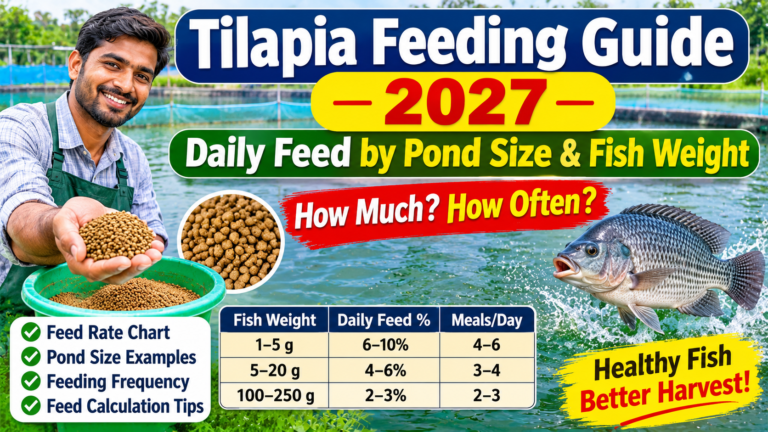
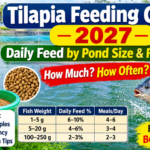 1. Introduction: Why Proper Tilapia Feeding Is Important Tilapia is … Read more
 2027 Mushroom Farming Project Report: Cost and Profit Analysis in … Read more
 2027 SEO Blog Article | Agriculture | Organic Farming | … Read more
 If you raise chickens, pigs, cattle, or fish, feed is … Read more
 Large-scale agricultural operations in 2027 will increasingly depend on automated … Read more