
Dragon fruit farming has emerged as a lucrative agribusiness opportunity due to rising global demand for exotic, nutrient-rich fruits. With proper management, innovative techniques, and strategic planning, a dragon fruit farm can yield high profits and long-term sustainability. This comprehensive 3000-word guide explores the best practices for managing and growing a successful dragon fruit farming business in 2025, covering cultivation techniques, market trends, financial planning, and expansion strategies.
Table of Contents
- Introduction to Dragon Fruit Farming in 2025
- Choosing the Right Dragon Fruit Varieties
- Optimal Climate and Soil Conditions
- Land Preparation and Planting Techniques
- Trellising and Support Systems
- Irrigation and Fertilization Strategies
- Pest and Disease Management
- Harvesting and Post-Harvest Handling
- Marketing and Sales Strategies
- Financial Planning and Profitability
- Scaling and Expanding Your Dragon Fruit Business
- Conclusion
1. Introduction to Dragon Fruit Farming in 2025
Dragon fruit (Hylocereus and Selenicereus spp.), also known as pitaya, is a tropical cactus fruit native to Central and South America but now widely cultivated in Asia, the U.S., and other warm regions . The global dragon fruit market is projected to grow at a CAGR of 9.47%, reaching $1.47 billion by 2030, driven by rising health consciousness and demand for exotic fruits .
Key factors contributing to its profitability include:
- High market value ($7–$8 per lb at farmers’ markets) .
- Low water requirements (25–50 inches annually) .
- Long productive lifespan (up to 30 years) .
- Diverse product applications (fresh fruit, juices, cosmetics, nutraceuticals) .
In 2025, successful dragon fruit farming requires a blend of traditional cultivation methods and modern agri-tech innovations to maximize yield and profitability.
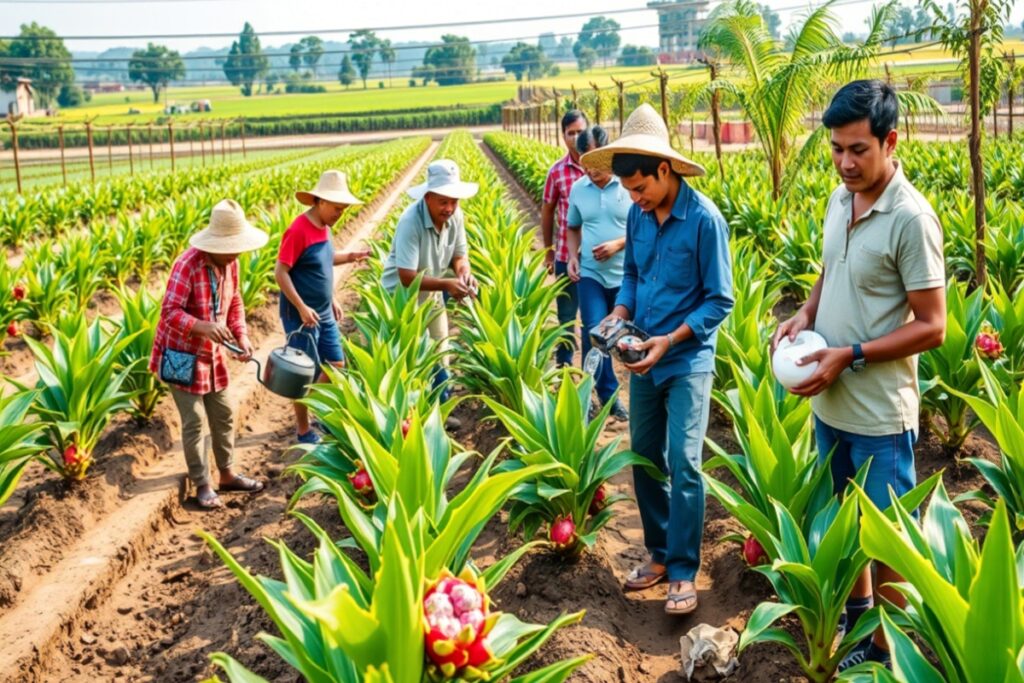
2. Choosing the Right Dragon Fruit Varieties
Selecting the best dragon fruit variety is crucial for commercial success. The most profitable types in 2025 include:
| Variety | Skin Color | Flesh Color | Key Features | Best For |
|---|---|---|---|---|
| Hylocereus undatus | Pink/Red | White | Mild flavor, high yield | Fresh markets, exports |
| Hylocereus costaricensis | Pink/Red | Deep Red | Sweet, rich flavor | Juices, value-added products |
| Selenicereus megalanthus | Yellow | White | Sweetest variety, thorny skin | Premium markets |
| Pink Champagne | Pink | Pink | Self-fertile, high Brix | High-end sales |
| Vietnamese Sweet White | Pink | White | High yield, disease-resistant | Commercial farming |
Self-fertile varieties (e.g., Pink Champagne, Common Red) are preferred for commercial farming to avoid pollination challenges .
3. Optimal Climate and Soil Conditions
Climate Requirements
- Temperature: 20°C–30°C (68°F–86°F) .
- Sunlight: 6–8 hours daily (partial shade in extreme heat) .
- Rainfall: 50 cm annually (drip irrigation recommended) .
Soil Conditions
- Type: Sandy loam or well-draining soil.
- pH: 5.5–7.0 .
- Organic matter: Compost or manure improves fertility .
Pro Tip: Avoid waterlogged soils to prevent root rot .
4. Land Preparation and Planting Techniques
Steps for Land Preparation
- Clear weeds and till soil to a fine tilth.
- Add organic compost (5–10 tons per acre).
- Install drip irrigation for efficient water use .
Planting Methods
- Cuttings (Preferred): Use 20 cm cuttings from healthy mother plants .
- Spacing: 1.8–3 meters between plants .
- Planting Depth: 5–10 cm, allowing roots to establish.
Note: Seed propagation is slow (6+ years to fruit) and not ideal for commercial farming .
5. Trellising and Support Systems
Dragon fruit is a climbing cactus requiring sturdy support. The trellis system is the most efficient for commercial farming:
| Trellis Type | Material | Advantages | Best For |
|---|---|---|---|
| Concrete Posts | Cement, rebar | Long-lasting, sturdy | Large-scale farms |
| Wooden Posts | Treated timber | Cost-effective | Small to medium farms |
| Metal Frame | Steel pipes | Easy to install | High-density planting |
Training Technique: Guide vines to the top of the trellis for optimal sunlight exposure .
6. Irrigation and Fertilization Strategies
Irrigation
- Drip irrigation is ideal for water efficiency .
- Watering frequency:
- Growth phase: 2–3 times per week.
- Fruiting phase: Increase slightly.
- Dormancy (winter): Reduce watering .
Fertilization
- NPK Ratio: 6-6-6 or 8-3-9 (higher potassium for fruiting) .
- Organic options: Compost tea, fish emulsion.
- Frequency: Every 2 months during growing season .
7. Pest and Disease Management
Dragon fruit is relatively pest-resistant but faces some challenges:
| Issue | Symptoms | Solution |
|---|---|---|
| Anthracnose | Dark spots on fruit | Copper-based fungicides |
| Stem Rot | Soft, discolored stems | Improve drainage, avoid overwatering |
| Mealybugs | White cottony patches | Neem oil or insecticidal soap |
| Aphids | Curling leaves | Beneficial insects (ladybugs) |
Preventive Measures:
- Regular pruning for airflow.
- Sanitize tools to avoid disease spread .
8. Harvesting and Post-Harvest Handling
Harvesting
- First harvest: 6–18 months after planting .
- Peak season: August–December (varies by variety) .
- Signs of ripeness:
- Color change (pink/red/yellow).
- Slight softness when pressed.
Post-Harvest Tips
- Harvest timing: 3–4 days after color change for local markets, 1 day for exports .
- Storage: 10°C (50°F) with 90% humidity for extended shelf life .
9. Marketing and Sales Strategies
Target Markets
- Fresh fruit sales: Farmers’ markets, supermarkets, online stores.
- Processed products: Juices, jams, ice cream, cosmetics .
- Export opportunities: China, U.S., Europe .
Branding & Pricing
- Premium pricing: Organic dragon fruit sells for $57.50 per 10 lbs wholesale .
- Agritourism: Farm tours, pick-your-own events boost revenue .
10. Financial Planning and Profitability
Cost Breakdown (Per Acre)
| Expense | Estimated Cost (USD) |
|---|---|
| Land prep & trellis | $2,000–$5,000 |
| Plants (500 cuttings) | $1,500–$3,000 |
| Irrigation | $1,000–$2,500 |
| Fertilizers & pest control | $500–$1,200 |
| Labor | $2,000–$4,000 |
Revenue Potential
- Yield: 5–6 tons per acre .
- Profit margin: 40–60% (depending on market prices).
Break-even: Typically in 2–3 years .
11. Scaling and Expanding Your Dragon Fruit Business
Growth Strategies
- Diversify products: Value-added goods (dried slices, supplements).
- Export partnerships: Use logistics providers like FedEx for global shipping .
- Collaborate with universities for R&D (e.g., hybrid varieties) .
Technology Integration
- AI & IoT: Soil sensors for precision farming .
- E-commerce: Direct-to-consumer sales via Shopify, Amazon.
12. Conclusion
Dragon fruit farming in 2025 offers high profitability with the right approach. By selecting optimal varieties, implementing efficient trellising, and leveraging modern marketing strategies, farmers can tap into the growing global demand. With low pest risks, drought tolerance, and multiple revenue streams, dragon fruit is an excellent agribusiness choice for sustainable income
2025 Guide to Managing and Growing a Profitable Dragon Fruit Farm Business
Introduction
Dragon fruit (pitaya) is a lucrative crop due to its rising demand in health-conscious and exotic markets. This guide outlines strategies to establish and scale a profitable dragon fruit farm, incorporating 2025 trends and sustainable practices.
1. Planning & Setup
- Location Selection: Tropical/subtropical climates with temperatures 20-30°C, 6+ hours of sunlight, and frost-free conditions.
- Variety Choice: Opt for high-yield, disease-resistant varieties (e.g., Hylocereus undatus for white flesh, Hylocereus costaricensis for red flesh).
- Soil Preparation: Well-draining sandy loam soil (pH 6–7), enriched with organic compost.
- Trellis Systems: Use durable materials (concrete, wood) for vertical growth. Space plants 2–3m apart for airflow and sunlight.
2. Cultivation Best Practices
- Planting: Propagate via cuttings (faster yield) or seeds. Plant 15–20 cm deep.
- Irrigation: Drip systems to avoid waterlogging; water 2–3 times/week in dry seasons.
- Fertilization: Balanced NPK (10-10-10) and micronutrients (calcium, magnesium). Organic options like compost tea.
- Pruning: Remove dead/damaged stems to boost productivity.
- Pollination: Hand-pollinate nocturnal flowers (using brushes) if natural pollinators (bats, moths) are scarce.
3. Pest & Disease Management
- Common Pests: Mealybugs, scale insects—control with neem oil or insecticidal soap.
- Diseases: Anthracnose (fungal)—apply copper-based fungicides. Prevent stem rot via proper drainage.
- IPM: Regular monitoring, sanitation, and biological controls (ladybugs for aphids).
4. Harvesting & Post-Harvest
- Harvesting: When skin turns vibrant pink/red and fruit slightly soft (30–50 days post-flowering).
- Storage: Keep at 10–12°C with 85–90% humidity for 2–3 weeks.
- Value-Added Products: Juices, jams, dried snacks, or cosmetics (oil from seeds).
5. Marketing & Sales
- Branding: Emphasize health benefits (antioxidants, vitamins) and exotic appeal.
- Channels: Farmers’ markets, online platforms (e-commerce, social media), export partnerships.
- Agritourism: Offer tours, U-pick events, or workshops to diversify revenue.
6. Financial Management
- Costs: Initial setup (~$15,000–$30,000/acre for trellises, plants, irrigation).
- Revenue: Fresh fruit ($5–$10/kg), value-added products, agritourism.
- Profitability: Achieve ROI in 3–5 years; optimize via crop rotation and intercropping.
7. Sustainability Practices
- Water Conservation: Drip irrigation, rainwater harvesting.
- Organic Certification: Avoid synthetic inputs; use compost and biocontrols.
- Waste Management: Convert pruning waste into mulch or compost.
8. Future Trends (2025)
- Tech Integration: IoT sensors for soil/weather monitoring, automated harvesting robots.
- New Markets: Plant-based diets, functional foods, and beauty products.
- Climate Resilience: Drought-tolerant varieties and shade nets for extreme weather.
FAQs
Q: What climate is best for dragon fruit?
A: Tropical/subtropical zones with 20–30°C, minimal frost, and 6+ hours of sunlight.
Q: How long until first harvest?
A: 6–12 months from cuttings; 18–24 months from seeds.
Q: What’s the average yield per acre?
A: 10–30 tons annually, depending on variety and management.
Q: Can I grow dragon fruit organically?
A: Yes! Use compost, neem oil, and biocontrols. Certification requires 3+ years of organic practices.
Q: How to manage pests without chemicals?
A: Introduce beneficial insects (ladybugs), apply neem oil, and maintain field hygiene.
Q: Is hand pollination necessary?
A: For self-sterile varieties, yes. Use a brush to transfer pollen at night.
Q: Ideal soil pH?
A: 6–7. Test soil annually and amend with lime (if acidic) or sulfur (if alkaline).
Q: How profitable is dragon fruit farming?
A: High margins due to demand. Diversify with value-added products and agritourism for increased income.
Q: What are key challenges?
A: Pest outbreaks, climate sensitivity, and market competition. Mitigate via IPM, insurance, and niche branding.
Final Tips
- Conduct market research to identify demand gaps.
- Invest in technology for efficiency and yield tracking.
- Network with agricultural extensions for latest practices.
