
As urbanization and demand for fresh produce rise, indoor farming in India is poised for growth. Here are the top 20 profitable ideas for 2025, tailored to India’s market and climate:
Indoor farming is an emerging sector in India, driven by urbanization, population growth, and the increasing demand for fresh, pesticide-free produce. With advancements in technology and a focus on sustainability, indoor farming offers lucrative opportunities for entrepreneurs and investors. Below are 20 profitable indoor farming ideas tailored to India’s market and climate, along with detailed explanations:
1. Hydroponic Vegetable Farming
- What it is: Growing vegetables like lettuce, spinach, kale, and tomatoes without soil, using nutrient-rich water solutions.
- Why it works: Hydroponics saves 90% water compared to traditional farming and allows year-round cultivation.
- Market Opportunity: High demand in urban areas for fresh, chemical-free greens.
2. Vertical Farming
- What it is: Multi-layered farming systems that maximize space by growing crops vertically.
- Why it works: Ideal for urban areas with limited land availability. Reduces transportation costs for fresh produce.
- Market Opportunity: Perfect for supplying metropolitan cities like Mumbai, Delhi, and Bangalore.
3. Aquaponics Systems
- What it is: Combining aquaculture (raising fish) and hydroponics to create a symbiotic ecosystem.
- Why it works: Fish waste provides nutrients for plants, while plants purify water for fish. It’s sustainable and eco-friendly.
- Market Opportunity: Dual income streams from selling fish and vegetables.
4. Microgreens Cultivation
- What it is: Growing small, nutrient-dense greens like radish, mustard, and broccoli sprouts.
- Why it works: Microgreens fetch premium prices due to their high nutritional value and short growth cycle (7–14 days).
- Market Opportunity: Popular among health-conscious consumers and gourmet restaurants.
5. Mushroom Farming
- What it is: Cultivating mushrooms like oyster, button, and shiitake indoors.
- Why it works: Requires minimal space, low investment, and has a quick turnaround time.
- Market Opportunity: Rising demand for mushrooms in vegetarian diets and export markets.
6. Aeroponic Farming
- What it is: Growing plants in air or mist environments without soil or aggregate medium.
- Why it works: Uses 98% less water than traditional farming and produces faster yields.
- Market Opportunity: Suitable for high-value crops like strawberries and herbs.
7. Smart Greenhouses
- What it is: Controlled-environment agriculture using IoT-enabled sensors for temperature, humidity, and light control.
- Why it works: Ensures optimal growing conditions, reduces resource wastage, and increases yield.
- Market Opportunity: Ideal for tech-savvy farmers and large-scale commercial operations.
8. Herb Farming
- What it is: Growing aromatic and medicinal herbs like basil, mint, coriander, and tulsi.
- Why it works: Herbs have high profit margins and are used in Indian cuisine and Ayurveda.
- Market Opportunity: Increasing demand in pharmaceuticals, cosmetics, and culinary industries.
9. Exotic Vegetable Farming
- What it is: Cultivating exotic vegetables like zucchini, red bell peppers, and cherry tomatoes.
- Why it works: These vegetables command premium prices and cater to urban elites.
- Market Opportunity: Rising trend of international cuisines in India.
10. Edible Flower Farming
- What it is: Growing edible flowers like marigold, rose, and nasturtium for garnishing and culinary use.
- Why it works: Unique product with niche appeal and high profitability.
- Market Opportunity: Restaurants, bakeries, and florists are potential buyers.
11. Seedling Production
- What it is: Producing high-quality seedlings for other farmers and gardeners.
- Why it works: Low initial investment and consistent demand from traditional farmers.
- Market Opportunity: Essential for crop rotation and seasonal farming practices.
12. Organic Indoor Farming
- What it is: Growing organic-certified fruits, vegetables, and herbs indoors without synthetic pesticides.
- Why it works: Aligns with the growing preference for organic products in India.
- Market Opportunity: Premium pricing and government support for organic farming.
13. Urban Rooftop Farms
- What it is: Converting rooftops into productive farmland using hydroponics or container gardening.
- Why it works: Utilizes unused urban spaces and reduces food miles.
- Market Opportunity: Community-supported agriculture (CSA) models can be implemented.
14. LED-Grown Crops
- What it is: Using energy-efficient LED lights to grow crops in fully controlled environments.
- Why it works: Mimics sunlight, enabling farming in basements or warehouses.
- Market Opportunity: Reduces dependency on natural sunlight and weather conditions.
15. Floriculture Indoors
- What it is: Growing ornamental flowers like orchids, lilies, and chrysanthemums indoors.
- Why it works: Flowers are perennially in demand for festivals, weddings, and home decor.
- Market Opportunity: Export potential to Gulf countries and Europe.
16. Insect Farming
- What it is: Raising insects like crickets and mealworms for protein-rich animal feed or human consumption.
- Why it works: High protein content and minimal resource requirements make insect farming sustainable.
- Market Opportunity: Emerging trend in alternative protein sources.
17. Biopharmaceutical Crops
- What it is: Growing plants like tobacco and saffron for extracting bioactive compounds used in medicines.
- Why it works: High-value crops with applications in pharma and nutraceuticals.
- Market Opportunity: Collaboration with pharmaceutical companies for raw materials.
18. Subscription-Based Salad Kits
- What it is: Offering ready-to-grow salad kits with seeds, nutrients, and instructions.
- Why it works: Appeals to DIY enthusiasts and urban households with limited gardening experience.
- Market Opportunity: Subscription model ensures recurring revenue.
19. Educational Farming Centers
- What it is: Setting up indoor farms as learning hubs for schools, colleges, and hobbyists.
- Why it works: Combines education with hands-on experience in sustainable agriculture.
- Market Opportunity: Partnerships with educational institutions and corporate CSR programs.
20. Farm-to-Table Restaurants
- What it is: Operating restaurants where ingredients are sourced directly from onsite indoor farms.
- Why it works: Offers ultra-fresh produce and enhances customer trust in food quality.
- Market Opportunity: Growing interest in farm-to-table dining experiences.

Key Factors for Success in Indoor Farming
- Technology Integration: Use IoT, AI, and automation for efficient resource management.
- Government Support: Leverage subsidies and incentives for sustainable agriculture.
- Market Research: Understand local preferences and price points before starting.
- Partnerships: Collaborate with retailers, restaurants, and e-commerce platforms for distribution.
- Training: Equip staff with skills in modern farming techniques.
- Hydroponic Leafy Greens
Grow spinach, kale, or lettuce without soil. High demand in cities ensures quick returns with minimal water usage. - Aeroponic Herb Gardens
Cultivate basil, mint, or coriander using mist nutrients. Ideal for restaurants and health-conscious consumers. - Aquaponic Systems
Integrate fish farming with plant cultivation (e.g., tomatoes, cucumbers). Sustainable and dual-income streams. - Vertical Vegetable Farming
Maximize space in cities like Mumbai or Delhi by stacking layers for veggies like okra or beans. - Microgreens Production
High-value crops like radish or sunflower microgreens cater to gourmet kitchens and fitness enthusiasts. - Mushroom Cultivation
Oyster or button mushrooms thrive in controlled environments, requiring low investment and space. - Medicinal Plants (Tulsi, Aloe Vera)
Tap into Ayurveda’s popularity with organic Tulsi or Aloe Vera for pharma and wellness brands. - Exotic Vegetables (Bell Peppers, Zucchini)
Supply premium supermarkets and expat communities with hydroponically grown exotic produce. - Strawberry Vertical Farms
Use stacked trays in climate-controlled setups for year-round berry production. - Edible Flowers
Grow marigolds or roses for upscale hotels and event planners. - Sprouts Production
Quick-turnaround crops like moong or alfalfa sprouts for salads and sandwiches. - Hydroponic Fodder
Provide nutrient-rich barley or wheatgrass to dairy farms, enhancing milk production. - Spirulina Cultivation
Produce protein-rich algae for health supplements, targeting fitness and vegan markets. - Organic Fertilizer from Waste
Convert farm residues into compost, aligning with India’s push for organic agriculture. - Urban Rooftop Gardens
Lease rooftops in cities to grow herbs or veggies, reducing transportation costs. - Automated Farming Solutions
Sell IoT-based systems (e.g., smart irrigation) to urban farmers. - Bamboo Shoots
Cultivate shoots for culinary use, popular in Northeastern cuisine. - Stevia Farming
Meet sugar-free trends by growing this natural sweetener indoors. - Saffron Cultivation
Replicate Kashmir’s climate for high-value saffron using controlled environments. - Ornamental Plant Nurseries
Grow succulents or bonsai for urban homeowners and offices.
Top 20 Profitable Indoor Farming Business Ideas in India (2025)
Below is a table summarizing the top 20 profitable indoor farming business ideas tailored to India’s market and climate:
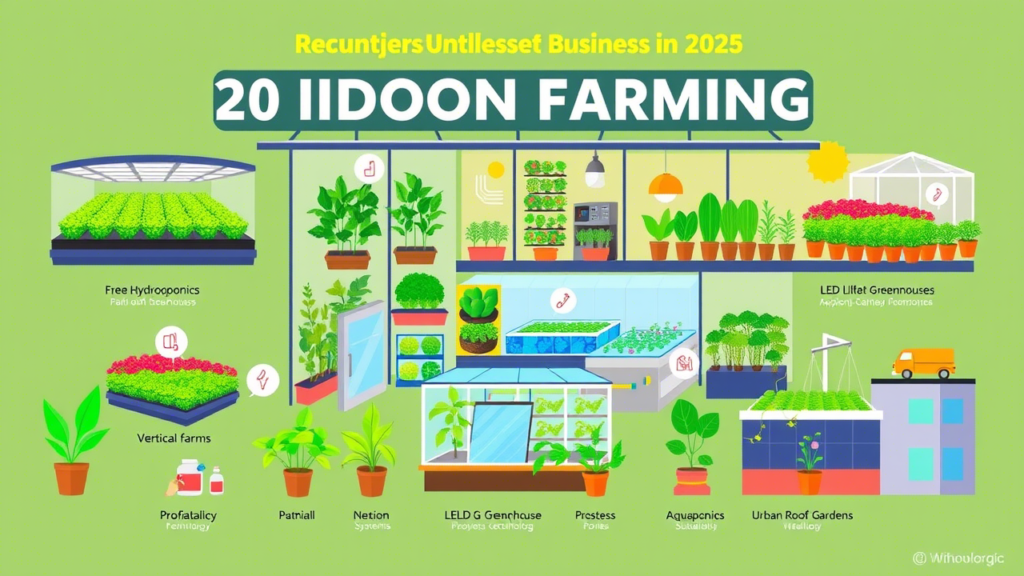
| S.No. | Business Idea | Key Features | Market Opportunity |
|---|---|---|---|
| 1 | Hydroponic Vegetable Farming | Soil-less farming, water-efficient, year-round cultivation | Urban areas with high demand for fresh greens |
| 2 | Vertical Farming | Multi-layered systems, space-saving, ideal for cities | Supply to metropolitan cities like Mumbai, Delhi, and Bangalore |
| 3 | Aquaponics Systems | Combines fish farming and hydroponics for a sustainable ecosystem | Dual income streams from fish and vegetables |
| 4 | Microgreens Cultivation | Nutrient-dense greens, short growth cycle (7–14 days), premium pricing | Health-conscious consumers and gourmet restaurants |
| 5 | Mushroom Farming | Minimal space, low investment, quick turnaround | Rising demand in vegetarian diets and export markets |
| 6 | Aeroponic Farming | Plants grown in air/mist, uses 98% less water | High-value crops like strawberries and herbs |
| 7 | Smart Greenhouses | IoT-enabled sensors for temperature, humidity, and light control | Tech-savvy farmers and large-scale commercial operations |
| 8 | Herb Farming | Aromatic and medicinal herbs like basil, mint, and tulsi | Used in Indian cuisine, Ayurveda, pharmaceuticals, and cosmetics |
| 9 | Exotic Vegetable Farming | Zucchini, red bell peppers, cherry tomatoes | Rising trend of international cuisines |
| 10 | Edible Flower Farming | Marigold, rose, nasturtium for garnishing and culinary use | Restaurants, bakeries, and florists |
| 11 | Seedling Production | Producing high-quality seedlings for other farmers | Consistent demand from traditional farmers |
| 12 | Organic Indoor Farming | Organic-certified produce without synthetic pesticides | Premium pricing and government support for organic farming |
| 13 | Urban Rooftop Farms | Converting rooftops into productive farmland using hydroponics | Community-supported agriculture (CSA) models |
| 14 | LED-Grown Crops | Energy-efficient LED lights mimic sunlight for indoor farming | Reduces dependency on natural sunlight and weather conditions |
| 15 | Floriculture Indoors | Ornamental flowers like orchids, lilies, and chrysanthemums | Festivals, weddings, and home decor; export potential |
| 16 | Insect Farming | Raising crickets and mealworms for protein-rich feed or human consumption | Emerging trend in alternative protein sources |
| 17 | Biopharmaceutical Crops | Tobacco, saffron for bioactive compounds used in medicines | Collaboration with pharmaceutical companies |
| 18 | Subscription-Based Salad Kits | Ready-to-grow salad kits with seeds, nutrients, and instructions | Recurring revenue through subscription models |
| 19 | Educational Farming Centers | Learning hubs for schools, colleges, and hobbyists | Partnerships with educational institutions and corporate CSR programs |
| 20 | Farm-to-Table Restaurants | Restaurants sourcing ingredients directly from onsite indoor farms | Growing interest in farm-to-table dining experiences |
Frequently Asked Questions (FAQs)
Q1: What is indoor farming?
A: Indoor farming refers to growing crops in controlled environments such as greenhouses, warehouses, or rooftops using techniques like hydroponics, aeroponics, or aquaponics. It eliminates dependency on soil, sunlight, and weather conditions.
Q2: Why is indoor farming gaining popularity in India?
A: Indoor farming is gaining traction in India due to:
- Rising urbanization and limited arable land.
- Increasing demand for fresh, pesticide-free produce.
- Water scarcity and the need for sustainable agricultural practices.
- Government incentives for innovative farming methods.
Q3: How much investment is required to start an indoor farming business?
A: The investment varies based on the scale and technology used:
- Small-scale setups (e.g., microgreens, mushroom farming): ₹1–5 lakhs.
- Medium-scale setups (e.g., hydroponics, vertical farming): ₹5–20 lakhs.
- Large-scale setups (e.g., smart greenhouses, aquaponics): ₹20 lakhs to crores.
Q4: Which crops are best suited for indoor farming in India?
A: Some of the best crops for indoor farming include:
- Leafy greens: Lettuce, spinach, kale.
- Herbs: Basil, mint, coriander, tulsi.
- Vegetables: Tomatoes, cucumbers, bell peppers.
- Exotic crops: Strawberries, zucchini, cherry tomatoes.
- Mushrooms: Oyster, button, shiitake.
Q5: Is indoor farming profitable in India?
A: Yes, indoor farming is highly profitable due to:
- High demand for fresh, chemical-free produce.
- Year-round cultivation and faster yield cycles.
- Premium pricing for organic and exotic crops.
- Government subsidies and export opportunities.
Q6: What are the challenges of indoor farming in India?
A: Challenges include:
- High initial setup costs for advanced technologies.
- Limited awareness and technical expertise among farmers.
- Dependence on electricity for artificial lighting and climate control.
- Competition from traditional farming during favorable seasons.
Q7: Can I start indoor farming without prior experience?
A: Yes, beginners can start with low-cost, low-risk options like mushroom farming, microgreens cultivation, or herb farming. Training programs and online resources are widely available to help new entrepreneurs.
Q8: Are there government schemes supporting indoor farming in India?
A: Yes, the Indian government offers several schemes:
- Pradhan Mantri Krishi Sinchayee Yojana (PMKSY): Focuses on water-efficient farming.
- Mission for Integrated Development of Horticulture (MIDH): Supports horticulture and floriculture.
- Rashtriya Krishi Vikas Yojana (RKVY): Provides grants for innovative farming projects.
- Subsidies for greenhouse and drip irrigation systems.
Q9: How can I market my indoor farming products?
A: Effective marketing strategies include:
- Partnering with local grocery stores, supermarkets, and e-commerce platforms.
- Selling directly to restaurants, hotels, and catering businesses.
- Participating in farmers’ markets and food expos.
- Building a strong online presence through social media and websites.
Q10: What is the future of indoor farming in India?
A: The future of indoor farming in India looks promising due to:
- Rapid urbanization and population growth.
- Increasing consumer awareness about health and sustainability.
- Advancements in agri-tech and automation.
- Supportive government policies and investments in agritech startups.
FAQs
- What’s the most profitable crop?
Microgreens and mushrooms offer high margins due to low space and quick growth. - Space requirements?
As small as 500 sq. ft. (e.g., mushrooms) to 2,000+ sq. ft. for vertical farms. - Challenges?
High initial costs (tech setup) and electricity; mitigate with solar panels. - Organic certification?
Yes! Use natural pest control and organic nutrients. - Marketing strategies?
Partner with supermarkets, use platforms like BigBasket, or target hotels directly. - Government support?
Subsidies for agritech under schemes like MIDH (Mission for Integrated Horticulture). - ROI timeline?
1–3 years, depending on crop and scale. - Pest management?
Controlled environments reduce risks; use neem oil or biocontrol agents.
Conclusion
Indoor farming in India merges tradition with innovation, offering solutions to food security and urban demand. With 2025’s tech advancements and sustainability focus, entrepreneurs can tap into niche markets while contributing to a greener economy. Start small, leverage local demand, and scale smartly!
Explore these ideas, attend agritech workshops, and join India’s indoor farming revolution! 🌱
