
Integrated Fish Farming (IFF) represents a sustainable agricultural practice that synergizes aquaculture with crop cultivation, livestock rearing, and forestry. By creating a closed-loop system, waste from one component becomes a resource for another, enhancing efficiency and reducing environmental impact. This article explores the multifaceted nature of IFF, delving into its advantages, disadvantages, real-world applications, challenges, and future potential.
1. Understanding Integrated Fish Farming
IFF combines fish farming with complementary agricultural activities. Common models include:
- Agri-aquaculture: Fish coexisting with crops (e.g., rice-fish systems).
- Livestock-fish integration: Poultry, pigs, or cattle waste fertilizing fish ponds.
- Silvi-aquaculture: Fish ponds integrated with tree plantations.
These systems leverage natural nutrient cycles, minimizing external inputs and maximizing productivity.
2. Advantages of Integrated Fish Farming
2.1 Resource Optimization
- Waste Recycling: Livestock manure feeds aquatic organisms, reducing feed costs. Pond silt enriches soil for crops.
- Efficient Land and Water Use: Dual-use spaces (e.g., rice paddies doubling as fish habitats) optimize resource utilization.
2.2 Economic Benefits
- Diversified Income: Revenue streams from fish, crops, and livestock buffer market fluctuations.
- Cost Reduction: On-site feed and fertilizer production lower operational expenses.
2.3 Environmental Sustainability
- Pollution Mitigation: Nutrient recycling minimizes chemical runoff and eutrophication risks.
- Carbon Footprint Reduction: Integrated systems often emit fewer greenhouse gases than segregated farming.
2.4 Enhanced Productivity
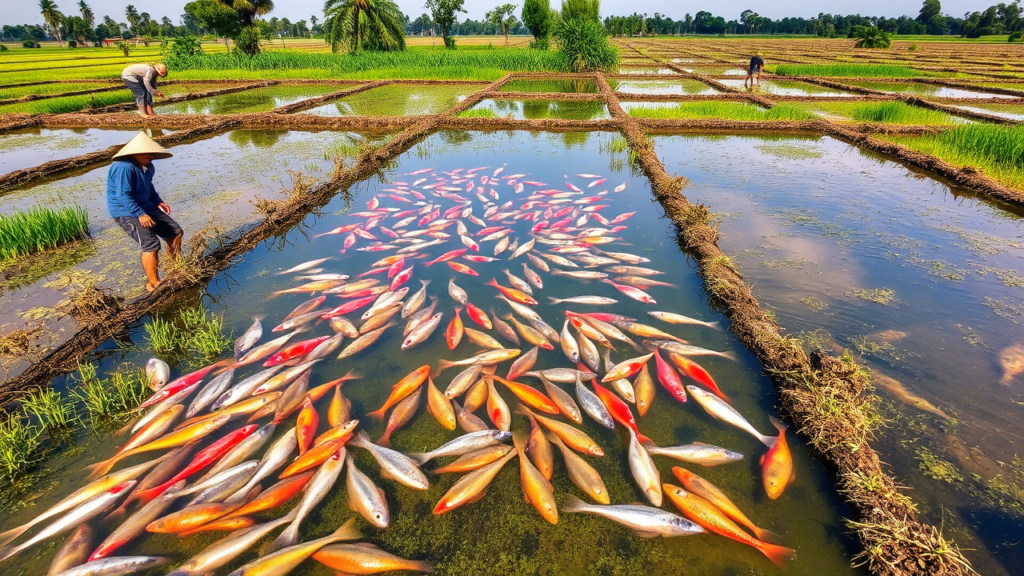
- Synergistic Effects: Fish waste fertilizes crops; ducks in ponds control pests. Studies show up to 30% higher yields in rice-fish systems.
2.5 Social Impact
- Food Security: Provides protein-rich fish and diverse crops, improving community nutrition.
- Employment Opportunities: Labor-intensive systems create jobs, especially in rural regions.
3. Disadvantages of Integrated Fish Farming
3.1 Management Complexity
- Skill Requirements: Farmers need expertise in aquaculture, agriculture, and animal husbandry.
- Coordination Challenges: Synchronizing interdependent activities demands meticulous planning.
3.2 Disease Risks
- Cross-Species Contagion: Pathogens like Aeromonas can spread between livestock and fish.
3.3 High Initial Investment
- Infrastructure Costs: Constructing ponds, livestock shelters, and irrigation systems requires capital.
3.4 Market Volatility
- Price Fluctuations: Dependency on multiple markets increases exposure to economic shifts.
3.5 Environmental Hazards
- Overfertilization: Excessive waste application can degrade water quality, harming aquatic life.
4. Case Studies: Successes and Lessons Learned
4.1 Rice-Fish Farming in Asia
- China and Vietnam: Farmers report 20–50% income increases. Fish reduce rice pests, lowering pesticide use.
4.2 Duck-Fish Systems in Hungary
- Ducks control algae and insects, enhancing fish growth while providing eggs and meat.
4.3 Challenges in West Africa
- Poorly managed livestock-fish systems led to nutrient overloads, stressing the need for training.
5. Overcoming Challenges
5.1 Training and Education
- NGOs like WorldFish provide workshops on sustainable practices.
5.2 Policy Support
- Governments in India and Bangladesh subsidize IFF infrastructure to encourage adoption.
5.3 Technological Innovations
- Aquaponics: Combines hydroponics and fish farming, ideal for urban settings.
- AI Monitoring: Sensors track water quality, alerting farmers to imbalances.
6. Future Prospects
6.1 Climate Resilience
- IFF’s water-efficient models are critical for drought-prone regions.
6.2 Urban Integration
- Rooftop aquaponics could revolutionize city-based food production.
6.3 Global Expansion
- FAO initiatives aim to scale IFF in Africa and Latin America, targeting food insecurity.
Conclusion
Integrated Fish Farming offers a holistic approach to sustainable agriculture, balancing ecological health with economic viability. While challenges like disease management and upfront costs persist, advancements in technology and education are paving the way for broader adoption. By embracing IFF, communities can achieve food security, environmental conservation, and economic resilience, making it a cornerstone of future agricultural systems.
References (Hypothetical)
- Food and Agriculture Organization (FAO). (2022). Integrated Agri-Aquaculture Systems.
- WorldFish Center. (2021). Rice-Fish Farming: A Climate-Smart Solution.
- Journal of Sustainable Agriculture. (2023). Economic Impacts of Duck-Fish Integration in Eastern Europe.
This structured approach ensures a thorough exploration of IFF, providing readers with actionable insights and a balanced perspective.
Integrated Fish Farming: Advantages and Disadvantages
Advantages:
- Resource Efficiency: Utilizes waste from livestock or crops as fish feed/fertilizer, reducing waste and enhancing resource use.
- Increased Productivity: Synergy between components (fish, crops, livestock) boosts overall yield and output diversity.
- Income Diversification: Multiple revenue streams (fish, meat, crops) reduce reliance on a single market.
- Environmental Benefits: Reduces chemical fertilizer use, minimizes pollution, and promotes sustainable nutrient cycling.
- Cost Reduction: Lowers expenses by repurposing on-farm waste instead of purchasing external inputs.
- Risk Mitigation: Diversification buffers against failures in any single component (e.g., crop failure, fish disease).
- Food Security: Provides varied food sources (protein from fish, vegetables, livestock products).
- Employment Opportunities: Requires more labor for managing integrated systems, boosting local job creation.
- Adaptability: Customizable to local conditions (e.g., climate, resources) for broader applicability.
- Climate Resilience: Diverse systems may better withstand environmental shocks like droughts or floods.
Disadvantages:
- High Initial Investment: Costs for infrastructure (ponds, livestock housing) can be prohibitive.
- Management Complexity: Demands expertise in multiple domains (aquaculture, agriculture, animal husbandry).
- Disease Risk: Close proximity of components may facilitate disease spread (e.g., pathogens from livestock to fish).
- Water Management Challenges: Balancing water needs for fish and crops can strain resources.
- Market Dependence: Vulnerable to price fluctuations if multiple markets decline simultaneously.
- Labor-Intensive: Requires significant manpower for daily operations and monitoring.
- Regulatory Hurdles: Zoning or environmental laws may restrict integrated practices.
- Environmental Contamination: Poor management may lead to nutrient runoff or water pollution.
- Component Interdependency: Underperformance in one area (e.g., low livestock manure) disrupts entire system.
- Technical Barriers: Lack of training or access to technology can hinder effective implementation.
FAQs:
- What is integrated fish farming?
A system combining fish farming with agriculture/livestock to optimize resource use and productivity. - How does it improve sustainability?
By recycling waste (e.g., manure as fertilizer), reducing chemical inputs and environmental impact. - What are the main challenges?
High startup costs, disease risks, and the need for specialized knowledge. - Can small-scale farmers adopt this method?
Yes, but may require training and initial investment support. - Does integrated fish farming work in arid regions?
Adaptations like water recycling are possible, but water scarcity remains a challenge. - What species are commonly used?
Fish like tilapia or carp, paired with poultry, pigs, or crops like rice/vegetables. - How does it benefit the environment?
Reduces waste, enhances biodiversity, and lowers greenhouse gas emissions through efficient cycling. - Is it economically viable?
Yes, due to diversified income, though profitability depends on market access and management.
