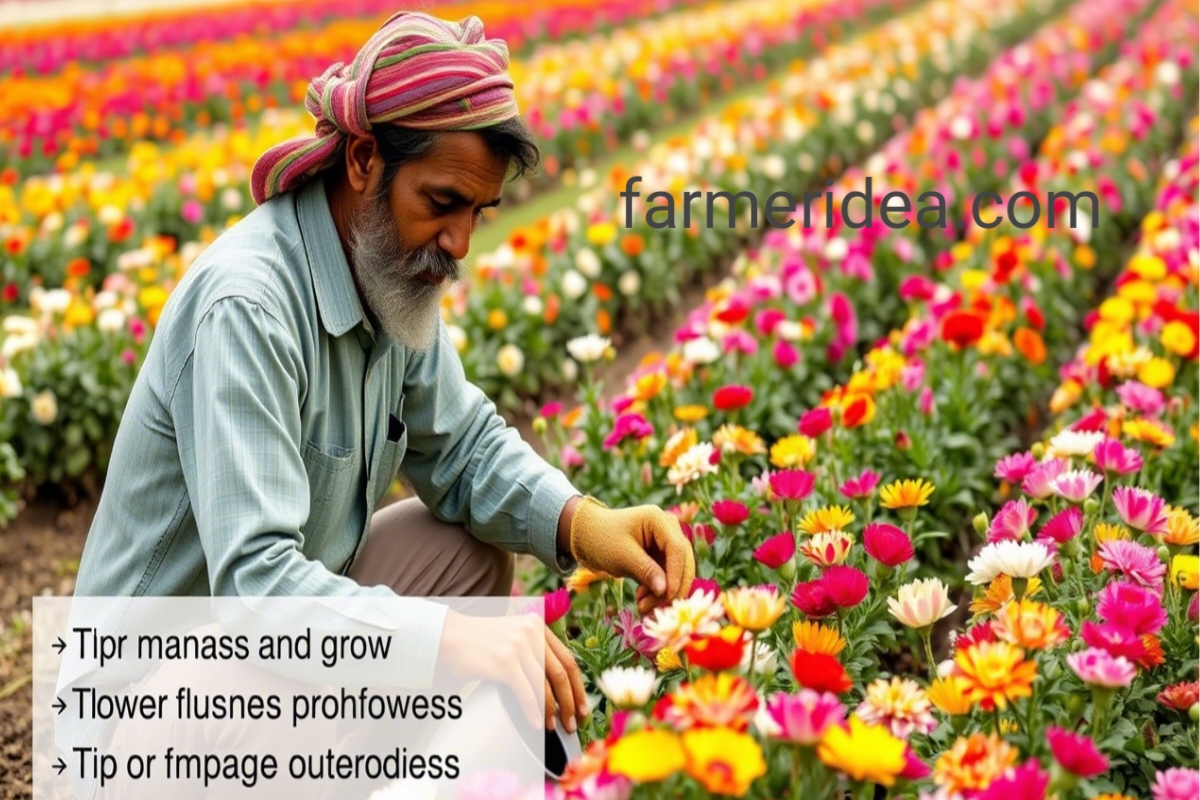
The floriculture industry in India is experiencing a vibrant boom, driven by rising demand for flowers in weddings, religious ceremonies, festivals, and urban lifestyles. With the market projected to reach ₹714.6 billion by 2032 , flower farming presents a lucrative opportunity for entrepreneurs. However, success requires strategic planning, efficient resource management, and innovative marketing. This guide explores actionable steps to establish and scale a profitable flower farming business in India.
1. Market Research and Business Planning
Identify Demand and Competition
Before investing, analyze local demand for specific flowers (e.g., marigolds for festivals, roses for weddings) and assess competition. For instance, Karnataka, Tamil Nadu, and Andhra Pradesh dominate flower production, but niche markets like exotic orchids or dried flowers remain underserved . Conduct surveys or collaborate with local event planners to identify gaps, such as demand for chemical-free or sustainably grown blooms .
Choose a Business Model
Tailor your model to your resources and goals:
- Farm-to-Retail: Sell directly via farmers’ markets or subscription services. Sierra Flower Farm generated $12,000 in its first year through farmers’ markets and bouquet subscriptions .
- Wholesale Supplier: Partner with florists, hotels, or online platforms like Ferns N Petals .
- Event Floristry: Focus on weddings and corporate events, which account for 30% of floral sales .
- Value-Added Products: Explore dried flowers, essential oils, or floral-inspired skincare .
Draft a Business Plan
Include financial projections, marketing strategies, and risk assessments. For example, calculate costs for seeds, irrigation, labor, and post-harvest storage. A lean startup approach—starting with 1,000–2,000 sq. ft.—minimizes initial debt .
2. Optimizing Cultivation Practices
Site Selection and Infrastructure
- Sunlight and Soil: Ensure 6–8 hours of daily sunlight and well-draining soil. Raised beds or polyhouses can mitigate poor soil quality .
- Polyhouse Farming: Ideal for high-value crops like roses and orchids, polyhouses protect against weather extremes. The National Horticulture Board (NHB) offers subsidies for polyhouse setup .
- Water Management: Drip irrigation reduces waste, while rainwater harvesting ensures sustainability in arid regions .
Intensive Planting Techniques
Maximize yield in small spaces using methods from SPIN (Small Plot Intensive) farming:
- Succession Planting: Rotate crops like zinnias and celosia to ensure continuous harvests .
- Vertical Trellising: Grow vining crops (e.g., sweet peas) vertically to save space .
- Dense Spacing: Plant annuals at 7×7 inches for higher density. Sierra Flower Farm achieved 385 plants per 45-foot row using this method .
Crop Selection
Prioritize high-demand, low-maintenance varieties:
- Annuals: Marigolds, chrysanthemums, and sunflowers thrive in most climates.
- Exotics: Orchids and gerberas cater to premium markets but require polyhouse conditions .
- Foliage: Pair flowers with greens like eucalyptus or ferns to enhance bouquet value .
3. Financial Management and Budgeting
Minimize Startup Costs
- Seeds vs. Plugs: Start seeds indoors to save 60–70% over buying plugs .
- DIY Infrastructure: Use recycled materials for trellises or cold storage. One farmer repurposed a basement with fans and insulated walls as a makeshift cooler .
- Avoid Debt: Reinvest profits gradually. Sierra Flower Farm began with $3,000 and scaled over five years .
Track Expenses and Revenue
- Key Costs: Seeds ($200–$500/year), labor ($100–$300/month), and marketing (10–15% of revenue) .
- Pricing Strategy: Mark up flowers by 200–300% to cover perishability risks. For example, sell marigold garlands at ₹50–₹100 during festivals .
4. Marketing and Sales Strategies
Build a Brand Identity
- Niche Targeting: Specialize in organic flowers, heirloom varieties, or themed bouquets (e.g., “Wedding Bliss” collections) .
- Packaging: Use eco-friendly materials like banana fiber sleeves or recycled paper to attract eco-conscious buyers .
Leverage Digital Platforms
- Social Media: Instagram and Pinterest are ideal for showcasing floral designs. Post behind-the-scenes reels of harvests or DIY arrangement tutorials .
- E-Commerce: Partner with platforms like Amazon or BigBasket for online sales. Rose Bazaar, a Bengaluru startup, delivers 15,000 subscriptions monthly via Swiggy and Dunzo .
Community Engagement
- Workshops: Host flower-arranging classes or U-pick events to build customer loyalty .
- Collaborations: Partner with wedding planners or cafes for pop-up sales. For example, supply flowers for restaurant table settings in exchange for promotion .
5. Overcoming Challenges
Perishability and Logistics
- Cold Chain Management: Invest in refrigerated transport or pre-cooling units. APEDA subsidies cover 25–50% of cold storage costs .
- Quick Turnaround: Sell within 1–2 days of harvest. Florists in Mumbai’s Dadar market often auction flowers by 5 AM to ensure freshness .
Pest and Disease Control
- Organic Solutions: Use neem oil or garlic spray to combat aphids. Intercropping marigolds with roses deters nematodes .
- Regular Monitoring: Scout crops twice weekly for early signs of blight or mildew .
Policy and Subsidies
- Government Support: The CSIR Floriculture Mission provides training, seeds, and tax holidays for new farmers .
- Export Opportunities: Register with APEDA to access global markets. India exported $77.84 million worth of flowers in 2020–21, primarily to the USA and UAE .
6. Scaling Your Business
Expand Product Lines
- Dried Flowers: Preserve blooms using silica gel or air-drying. Dried lavender bundles sell for ₹300–₹500 online .
- Floral Workshops: Charge ₹1,000–₹2,000 per participant for seasonal wreath-making classes .
Invest in Technology
- Automated Irrigation: Install drip systems with timers to reduce labor costs .
- E-Commerce Analytics: Use tools like Google Analytics to track customer preferences and optimize inventory .
Collaborate with Farmers’ Collectives
Join cooperatives like the Karnataka Floriculture Society to bulk-purchase inputs and negotiate better prices for exports .
Conclusion: Blooming Opportunities Ahead
Flower farming in India is not just a business—it’s a blend of art, agriculture, and entrepreneurship. By adopting intensive farming techniques, leveraging government subsidies, and embracing digital marketing, growers can tap into a market poised for exponential growth. While challenges like perishability and climate risks persist, innovation and community-driven strategies offer pathways to resilience. As the CSIR Floriculture Mission fuels industry growth, now is the time to plant the seeds of a thriving floral enterpris
Flower Farming in India: Management and Business Growth Guide
1. Introduction
Flower farming in India is a lucrative venture due to high demand for religious, decorative, and export purposes. Key states include Karnataka, Tamil Nadu, West Bengal, and Maharashtra. Success hinges on strategic planning, market understanding, and sustainable practices.
2. Flower Selection
- Popular Flowers: Marigold, Jasmine, Rose, Chrysanthemum, Gerbera, Tuberose, and Orchids.
- Factors to Consider:
- Climate: Roses (cooler regions), Marigolds (tropical/subtropical).
- Market Demand: Festive demand (marigold, jasmine), exports (orchids, gerbera).
- Soil Type: Well-drained loamy soil (pH 6–7 for most flowers).
3. Cultivation Practices
- Propagation: Seeds (marigold), cuttings (rose), bulbs (tuberose).
- Planting:
- Spacing: Varies by flower (e.g., roses: 1.5–2 ft apart).
- Season: Marigold (monsoon), Jasmine (summer).
- Irrigation: Drip/sprinkler systems for water efficiency.
- Fertilization: Use organic compost (reduce costs, enhance soil health).
4. Pest & Disease Management
- Common Pests: Aphids, mites, thrips.
- Natural Solutions: Neem oil, biopesticides.
- Diseases: Powdery mildew, blight.
- Prevention: Crop rotation, field sanitation, resistant varieties.
5. Harvesting & Post-Harvest Care
- Timing: Early morning for freshness.
- Techniques: Use sharp tools to avoid damage.
- Storage: Cold storage (10–12°C for roses, chrysanthemums).
- Packaging: Ventilated boxes to prevent moisture buildup.
6. Business Growth Strategies
- Market Channels:
- Local markets, florists, online platforms (Flipkart, Amazon).
- Export via APEDA-certified channels.
- Value Addition: Dried flowers, essential oils, garlands.
- Branding: Quality certifications (ISO, Organic), eco-friendly packaging.
- Technology: Greenhouse cultivation, IoT-based monitoring.
7. Financial & Government Support
- Schemes: NHB subsidies, MIDH (Mission for Integrated Horticulture).
- Loans: NABARD offers agricultural loans.
- Insurance: Pradhan Mantri Fasal Bima Yojana (crop insurance).
8. FAQs
- Q1. Most profitable flowers?
Roses, gerbera, orchids (high export demand). - Q2. Challenges?
Climate risks, pest outbreaks, post-harvest losses. - Q3. How to manage transportation?
Partner with refrigerated logistics providers; target local markets first. - Q4. Organic farming benefits?
Higher premiums, eco-friendly appeal, and access to niche markets.
9. Key Tips
- Networking: Collaborate with wedding planners, event managers.
- Sustainability: Adopt rainwater harvesting, solar energy.
- Training: Attend KVK workshops for skill development.
- Risk Management: Diversify flower varieties to mitigate market fluctuations.
10. Conclusion
Flower farming in India offers scalability with proper planning. Focus on quality, adopt technology, and leverage
