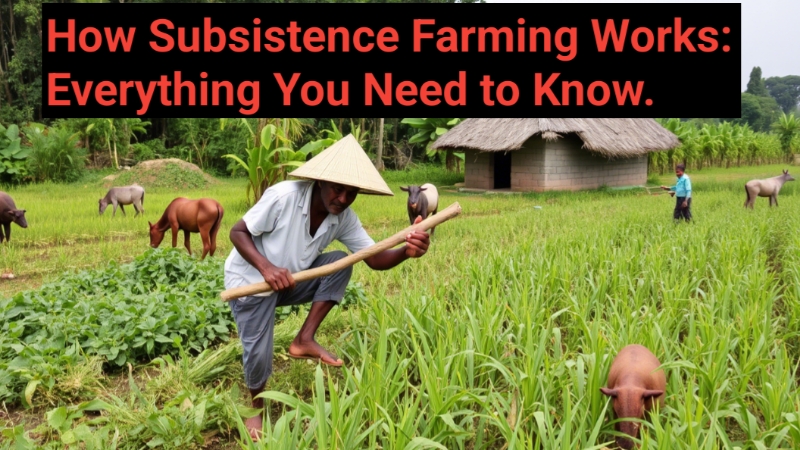
Here’s a human-written style SEO blog article on subsistence farming, designed to be informative and readable for a general audience while targeting search engines effectively:
Title: Understanding Subsistence Farming: A Closer Look at Traditional Agriculture
Introduction
In an era of industrial-scale agriculture and cutting-edge farming technology, subsistence farming remains a vital practice for millions of people worldwide. Often overshadowed by commercial agriculture, subsistence farming is a traditional method that sustains families and communities, particularly in developing countries. But what exactly is subsistence farming, and why is it still relevant today?
What is Subsistence Farming?
Subsistence farming is a type of agriculture where farmers grow food primarily to feed themselves and their families. Unlike commercial farming, which focuses on producing crops and livestock for sale, subsistence farming aims to meet the immediate food needs of the household. Any surplus, if available, might be traded locally but is not the primary goal.
This farming method is often characterized by:
- Small landholdings
- Manual labor or simple tools
- Mixed cropping systems
- Limited use of chemical fertilizers or pesticides
Key Features of Subsistence Farming
- Self-Sufficiency: Families rely on their own agricultural output for daily nutrition. They grow staples like maize, rice, potatoes, or cassava based on regional preferences.
- Low Technology Input: Most subsistence farmers use traditional techniques passed down through generations, with minimal mechanization.
- Labor-Intensive: Entire families often participate in farming activities, from planting and weeding to harvesting.
- Diverse Cropping: To reduce risk, farmers often grow a variety of crops on the same plot—this practice helps protect against total crop failure.

Where is Subsistence Farming Practiced?
Subsistence agriculture is commonly found in regions with lower economic development, such as:
- Sub-Saharan Africa
- South and Southeast Asia
- Parts of Latin America
- Remote rural areas globally
In these regions, limited access to modern farming equipment, markets, and infrastructure makes subsistence farming a necessity rather than a choice.
Benefits and Challenges
Benefits:
- Food Security at the Household Level
- Sustainable Practices: Many subsistence farmers use environmentally friendly methods by default.
- Cultural Preservation: Farming traditions and indigenous knowledge are often preserved through this form of agriculture.
Challenges:
- Vulnerability to Climate Change: Subsistence farmers are highly susceptible to droughts, floods, and shifting weather patterns.
- Limited Income: Without surplus produce, it’s difficult to earn money or invest in farm improvements.
- Lack of Access to Resources: Seeds, fertilizers, training, and market access are often out of reach.
The Future of Subsistence Farming
While modernization continues to shape global agriculture, subsistence farming will likely persist, especially where it’s deeply rooted in culture and necessity. Supporting smallholder farmers through education, sustainable practices, and access to resources can improve food security and lift communities out of poverty.
Conclusion
Subsistence farming may not make headlines, but it plays a critical role in feeding millions of families worldwide. Recognizing and supporting this age-old practice is essential for building a resilient, inclusive, and sustainable global food system.
