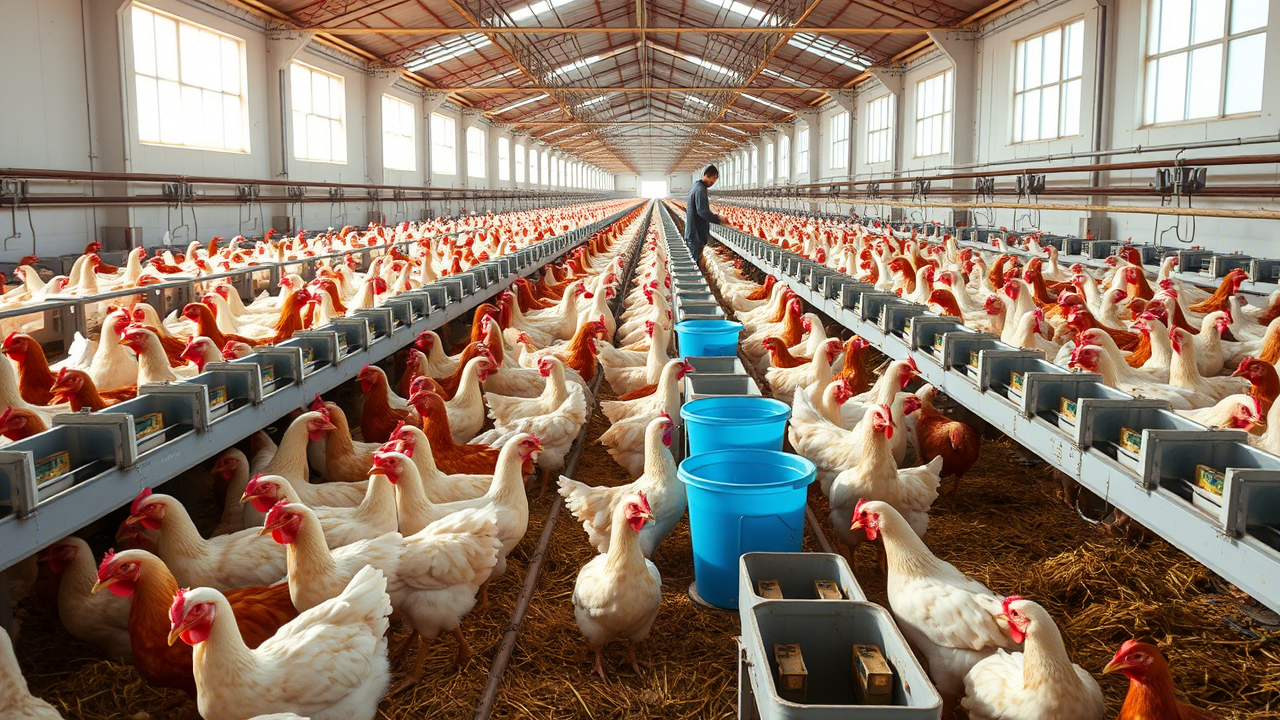
Step-by-Step Guide to Managing and Growing a Poultry Farm with 5,000 Hens
Poultry farming is a lucrative venture with growing global demand for eggs and poultry meat. Managing a farm with 5,000 hens requires strategic planning, attention to detail, and adaptability. This guide provides a comprehensive, step-by-step approach to establishing, managing, and scaling your poultry farm.
1. Planning and Setup
1.1 Define Your Objectives
- Purpose: Decide whether your farm will focus on egg production, meat (broilers), or dual-purpose breeds.
- Market Research: Study local demand, pricing, competition, and distribution channels.
- Financial Goals: Estimate startup costs, operating expenses, and projected revenue.
1.2 Legal and Regulatory Compliance
- Permits and Licenses: Obtain necessary permits for poultry farming, waste management, and biosecurity from local authorities.
- Zoning Laws: Ensure your farm location complies with zoning regulations (distance from residential areas, water sources, etc.).
- Insurance: Invest in livestock insurance to cover disease outbreaks, natural disasters, or equipment failures.
1.3 Site Selection
- Location: Choose a well-drained, elevated area with access to clean water, electricity, and transportation.
- Biosecurity: Avoid proximity to other poultry farms to reduce disease transmission risks.
- Space Requirements: Allocate 2–3 sq. ft. per hen in the coop and additional space for outdoor runs (if free-range).
1.4 Housing Design
- Coop Structure: Build a durable, ventilated poultry house with concrete floors, insulated walls, and predator-proofing.
- Ventilation: Install exhaust fans or ridge vents to regulate temperature and humidity.
- Lighting: Use LED lights to simulate 14–16 hours of daylight for optimal egg production.
2. Selecting the Right Breed
2.1 Egg-Laying Breeds
- Hybrid Layers: Isa Brown, Lohmann Brown, or White Leghorns lay 280–320 eggs/year.
- Heritage Breeds: Rhode Island Reds or Sussex (fewer eggs but hardy for free-range systems).
2.2 Dual-Purpose Breeds
- Plymouth Rock or Australorp provide eggs and meat but require more space.
2.3 Sourcing Chicks
- Reputable Hatcheries: Purchase day-old chicks certified free of diseases like Salmonella and Avian Influenza.
- Vaccination: Ensure chicks are vaccinated against Marek’s disease, Newcastle disease, and Infectious Bronchitis.
3. Housing and Equipment
3.1 Coop Layout
- Nesting Boxes: Provide 1 box per 4–5 hens (12x12x12 inches) filled with straw or shavings.
- Perches: Allow 8–10 inches of perch space per hen.
- Litter Management: Use rice husks, wood shavings, or sand for moisture absorption.
3.2 Feeding Systems
- Automatic Feeders: Reduce labor and ensure consistent access to feed.
- Feed Storage: Store feed in rodent-proof containers to avoid contamination.
3.3 Watering Systems
- Nipple Drinkers: Minimize spillage and keep water clean.
- Daily Cleaning: Sanitize waterers to prevent bacterial growth.
3.4 Waste Management
- Composting: Convert manure into organic fertilizer.
- Biogas: Install biogas digesters to generate energy from waste (optional).
4. Day-Old Chicks Management
4.1 Brooding (Weeks 1–6)
- Brooder Setup: Maintain a temperature of 95°F in week 1, reducing by 5°F weekly until reaching 70°F.
- Bedding: Use paper towels or pine shavings to prevent slipping.
- Feed: Provide chick starter crumbles (20% protein) and electrolyte water.
4.2 Vaccination Schedule
- Week 1: Marek’s disease (hatchery-administered).
- Week 2–4: Newcastle disease and Infectious Bronchitis.
4.3 Monitoring Health
- Signs of Stress: Huddling (too cold), panting (too hot), or lethargy.
- Mortality Rate: Aim for <2% in the first month.
5. Feeding and Nutrition
5.1 Feed Formulation
- Starter Feed (0–6 weeks): 20% protein for growth.
- Grower Feed (7–18 weeks): 16–18% protein.
- Layer Feed (19+ weeks): 16–18% protein + calcium (3.5–4%) for strong eggshells.
5.2 Supplements
- Grit: Helps digestion in free-range hens.
- Oystershells: Provide calcium for layers.
5.3 Feeding Schedule
- Ad Libitum Feeding: Allow 24/7 access to feed for layers.
- Average Consumption: 100–120 grams of feed per hen daily.
6. Health Management
6.1 Common Diseases
- Avian Influenza: Report symptoms (swelling, drop in egg production) immediately.
- Coccidiosis: Prevent with medicated feed or vaccines.
- Mites/Lice: Dust hens with diatomaceous earth or use permethrin sprays.
6.2 Biosecurity Measures
- Footbaths: Place disinfectant baths at coop entrances.
- Restricted Access: Limit visitors and sanitize equipment.
- Quarantine: Isolate new or sick birds for 2–4 weeks.
6.3 Regular Checkups
- Vet Partnership: Schedule monthly health inspections.
- Record Keeping: Track mortality, feed intake, and egg production.
7. Egg Production and Handling
7.1 Collection
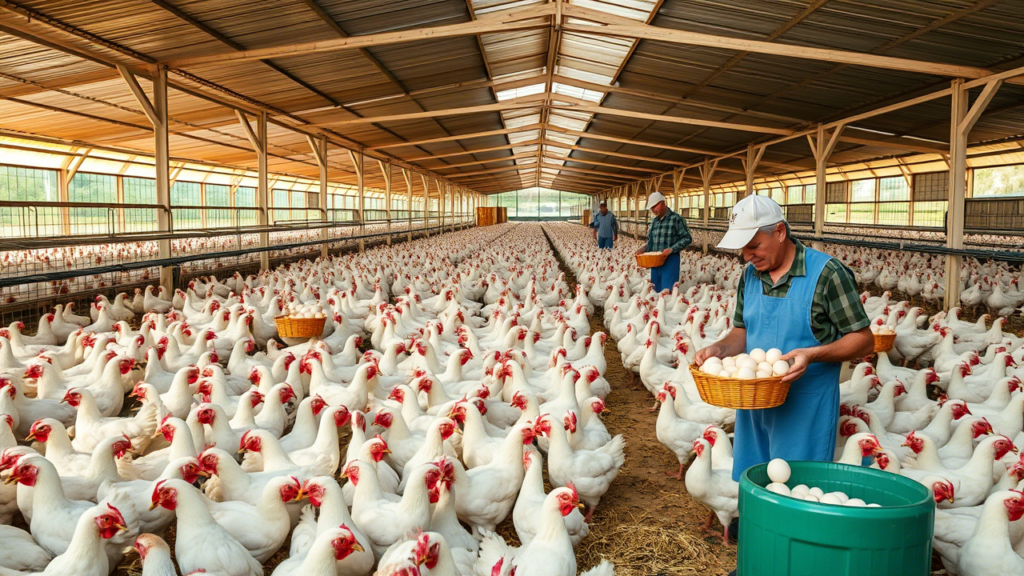
- Collect eggs 2–3 times daily to prevent cracking or contamination.
- Discard dirty eggs; avoid washing (removes protective bloom).
7.2 Storage
- Store eggs at 55°F and 75% humidity.
- Sell within 7 days for optimal freshness.
7.3 Grading and Packaging
- Sort eggs by size (small, medium, large, extra-large).
- Use recycled pulp trays or branded cartons for retail.
8. Marketing and Sales
8.1 Target Markets
- Direct Sales: Farmers’ markets, roadside stands, or subscriptions.
- Wholesale: Supply grocery stores, restaurants, or egg processors.
- Value-Added Products: Sell boiled eggs, liquid eggs, or egg powder.
8.2 Branding
- Certifications: Obtain organic, free-range, or animal welfare certifications.
- Online Presence: Create a website/social media to showcase your farm.
8.3 Pricing Strategy
- Break-Even Analysis: Factor in feed, labor, and overhead costs.
- Competitive Pricing: Match local rates while emphasizing quality.
9. Financial Management
9.1 Budgeting
- Startup Costs: $20,000–$50,000 (housing, equipment, chicks).
- Operating Costs: Feed (60% of expenses), labor, utilities, and healthcare.
9.2 Record Keeping
- Use software (e.g., Farmbrite) to track expenses, egg production, and profits.
- Calculate feed conversion ratio (FCR) and cost per dozen eggs.
9.3 Profitability
- Revenue Streams: Eggs, manure, spent hens (sold as stewing hens).
- ROI: Expect profitability within 12–18 months.
10. Scaling Your Poultry Farm
10.1 Expansion
- Increase Flock Size: Gradually add 1,000–2,000 hens annually.
- Diversify: Introduce broilers, turkeys, or quail.
10.2 Automation
- Invest in egg collection belts, automatic feeders, and climate control systems.
10.3 Sustainability Practices
- Solar Power: Reduce energy costs with solar panels.
- Rainwater Harvesting: Install tanks for water conservation.
11. Challenges and Solutions
- Disease Outbreaks: Implement strict biosecurity and vaccination.
- Price Fluctuations: Hedge feed costs by buying in bulk or contracting suppliers.
- Labor Shortages: Train reliable staff and offer competitive wages.
Conclusion
Successfully managing a 5,000-hen poultry farm requires a blend of technical knowledge, meticulous planning, and continuous learning. By prioritizing bird health, optimizing feed efficiency, and exploring innovative markets, you can build a sustainable and profitable enterprise. Stay informed about industry trends, invest in automation, and maintain a customer-centric approach to thrive in the competitive poultry sector.
Step-by-Step Guide to Managing and Growing a Poultry Farm with 5,000 Hens
1. Planning & Business Model
- Market Research: Identify demand (e.g., eggs, meat) and local competition.
- Business Plan: Outline goals, budget, revenue streams (egg sales, manure), and expansion strategies.
- Legal Compliance: Secure permits, licenses, and insurance. Follow zoning laws and environmental regulations.
2. Infrastructure Setup
- Location: Choose a site with access to water, electricity, and transport. Ensure biosecurity (isolated from other farms).
- Housing:
- Space: 1.5–2 sq ft/hen (7,500–10,000 sq ft total).
- Ventilation, insulation, and lighting (14–16 hours/day for laying).
- Use raised wire floors or deep litter systems.
- Equipment: Automatic feeders, drinkers, egg collectors, and heating/cooling systems.
3. Sourcing Hens
- Breed Selection: Opt for high-yield layers (e.g., Leghorns) or dual-purpose breeds.
- Supplier: Purchase from certified hatcheries. Start with pullets (16–20 weeks old) for immediate egg production.
- Biosecurity: Quarantine new birds for 2 weeks.
4. Feeding & Nutrition
- Feed Types:
- Layers: 16–18% protein feed with calcium for eggshells.
- Provide grit for digestion.
- Daily Intake: ~0.25 lbs/hen (1,250 lbs/day for 5,000 hens).
- Water: Clean, accessible supply (2x daily checks).
5. Health Management
- Vaccinations: Marek’s, Newcastle, Infectious Bronchitis.
- Parasite Control: Deworming and mite treatments.
- Vet Partnership: Schedule regular check-ups and emergency plans.
- Record-Keeping: Track mortality, feed, and egg production.
6. Daily Operations
- Egg Collection: 2–3 times/day to prevent breakage. Clean with sanitized tools.
- Monitoring: Check for signs of illness (lethargy, ruffled feathers).
- Labor: Hire staff for feeding, cleaning, and egg collection. Train in biosecurity.
7. Waste Management
- Manure Handling: Remove daily. Compost or sell as fertilizer.
- Dead Birds: Dispose via incineration or burial following local laws.
8. Marketing & Sales
- Channels: Local markets, supermarkets, restaurants, direct sales (farmers’ markets, online).
- Branding: Highlight quality (e.g., free-range, organic) for premium pricing.
- Customer Feedback: Adjust production based on demand.
9. Financial Management
- Cost Tracking: Monitor feed, labor, and healthcare expenses.
- Pricing Strategy: Align with market rates while ensuring profit margins.
- Funding: Explore loans/grants for expansion.
10. Expansion Strategies
- Increase Flock Size: Add coops incrementally.
- Diversify: Processed eggs, organic certification, or meat production.
- Technology: Invest in automation (feeding, egg collection).
FAQs
- Space Requirements?
- 1.5–2 sq ft/hen indoors; more for free-range.
- Daily Feed Cost?
- Depends on local prices (e.g., $0.10–$0.15/hen/day ≈ $500–$750 daily).
- Key Vaccinations?
- Marek’s, Newcastle, Infectious Bronchitis.
- Egg Yield?
- 250–300 eggs/hen/year (1.25–1.5 million total).
- Manure Management?
- Compost for fertilizer or sell to farms.
- Profitability Timeline?
- 1–2 years, depending on market and efficiency.
- Predator Control?
- Secure fencing, traps, and guardian animals.
- Optimal Temperature?
- 60–75°F. Use heaters or fans as needed.
- Licensing Needed?
- Yes—business license, USDA/FDA approvals for egg sales.
- Organic Certification?
- Requires organic feed, outdoor access, and no antibiotics (process takes 3 years).
