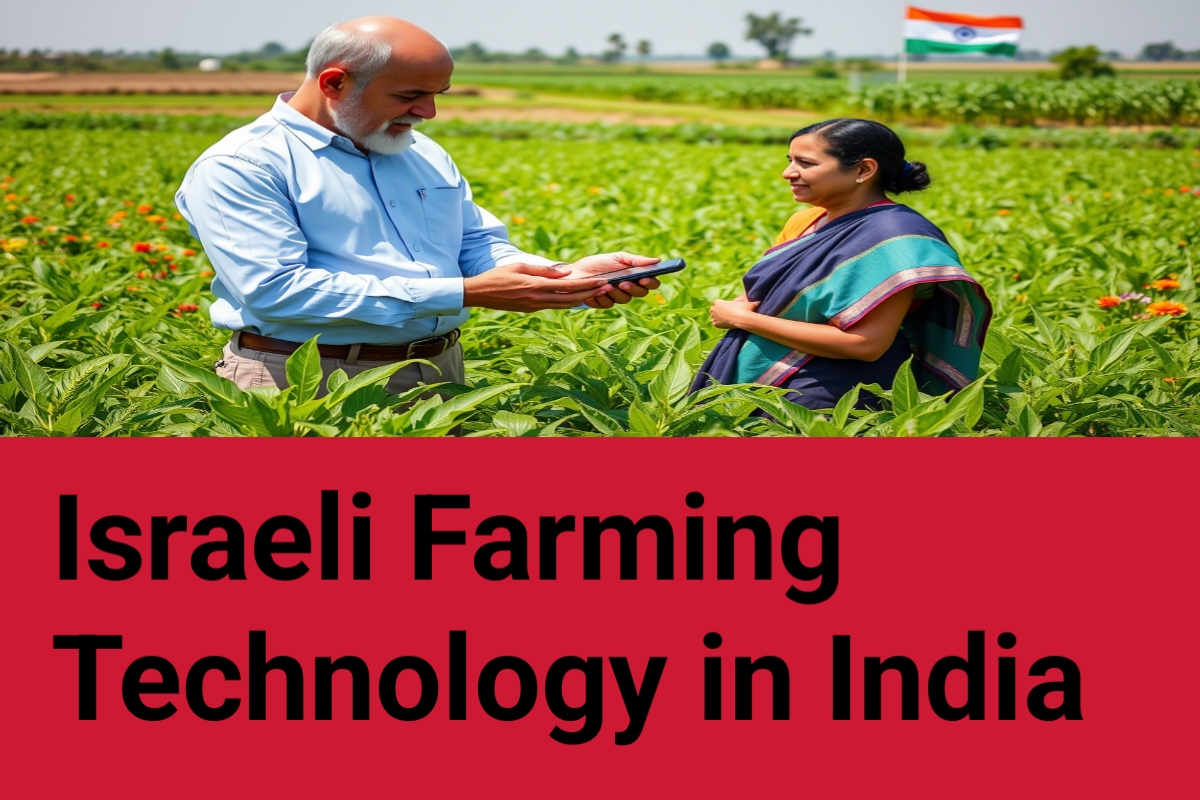
India and Israel have forged a transformative partnership in agriculture, driven by the urgent need to address water scarcity, climate challenges, and low farm productivity. Israeli technologies—ranging from drip irrigation to precision farming—are reshaping Indian agriculture, enabling farmers to optimize resources, boost yields, and adopt sustainable practices. This article explores the key Israeli innovations adopted in India, their impact, challenges, and future prospects, supported by case studies and data.
Key Israeli Technologies Transforming Indian Agriculture
1. Drip Irrigation and Micro-Irrigation Systems
Technology Overview:
Israeli-developed drip irrigation delivers water directly to plant roots via a network of pipes and emitters, reducing water wastage by up to 70% compared to traditional flood irrigation . Companies like Netafim (pioneered by Simcha Blass) have customized these systems for Indian conditions, integrating fertigation (fertilizer + irrigation) to enhance nutrient delivery .
Impact in India:
- Water Savings: Farmers in Maharashtra, Gujarat, and Telangana reduced water usage by 40–65% while doubling crop yields .
- Government Support: Subsidies through the National Mission on Micro Irrigation (NMMI) and a ₹5,000 crore micro-irrigation fund have expanded adoption to 8.6 million hectares (potential: 69.5 million hectares) .
- Case Study: Jain Irrigation Systems collaborated with Israeli agronomists to localize drip systems, enabling smallholders to grow high-value crops like pomegranates and citrus fruits .
2. Protected Cultivation (Greenhouses and Net Houses)
Technology Overview:
Greenhouses and net houses regulate temperature, humidity, and pest exposure, enabling year-round cultivation. Israel’s adaptive designs include cost-effective structures for semi-arid regions .
Impact in India:
- Yield Increase: In Haryana, protected cultivation of tomatoes and cucumbers raised productivity 5–10 times while cutting water use by 65% .
- Adoption: Farmers in Botad, Gujarat, adopted net houses for dates and pears, doubling yields and incomes .
3. Precision Agriculture
Technology Overview:
Israeli startups like AgriTask, Taranis, and CropX use AI, drones, and soil sensors to optimize irrigation, pest control, and fertilizer use .
Impact in India:
- Data-Driven Farming: Andhra Pradesh pilots using satellite imaging reduced pesticide costs by 30% .
- Challenges: Limited adoption due to high initial costs and digital literacy gaps among small farmers .
4. Wastewater Reuse and Desalination
Technology Overview:
Israel recycles 80% of wastewater for agriculture, a model India is replicating through projects like the Ganga cleanup and state-level desalination plants .
Impact in India:
- Pilot Projects: Gujarat and Rajasthan treat urban wastewater for irrigation, reducing freshwater dependency .
5. Post-Harvest Technologies
Technology Overview:
- GrainPro Cocoons: Airtight storage bags prevent spoilage, piloted in India to reduce post-harvest losses (up to 50%) .
- Biofeed’s FreeDome: Organic pest traps reduced mango fruit-fly infestation from 95% to 5% in Maharashtra .
Case Studies: Success Stories
1. Hirji and Godavari Bhinradia (Gujarat)
- Challenge: Arid land with water scarcity.
- Solution: Attended Israel’s Agriculture Fair (2015), adopted net houses, drip irrigation, and canopy management.
- Outcome: Doubled yields of dates, chikku, and watermelons; trained 100+ local farmers .
2. Indo-Israel Centers of Excellence (CoEs)
- Achievements: 25 CoEs established since 2008, showcasing drip irrigation, mango rejuvenation, and beekeeping.
- Impact: 10,000–20,000 farmers trained annually; mango productivity tripled in Maharashtra .
Challenges and Barriers
| Challenge | Details |
|---|---|
| High Initial Costs | Drip irrigation setup costs ₹50,000–₹1 lakh/acre, unaffordable for smallholders . |
| Subsidy Delays | Micro-irrigation fund operationalized a year after announcement . |
| Regional Disparities | North India lags in adoption due to perceived water abundance . |
Future Outlook
- Expansion of CoEs: 5 new centers planned, focusing on dairy and citrus crops .
- Private Sector Partnerships: Companies like Amaizz and Biofeed scaling post-harvest solutions .
- Policy Push: Linking Israeli tech to PM-KISAN and Soil Health Card schemes for wider outreach.
Comparative Table: Israeli Technologies and Their Impact in India
| Technology | Description | Impact in India | |
|---|---|---|---|
| Drip Irrigation | Water delivered via emitters to roots. | 65% water savings; 2x yield in Maharashtra, Gujarat. | |
| Protected Cultivation | Greenhouses/net houses for climate control. | 5–10x yield for tomatoes; adopted in 10+ states. | |
| Precision Agriculture | AI-driven sensors for resource optimization. | 30% cost reduction in Andhra pilots. | |
| Wastewater Reuse | Treated urban wastewater for irrigation. | Pilot projects in Gujarat reduce freshwater use by 40%. | |
| Post-Harvest Solutions | GrainPro Cocoons and Biofeed traps. | 50% reduction in grain loss; 95% pest control in mangoes. |
Conclusion
Israeli farming technologies are bridging India’s agricultural productivity gap through water-efficient systems, precision tools, and knowledge transfer. While challenges like affordability and scalability persist, government initiatives and grassroots success stories signal a promising future. By integrating Israeli innovations with local practices, India can achieve its vision of doubling farmers’ incomes and ensuring food security.
FAQs: Israeli Farming Technology in India – Revolutionizing Agriculture through Digital Innovation
1. What is Israeli farming technology?
Israeli farming technology encompasses advanced agricultural practices like drip irrigation, precision agriculture, IoT sensors, drones, and digital farm management platforms. Companies like Netafim (pioneers in drip irrigation) and digital tools for soil health monitoring are key examples.
2. Why is India adopting Israeli agricultural tech?
India faces challenges like water scarcity, climate variability, and the need to enhance productivity for its large population. Israeli tech offers solutions for efficient water use, higher yields, and resilience against climate stress.
3. Which Israeli technologies are most impactful in India?
- Drip Irrigation: Reduces water use by up to 60% while boosting yields.
- Precision Agriculture: Sensors and drones monitor crop health and optimize inputs.
- Digital Platforms: Apps like AgriTask provide real-time farm management insights.
- Water Recycling: Desalination and wastewater treatment technologies.
4. How do Indian farmers benefit from these technologies?
- Higher Yields: Farmers report 20-50% increases in productivity.
- Water Savings: Drip irrigation cuts water usage significantly.
- Cost Reduction: Efficient input use lowers fertilizer and pesticide costs.
- Climate Resilience: Drought-resistant crops and smart monitoring mitigate climate risks.
5. What challenges hinder adoption in India?
- High initial costs for smallholders.
- Lack of awareness and technical training.
- Infrastructure gaps (e.g., unreliable electricity for IoT devices).
- Cultural resistance to changing traditional practices.
6. Are there government initiatives supporting this adoption?
Yes! Schemes like Per Drop More Crop subsidize micro-irrigation. Indo-Israeli Centers of Excellence (CoEs) in states like Gujarat and Haryana provide training and demo farms.
7. How are startups and private companies involved?
Indian agritech startups (e.g., Fasal, Ninjacart) collaborate with Israeli firms to adapt tech to local needs. Private partnerships focus on affordable drip systems and AI-driven advisory services.
8. Any success stories in India?
- Gujarat: Drip irrigation in cotton fields increased yields by 30%.
- Maharashtra: IoT-enabled farms reduced water use by 40% in vineyards.
- Haryana: CoEs trained over 50,000 farmers in precision techniques.
9. Does Israeli tech promote sustainability?
Absolutely! It reduces water waste, minimizes chemical use via targeted application, and enhances soil health through data-driven practices.
10. Is this technology affordable for small farmers?
Subsidies (up to 50-80% via state schemes) and scalable models (e.g., community drip systems) make it accessible. NGOs also facilitate microloans and group investments.
11. What training is available for farmers?
CoEs and agritech startups offer workshops on tech usage. Digital platforms like Krishi Vigyan Kendra provide online tutorials and helplines.
12. Future trends in Indo-Israeli agri-collaboration?
- AI and machine learning for predictive analytics.
- Blockchain for transparent supply chains.
- Solar-powered IoT devices to tackle energy issues.
13. How does Israeli tech compare to traditional methods?
It outperforms in efficiency (e.g., drip vs. flood irrigation) and enables real-time decision-making versus manual guesswork. However, it requires upfront investment and tech literacy.
14. What risks are involved?
- Dependence on consistent tech maintenance.
- Vulnerability to power outages affecting IoT devices.
- Over-reliance on external companies for support.
15. How can farmers access these technologies?
- Contact state agriculture departments for subsidy schemes.
- Partner with agritech startups (e.g., DeHaat, CropIn).
- Visit Indo-Israeli CoEs for demonstrations and training.
16. Which states lead in adopting these technologies?
Gujarat, Maharashtra, Rajasthan, Haryana, and Karnataka due to proactive government policies and partnerships with Israeli firms.
17. Can Israeli tech address soil degradation in India?
Yes! Soil sensors and data analytics help farmers apply precise fertilizers, improving soil health and reducing degradation.
18. What role do drones play?
Drones monitor crop health, spray pesticides efficiently, and map fields for better resource allocation, cutting labor costs by up to 30%.
19. Are there collaborations beyond technology?
Yes, joint R&D projects focus on developing crops suited to India’s climate, such as heat-tolerant vegetable varieties.
20. Where can I learn more?
- Indo-Israeli Agricultural Project Website
- National Mission on Agricultural Extension and Technology (NMAET)
- Contact local Krishi Vigyan Kendras or agritech startups for tailored solutions.
This FAQ highlights the transformative potential of Israeli tech in India while addressing practical concerns, ensuring farmers and stakeholders can navigate opportunities and challenges effectively.
