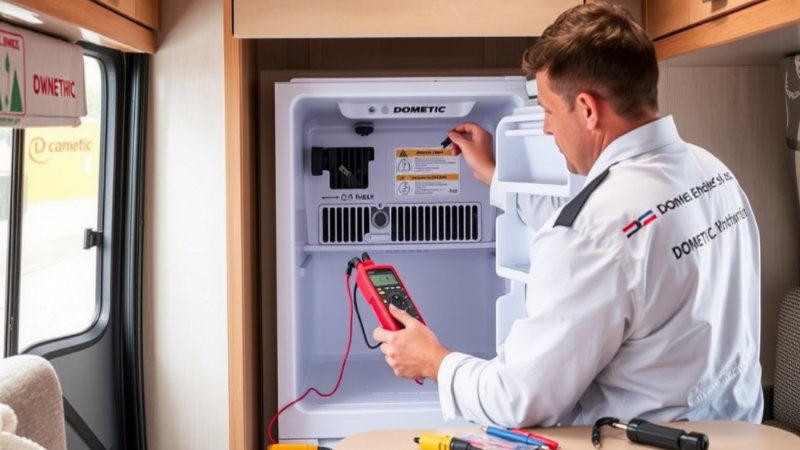
- Confirm Basic Settings
- Ensure the fridge is turned on and set to the correct mode (Electric/LP/Auto).
- Check the thermostat is set to a cooling temperature (e.g., 2-5°C for fridge, -18°C for freezer).
- Verify Power Sources
- Electric Mode:
- Test the RV’s power source (shore power/generator/inverter).
- Check for tripped breakers in the RV’s electrical panel.
- Inspect fuses related to the fridge (replace if blown).
- Propane (LP) Mode:
- Ensure the propane tank is open and not empty.
- Listen for the gas valve click when switching to LP mode.
- Check Leveling
- Use a bubble level to ensure the RV is within 3° of level (critical for propane operation).
- Inspect Door Seals
- Close a dollar bill in the door; if it slips out easily, the seal is worn. Replace if necessary.
- Ensure Proper Ventilation
- Clear obstructions from external upper/lower vents.
- Confirm the cooling fan (if equipped) is running when the fridge is on.
- Look for Error Codes
- Check the control panel for codes (e.g., E0/E1 for sensor issues). Refer to the manual for specifics.
- Test Heating Elements (Electric Mode)
- Use a multimeter to check the heating element for continuity (replace if open circuit).
- Verify 120V AC reaches the element (no power = faulty board or wiring).
- Inspect Propane Burner
- Turn off gas and remove the burner access panel (exterior vent).
- Clean the burner tube and orifice with compressed air.
- Reignite manually: If the flame is weak/yellow, check gas pressure or for obstructions.
- Check Cooling Unit for Issues
- Look for yellow residue (ammonia leak) or rust on the cooling unit.
- Feel the back of the fridge after 24 hours: The boiler should be hot, condenser warm, and evaporator cold.
- Test Thermostat/Thermistor
- Use a multimeter to measure the thermistor’s resistance (compare to manual specs).
- Bypass the thermostat temporarily to rule out failure.
- Inspect 12V DC System
- Check the RV battery voltage (low voltage can disrupt control boards).
- Test fuses for the fridge’s 12V circuit (even in LP mode, 12V powers controls).
- Wait for Cooling
- Allow 24 hours for the fridge to cool after startup (absorption fridges are slow).
- When to Call a Professional
- If the cooling unit is leaking, the burner won’t stay lit, or electrical components fail.
- Complex repairs (e.g., coolant recharge, board replacement) require expertise.
- Step-by-Step Guide to Troubleshooting a Dometic Camper Fridge
1. Initial Checks
Power Source Confirmation:
Propane Mode: Ensure the LP gas valve is open and the tank has sufficient fuel.
Electric Modes: Verify the RV is plugged into shore power (AC) or the battery is charged (12V DC).
Thermostat Settings: Confirm the thermostat is set to a cooling temperature (e.g., “3” or “5”). Avoid extreme settings initially.
Leveling: Ensure the RV is parked on level ground; uneven surfaces disrupt coolant flow in absorption fridges.
Patience: Allow 12–24 hours for the fridge to cool after startup or power source changes.
2. Power Source Troubleshooting
Propane Mode Issues:
Check for gas flow (listen for burner ignition).
Inspect the burner assembly for blockages or dirt. Clean with a soft brush if necessary.
Test the thermocouple (if flame won’t stay lit) and replace if faulty.
Look for soot near the chimney, indicating incomplete combustion; clean vents and flue.
AC Electric Mode Issues:
Check the circuit breaker for tripping. Reset if needed.
Test the AC heating element with a multimeter (replace if no continuity).
12V DC Mode Issues:
Inspect fuses related to the fridge circuit; replace blown fuses.
Test the DC heating element for continuity.
3. Cooling Performance
Airflow:
Clear obstructions from external ventilation vents.
Avoid overloading the fridge; ensure internal airflow gaps.
Door Seal Test:
Close the door on a dollar bill; if it slips out easily, replace the gasket.
Cooling Unit:
Listen for boiling/hissing sounds (indicating active cooling).
Check for ammonia smells (potential coolant leak). Caution: Leaks require professional repair.
4. Error Code Diagnostics
Refer to the manufacturer’s manual for model-specific codes.
Common codes (e.g., E0, E1) often relate to temperature sensors or power failures. Reset the fridge or address sensor issues.
5. Burner and Chimney Inspection
Clean the burner orifice with compressed air.
Ensure the flame is blue (yellow flames signal impurities or blockages).
Inspect the chimney for obstructions like insect nests.
FAQs
Why isn’t my fridge cooling?
Check power sources, thermostat settings, leveling, and ventilation. Allow 24 hours for stabilization.
Can I run the fridge while driving?
Yes, but use propane only when parked. Use 12V DC mode while driving (verify RV compatibility).
Why does it work on electricity but not propane?
Likely a gas supply issue, dirty burner, or faulty thermocouple.
How often should I maintain my fridge?
Clean burner and vents annually; inspect door seals quarterly.
Is noise normal?
Hissing/boiling is normal. Loud knocking or buzzing may indicate issues.
Conclusions
Start Simple: Confirm power, settings, and leveling before deeper diagnostics.
Safety First: Turn off gas/electricity before inspections. Handle propane cautiously.
Professional Help: Seek assistance for coolant leaks, electrical faults, or persistent cooling failures.
Preventative Care: Regular maintenance extends fridge life and efficiency.
By methodically addressing these areas, most issues can be resolved or narrowed down for professional repair. When in doubt, consult Dometic’s customer support or a certified RV technician. 🚐❄️
Safety Tips:
- Turn off propane and power before inspecting components.
- Use a carbon monoxide detector when testing LP mode.
By following these steps, you’ll systematically address common issues. If unresolved, consult a Dometic-certified technician. 🚐❄️
