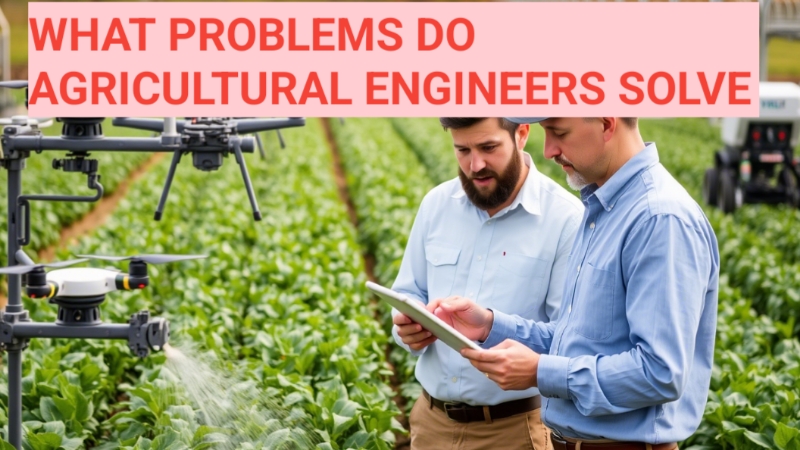
Agricultural engineering is more than just working on tractors or managing irrigation systems. It is a discipline rooted in innovation and science, addressing some of the most pressing problems in agriculture today. Agricultural engineers merge biology, technology, and problem-solving to revolutionize how the world grows food, conserves resources, and adapts to climate change. But what exactly are the problems they solve?
1. Water Management and Irrigation Efficiency
Water scarcity affects farming communities around the world. Agricultural engineers design efficient irrigation systems such as drip and sprinkler setups that optimize water use. These systems not only conserve water but also ensure better crop yields by delivering water precisely where and when it is needed. Smart irrigation technologies, like soil moisture sensors and automated pumps, are direct results of agricultural engineering.
2. Soil Erosion and Land Degradation
Soil erosion is one of the most silent threats to agriculture. Agricultural engineers develop systems such as terracing, no-till farming methods, and contour plowing to prevent erosion. These methods help maintain soil structure, retain nutrients, and support biodiversity. Land that would otherwise be lost to erosion can be reclaimed and made productive again.

3. Farm Infrastructure and Building Design
Farm infrastructure includes silos, storage sheds, barns, and greenhouses. Agricultural engineers design structures that are resilient to environmental stressors such as heat, cold, and pests. By ensuring proper ventilation, lighting, and insulation, these engineers extend the shelf life of agricultural products and reduce post-harvest losses.
4. Farm Machinery and Automation
Gone are the days of fully manual farming. Agricultural engineers are the brains behind the machines that automate seeding, weeding, irrigation, and harvesting. Innovations like GPS-guided tractors and autonomous drones are transforming modern agriculture, reducing labor costs, and increasing productivity.
5. Adapting to Climate Change
Agricultural engineers are on the front lines of the climate crisis. They design systems that help farmers adapt to extreme weather, including flood control systems, rainwater harvesting setups, and drought-resistant irrigation models. Their contributions make farming more resilient to shifting climate patterns.
6. Waste Management and Pollution Control
Farms produce a variety of waste products, including animal waste, pesticide residues, and food processing by-products. Agricultural engineers create waste treatment systems such as anaerobic digesters for biogas, composting units, and filtration systems that reduce runoff and pollution. This helps farms meet environmental regulations and turn waste into valuable resources.
7. Post-Harvest Processing and Preservation
Agricultural engineers help reduce food waste by designing better storage, cooling, and processing systems. Whether it’s designing cold storage for vegetables or dryers for grains, these technologies ensure food remains safe and consumable for longer periods. Advanced packaging solutions also fall under this domain.
8. Renewable Energy Integration on Farms
Farms can become energy producers with the help of agricultural engineering. Engineers develop ways to integrate solar panels, wind turbines, and bioenergy systems into farm operations. This not only cuts down on energy costs but also supports sustainable agriculture.
9. Urban and Indoor Farming Solutions
Urban farming is gaining popularity, and agricultural engineers are central to making it viable. They design vertical farming systems, hydroponic and aquaponic setups, and container farms that make growing food in cities more efficient. These systems use less water, require less space, and provide fresh produce year-round.
10. Enhancing Food Security
In a world with a growing population, food security is more critical than ever. Agricultural engineers increase efficiency in every part of the food production chain. They help develop robust supply chains, reduce food losses, and ensure that food reaches markets faster and fresher.
11. Smart Farming Technologies
Precision agriculture uses data to make informed decisions. Agricultural engineers design systems that collect and analyze data from sensors, drones, and satellites. This data helps farmers make better choices about planting, fertilizing, and harvesting, reducing costs and environmental impact.
12. Environmental Protection
Agricultural engineers work to ensure that farming practices are sustainable. They help develop and implement conservation techniques that protect ecosystems, maintain biodiversity, and reduce greenhouse gas emissions.
13. Designing Efficient Drainage Systems
Drainage is crucial for preventing waterlogging and root damage. Agricultural engineers design subsurface drainage systems that help manage excess water, especially in flood-prone areas. Proper drainage also improves soil aeration and crop health.
14. Improving Livestock Systems
Animal farming presents its own set of challenges. Engineers develop better feeding systems, climate-controlled barns, and waste disposal setups for livestock. These innovations improve animal health and productivity while minimizing environmental harm.
15. Enhancing Worker Safety and Ergonomics
Agricultural labor can be dangerous. Engineers design safer tools, ergonomic equipment, and automated machinery to reduce injuries. They also improve working conditions by designing better lighting, air quality, and temperature control in farm facilities.
16. Agricultural Education and Outreach
Agricultural engineers often work with universities, extension programs, and research institutions to share their knowledge. They develop educational materials and training modules to help farmers adopt new technologies and practices.
17. Pest and Disease Control Systems
Engineers create systems that help detect and manage pest outbreaks. This includes designing sensors, traps, and spraying systems that reduce pesticide use while protecting crops. Precision pest management reduces environmental impact and production costs.
18. Designing Climate-Controlled Environments
Greenhouses and vertical farms require finely tuned climate control systems. Agricultural engineers design heating, cooling, lighting, and ventilation systems that mimic optimal growth conditions year-round.
19. Data Collection and Management Systems
From IoT sensors to cloud-based data dashboards, agricultural engineers build systems that provide farmers with real-time data. These tools enable smarter decisions, predictive analytics, and long-term planning.
20. Innovation in Crop Transport and Logistics
Transporting crops from fields to markets quickly and efficiently is crucial. Agricultural engineers optimize transport logistics, packaging, and storage to minimize damage and loss during transit.
Final Thoughts
Agricultural engineers are integral to solving complex global challenges. From water conservation and mechanization to environmental sustainability and food security, their work touches every aspect of agriculture. As agriculture continues to evolve in response to global pressures, the solutions crafted by agricultural engineers will remain at the heart of a more efficient, productive, and sustainable future.
Whether you are a student considering a career in agricultural engineering or a farmer seeking innovative solutions, understanding the problems these engineers solve provides insight into the future of farming and global food systems.
