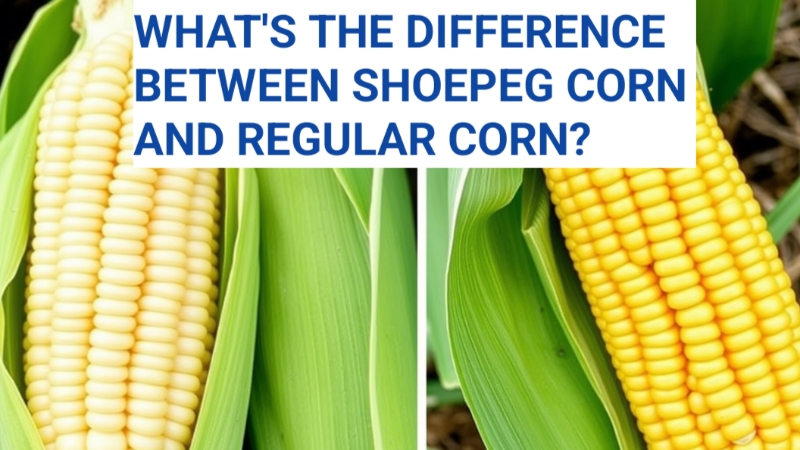
In the vibrant world of corn, two varieties often spark curiosity: the elusive shoepeg corn and the familiar regular sweet corn. While both burst with summer sweetness, their differences lie in appearance, texture, and culinary legacy. Let’s shuck the mystery and explore what sets them apart.
1. A Study in Structure: Kernel Architecture
Shoepeg Corn derives its whimsical name from 19th-century shoemaking pegs—thin, cylindrical nails used in cobbling. True to its namesake, its kernels are petite, irregularly spaced, and tapered, resembling tiny ivory teeth clinging to the cob. Unlike the orderly rows of regular corn, shoepeg kernels spiral haphazardly, creating a whimsical, “wild” aesthetic.
Regular Sweet Corn, in contrast, boasts plump, uniformly aligned kernels. Most varieties (yellow, white, or bi-color) grow in neat, grid-like patterns, offering visual symmetry. The kernels are broader and rounder, often bursting with juices when bitten.
2. Flavor and Texture: A Sensory Dance
Both varieties are sweet, but shoepeg corn is celebrated for its exceptionally crisp texture and subtle, nuanced sweetness. Its slender kernels retain a satisfying crunch even after cooking, making it a star in dishes where texture matters. Connoisseurs describe its flavor as slightly milder yet more complex, almost floral.
Regular sweet corn delivers a classic, robust sweetness with a juicier bite. Its tender kernels soften readily when cooked, offering that iconic buttery mouthfeel we associate with summer barbecues and creamy chowders.
3. Culinary Destinies: Where They Shine
Shoepeg’s Claim to Fame:
This corn is a darling of Southern U.S. cuisine and gourmet recipes. Its firm texture holds up brilliantly in:
- Cold salads (e.g., classic Southern corn salad)
- Salsas and relishes (where crunch contrasts with tangy tomatoes)
- Casseroles and succotash (it won’t turn mushy when baked)
Canned shoepeg is a pantry staple for its convenience and consistency.
Regular Sweet Corn’s Versatility:
A universal favorite, it excels in:
- Grilled or boiled on the cob (slathered with butter!)
- Creamed corn or chowders (where its softness blends seamlessly)
- Roasted in Mexican street corn (elote)

4. Origins and Availability
Shoepeg corn is believed to be an heirloom variety, possibly descended from Iroquois white corn. Rarely found fresh, it’s most commonly sold canned or frozen, particularly in the American South. Regular sweet corn, however, dominates farmers’ markets and grocery stores globally, available fresh seasonally or preserved year-round.
5. Nutritional Nuances
Both varieties offer similar health benefits: fiber, vitamins B and C, and antioxidants. Shoepeg may have marginally lower starch content, but differences are minimal. The choice hinges on texture and recipe needs, not nutrition.
What is shoepeg corn
Shoepeg Corn is a variety of sweet corn (Zea mays) known for its distinctive kernel shape, flavor, and culinary uses. Here’s a detailed overview:
Name Origin
The term “shoepeg” refers to the kernels’ resemblance to the small, narrow wooden pegs (called “shoepicks” or “shoepegs”) traditionally used in cobblers’ workshops to attach soles to shoes. The kernels are irregularly spaced, smaller, and more cylindrical than standard sweet corn.
Characteristics
- Appearance: Kernels are white or off-white, slender, and arranged in uneven rows.
- Flavor: Sweeter and more tender than yellow sweet corn, with a crisp, juicy texture.
- Varieties: Popular heirloom cultivars include ‘Country Gentleman’ and ‘Stowell’s Evergreen’.
Culinary Uses
- Salads: A staple in Southern U.S. dishes like corn salad, relish, or succotash (mixed with lima beans, peppers, and onions).
- Canned/Frozen: Retains its firmness and sweetness when preserved, making it ideal for soups, casseroles, or side dishes.
- Regional Favorite: Common in Midwestern and Southern U.S. cuisine.
Nutrition
Similar to other sweet corn varieties:
- Rich in carbohydrates and dietary fiber.
- Contains vitamins C and B, magnesium, and antioxidants.
Growing & Storage
- Season: Harvested in late summer.
- Storage: Refrigerate fresh ears and consume within 1–2 days, or blanch and freeze for longer storage.
Shoepg Corn vs. Regular Corn: Key Differences
- Kernel Characteristics:
- Shoepeg Corn: Small, narrow, irregularly shaped kernels arranged in staggered rows. Named after 19th-century shoe pegs due to their resemblance.
- Regular Corn: Larger, uniform, plump kernels typically aligned in straight, even rows (common in yellow sweet corn).
- Color:
- Shoepeg: Almost always white kernels.
- Regular: Usually yellow, but can also be white or bicolor (a mix of yellow and white).
- Flavor and Sweetness:
- Shoepeg: Known for exceptional sweetness and a crisp, tender texture. Often retains sugar longer after harvesting.
- Regular: Mildly sweet, with a juicier, crunchier bite (especially yellow varieties).
- Culinary Uses:
- Shoepeg: Preferred in dishes where texture and subtle sweetness matter, like salads (e.g., Southern corn salad), salsas, casseroles, and soups. Commonly found canned.
- Regular: Versatile for grilling, boiling, or incorporating into tacos, chowders, and side dishes. Available fresh, frozen, or canned.
- Availability:
- Shoepeg: Less common fresh; primarily sold canned or frozen in specific regions (e.g., the U.S. South).
- Regular: Widely available year-round in all forms (fresh, frozen, canned).
- Nutrition:
- Both are nutritionally similar (high in fiber, vitamins, and antioxidants), but canned shoepeg may have added sodium.
- Cultural Roots:
- Shoepeg: Has a niche following in Southern U.S. cuisine.
- Regular: A staple in global diets, with yellow corn dominating in many Western dishes.
Summary: Shoepeg corn stands out for its delicate, sweet kernels and specialty uses, while regular corn (especially yellow) offers broader accessibility and a classic corn flavor. The choice depends on recipe requirements and regional preferences.
Fun Fact
Its heirloom status and unique texture have made it a gourmet ingredient in upscale recipes, though it can be harder to find than standard yellow corn.
Let me know if you’d like recipe ideas or further details! 🌽
Differences Between Shoepeg Corn and Regular Corn
| Characteristic | Shoepeg Corn | Regular Corn |
|---|---|---|
| Kernel Shape | Narrow, pointed, uneven, resembling shoemaking pegs. | Plump, rounded, uniformly arranged. |
| Kernel Arrangement | Irregular, scattered on the cob (not in neat rows). | Straight, orderly rows. |
| Color | Typically white. | Commonly yellow, white, or bi-color. |
| Flavor & Texture | Sweeter, more tender, and less starchy. | Mildly sweet, slightly firmer texture. |
| Common Uses | Preferred in salads, salsas, casseroles (holds shape well). | Versatile: grilled, boiled, canned, frozen, etc. |
| Availability | Less common, regional (especially Southern U.S.), often canned. | Widely available fresh, canned, or frozen. |
| Sugar Content | Higher sugar content, retains sweetness longer. | Standard sweetness, may convert sugar to starch faster. |
| Cultivar Examples | Specific heirloom varieties (e.g., ‘Country Gentleman’). | Common sweet corn types like ‘Silver Queen’. |
Conclusion: A Kernel of Wisdom
Shoepeg corn is the artisanal cousin of regular corn—prized for its dainty crunch and elegance in refined dishes. Regular sweet corn, meanwhile, remains the hearty crowd-pleaser. Whether you’re crafting a silky bisque or a confetti-like salsa, let texture and tradition guide your choice. Embrace both, and let your palate savor the diversity of nature’s golden (and ivory) gems.
